
For many first-time visitors, the word "portage" sounds intimidating.
In reality, it's often the opposite. By the end of the trip, many paddlers tell us the portages became one of their favourite parts of the adventure.
The portages are one of the defining features of this multi-day canoe trip, but with the right technique, they become surprisingly manageable—even for many first-time paddlers.
They are well-marked, well-established, and designed for canoe travel. Frequent canoe rests make it easy to take breaks, switch portagers, and enjoy the walk through the forest.
After almost four decades of helping paddlers complete the route, we've found there's one portaging system that consistently works best.

Portaging is part of the adventure. With the two-trip system, even first-time paddlers quickly find their rhythm.
The Best Way to Portage the qathet Canoe Route
Many first-time paddlers assume they'll carry everything across in one trip. While it might seem faster, it usually isn't.
Trying to carry a canoe, backpack, paddles, PFDs, and loose gear all at once usually makes the portage slower, more tiring, and far less enjoyable.
Another reason we recommend the two-trip system is that carrying everything at once traps body heat. Most paddlers are far more comfortable carrying the canoe first, then returning for their backpacks.
Instead, we recommend this simple two-trip system.
Step 1
One paddler carries the canoe using the yoke.
The second paddler carries only the light essentials:
Water
Sunscreen
Camera
Small first aid kit
Paddles
PFDs
Because the canoe partially blocks the carrier's view, the lighter-loaded paddler walks alongside, helping guide the carrier around tight treed corners where visibility is limited. They can also watch for the fluorescent orange trail markers and check for traffic where the trail crosses active forestry roads.
Step 2
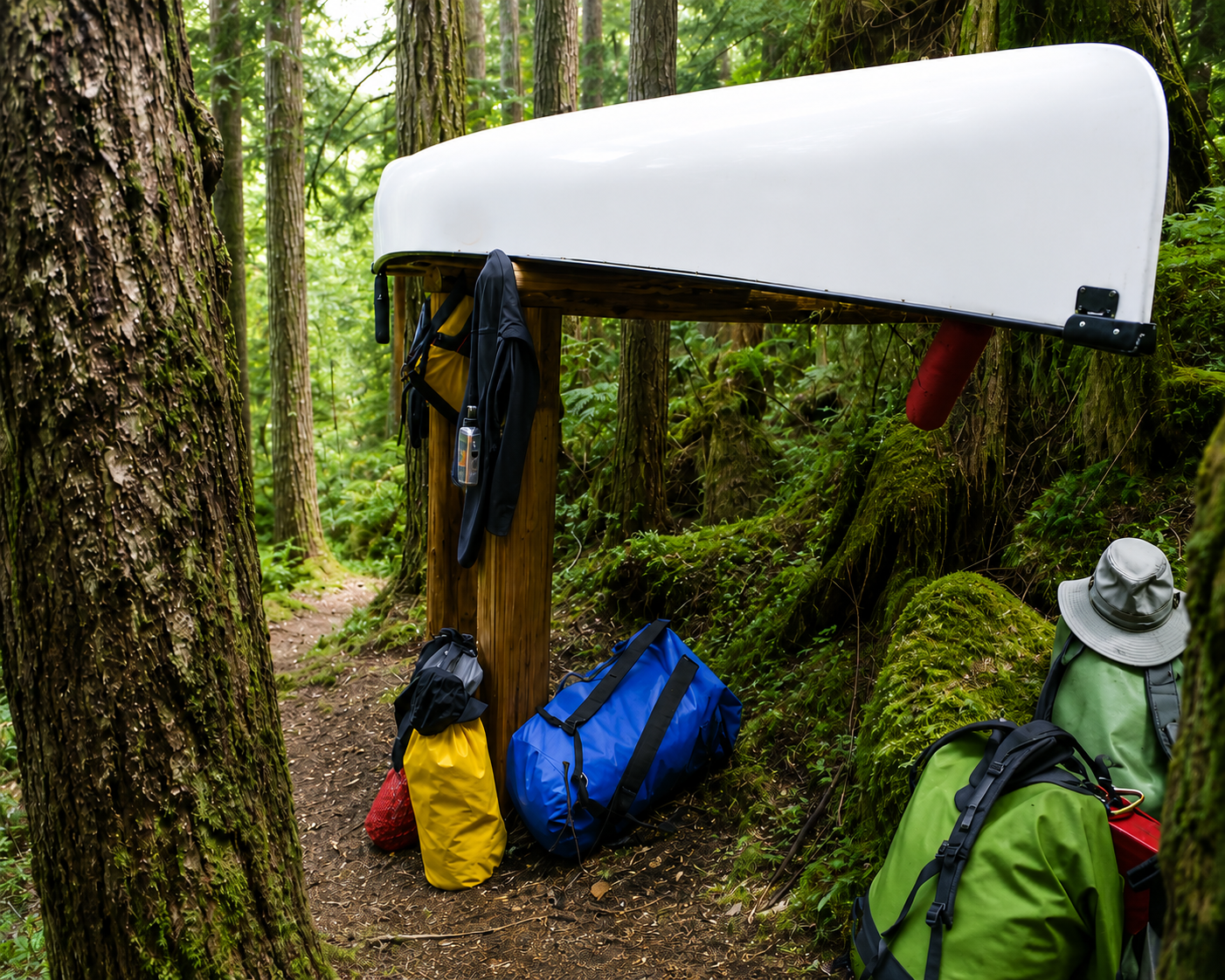
Whenever the canoe carrier's shoulders become tired, they simply walk into one of the frequent canoe rests. Canoe rests are located approximately every 100–150 metres along each portage. Some are double rests that fully support the canoe, while others are simple crosspieces between two trees where you rest the bow while leaving the stern on the ground.
For the initial canoe lift most paddlers use two people to lift the canoe onto the portager's shoulders at the beginning of each portage. If you'd like to learn a solo lift, watch this video for proper technique.
Step 3
Once the canoe reaches the far end of the portage, both paddlers walk back empty and then carry their backpacks through. Before launching, do a quick gear check to make sure nothing was left behind.
Surprisingly, this two-trip system is usually faster—and far less exhausting—than trying to carry everything at once.
Even better, you get to enjoy the beautiful forest twice.
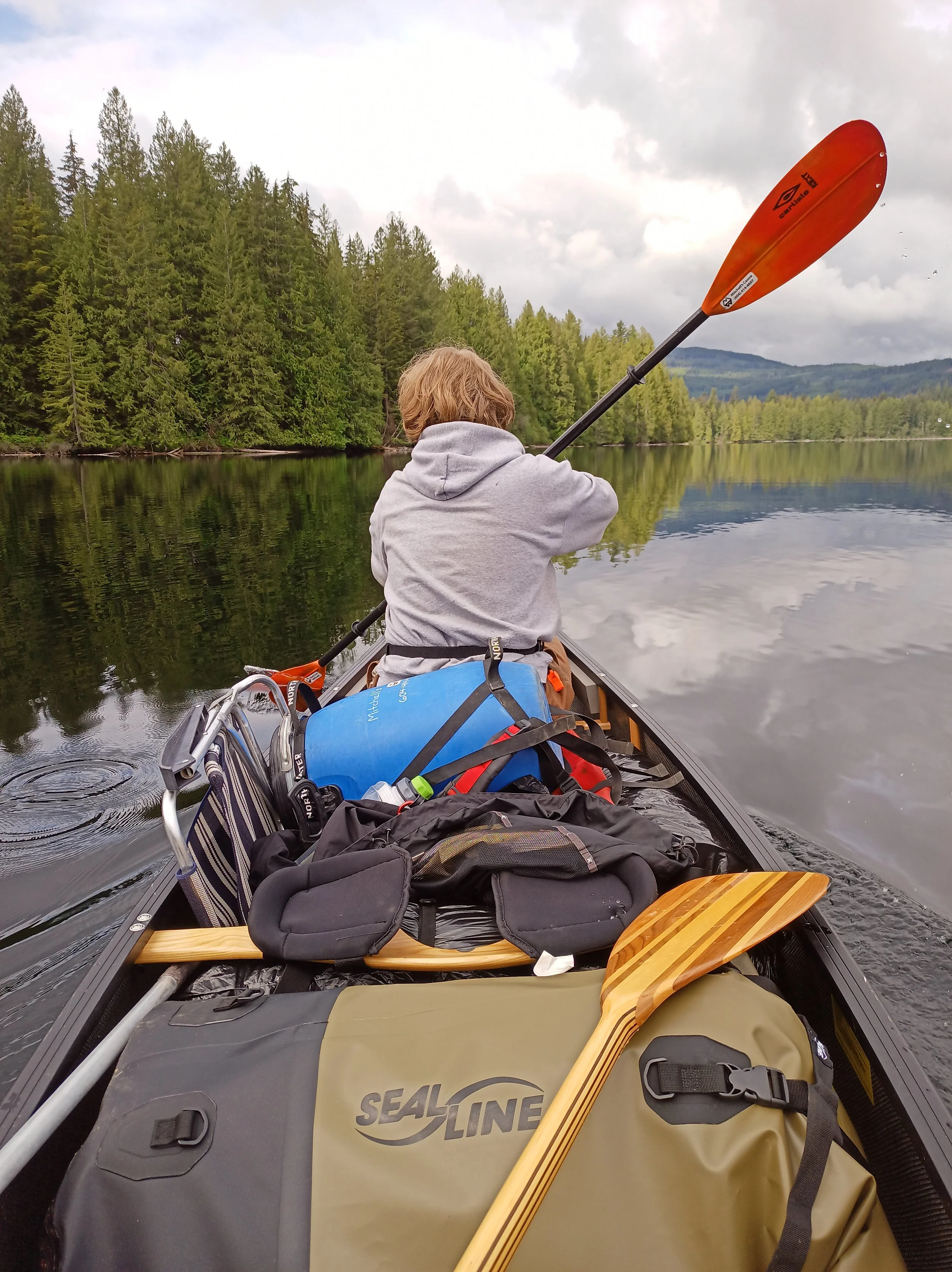
Yoke Padding, like these soft knee pads work wonders on the boney shoulders.
Our Favourite Portage Tricks
A few simple tricks can make a noticeable difference.
Add Padding to Your Yoke
Wrapping closed-cell sleeping pad foam around the yoke creates a much more comfortable carry.
Be sure the foam wraps completely around the yoke so no duct tape touches the wood.
Soft knee pads or a yoke pad secured around the yoke also work extremely well. We rent them for paddlers who'd like a little extra comfort.
Give Your Shoulders a Break
If your shoulders start feeling tired, don't push through it. Walk into the next canoe rest and switch paddlers or occasionally lower one arm completely to your side while supporting the canoe with the opposite arm completely outstretched (elbow straight).
After a minute or two, switch arms.
You can also briefly press both palms outward against the inside of the canoe hull with your arms straight.
Small adjustments like these shift the canoe slightly which changes the pressure points on your shoulders and helps prevent fatigue, making longer portages much more comfortable.
For most paddlers, muscle strength isn't the limiting factor—the pressure on the shoulders is. With a deep dish yoke, yoke padding, and regular switches at the canoe rests, most paddlers find they have plenty of energy to continue.
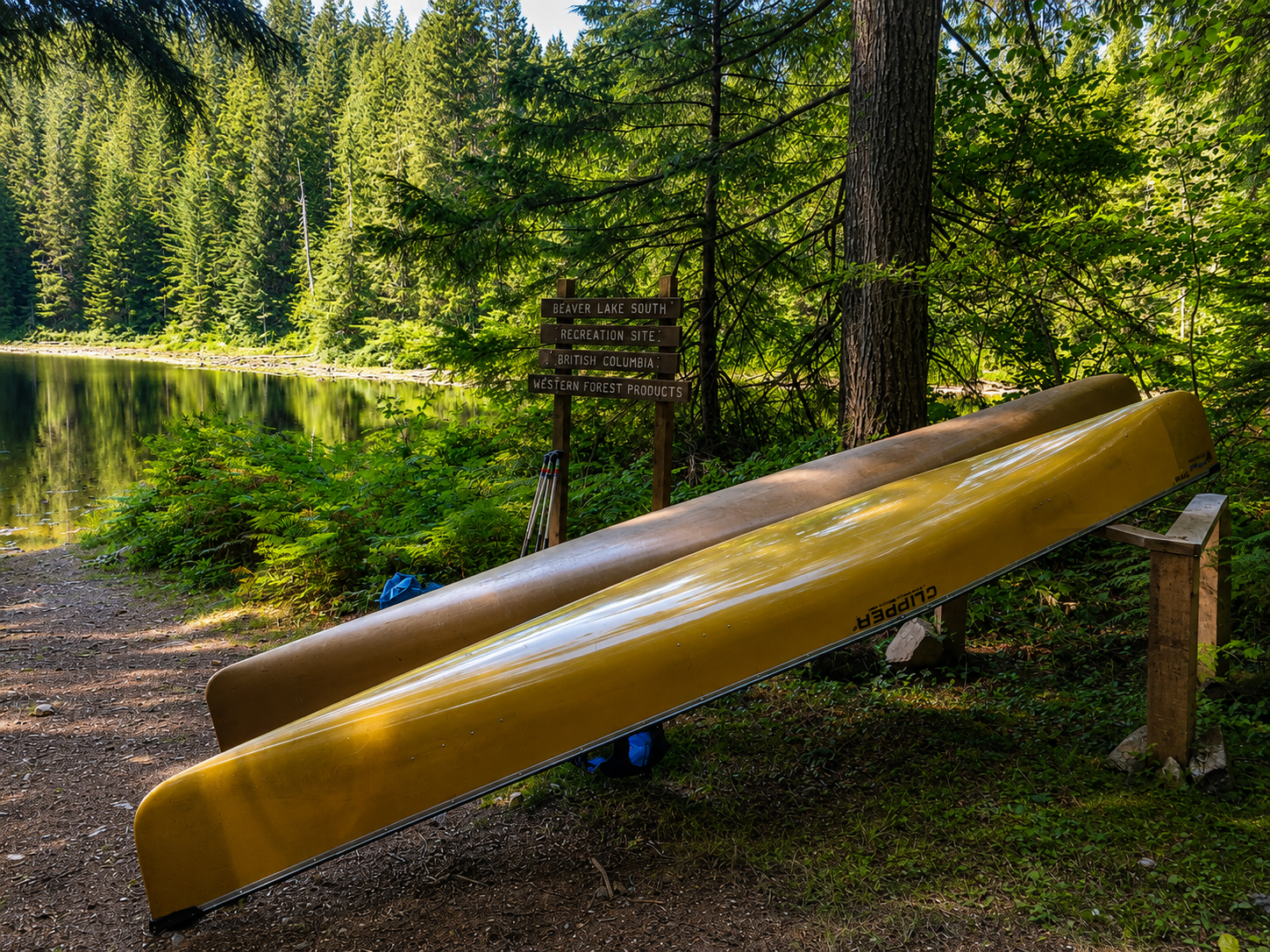
Frequent canoe rests every 100–150 metres let paddlers easily swap carriers and continue refreshed.
Don't Attach Gear to the Canoe
It's tempting to clip bags, fishing rods, or loose gear onto the canoe before a portage.
We don't recommend it.
Extra gear changes the canoe's balance, making it harder to carry comfortably and increasing fatigue.
A properly balanced canoe on your shoulders is far easier to manage through the forest.
Portage Etiquette
The portages are shared trails.
Following a few simple courtesies keeps everyone moving safely.
Give paddlers carrying canoes the right of way.
Store canoes and packs beside the trail—not in the middle.
If you're taking a break or moving slowly, allow faster groups to pass.
Leave canoe rests available whenever possible.
Good etiquette makes the experience better for everyone.
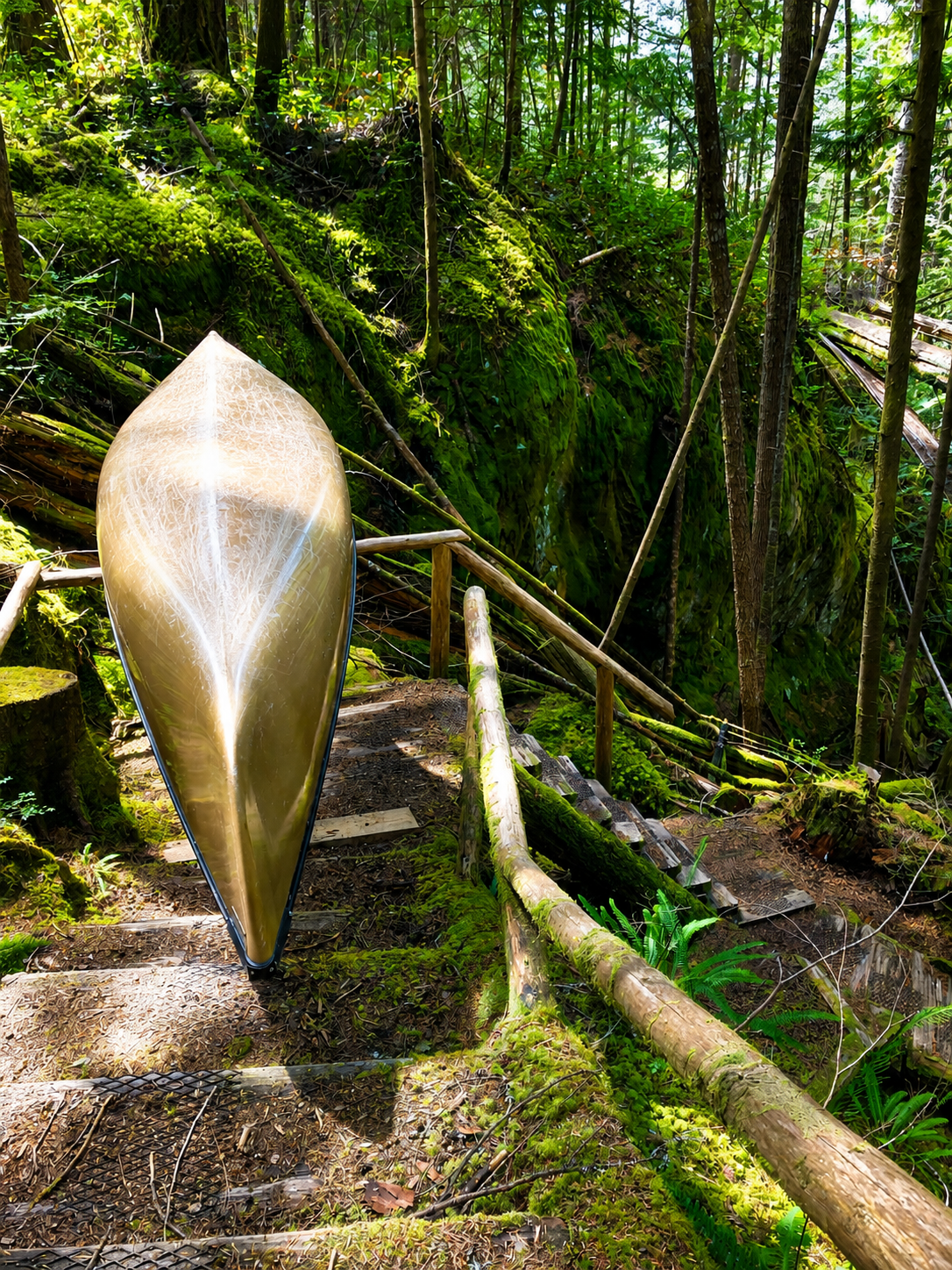
The portages aren't just a way to reach the next lake—they're your chance to experience the quiet beauty of the coastal rainforest.
Portage Distances on the qathet Canoe Route
The main portages on the traditional route are:
Portage Distance Approx. Time per Direction
Lois Lake → Horseshoe Lake 1.5 km 30 minutes
Nanton Lake → Ireland Lake 2.3 km 43 minutes
Ireland Lake → Dodd Lake 1.0 km 19 minutes
Dodd Lake → Windsor Lake 0.7 km 13 minutes
Windsor Lake → Goat Lake 2.4 km 45 minutes
Remember that these times are for one direction. Because we recommend a two-trip system, you'll typically walk each portage three times—but only carry the canoe once.

A comfortable yoke and the right technique make portaging much easier than most first-time paddlers expect.
What to Expect on Each Portage
Each portage on the qathet Canoe Route has its own personality, but all are well-marked with fluorescent orange triangle markers, established, and shaded by beautiful coastal forest. Occasionally, the trails cross active logging roads, so stop, look, and listen before crossing, and stay well back if equipment is operating.
The first portage from Lois Lake to Horseshoe Lake follows a wide gravel road and is the easiest underfoot. It's the only portage where a canoe cart could technically roll, although carts aren't practical for the full canoe route because the remaining portages are narrow wilderness trails.
The Nanton Lake to Ireland Lake portage is the longest relatively flat walk. Boardwalks cross several wet areas, and a picnic table about halfway through makes a great place for a relaxed lunch.
The Ireland Lake to Dodd Lake and Dodd Lake to Windsor Lake portages are shorter, with the Windsor trail leading into one of the most beautiful sections of old-growth forest on the route.
The final portage between Windsor Lake and Goat Lake is the longest and steepest. The trail descends approximately 110 metres using a well-designed series of switchbacks. Taking your time and using the canoe rests makes it much more manageable than many first-time paddlers expect.
The route is very beginner-friendly for paddlers who are comfortable with a multi-day canoe trip.
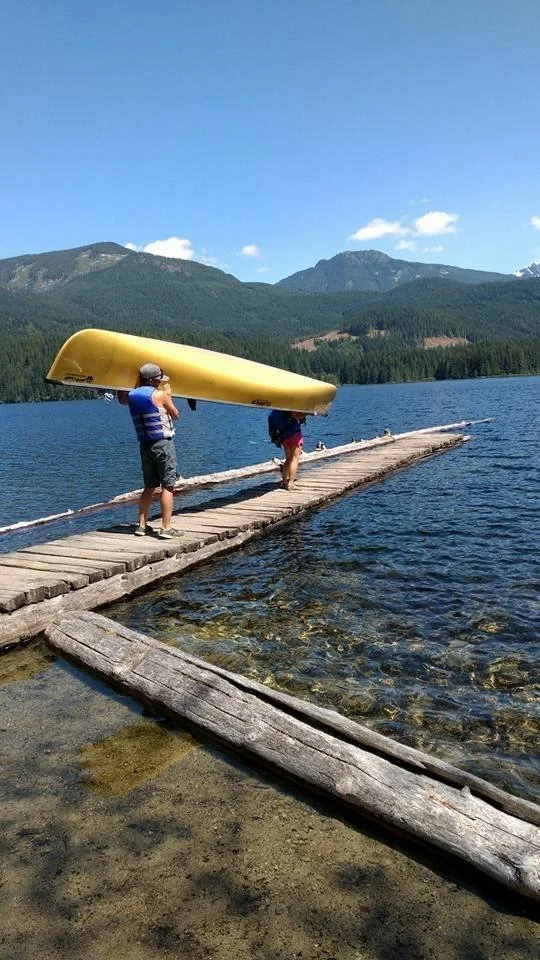
Docks and Boardwalks help paddlers easily launch and cross wetter sections while protecting the surrounding area.
What Level of Fitness Is Required?
A common question is what fitness is required to complete the route.
You don't need to be an elite athlete to enjoy the qathet Canoe Route. If you're comfortable walking several kilometres while carrying a backpack and can enjoy a leisurely day of paddling, you'll likely find the route very achievable. Most paddlers complete the route over five or six days, which allows plenty of time for breaks, swimming, fishing, photography, and simply enjoying the scenery.
If you travel light, use a comfortable yoke, and follow the two-trip portaging system we recommend, most reasonably active paddlers find the portages very achievable. By the end of the trip, many discover that the walks between the lakes become just as memorable as the paddling itself.
Final Thoughts
One of the things that makes the qathet Canoe Route so special is that the portages remain true wilderness trails. Apart from the first gravel section, they are narrow, well-worn footpaths that have very little impact on the surrounding forest.
Many visitors arrive expecting the portages to be the work between the lakes. By the end of the trip, they're often surprised to discover that the shaded forest trails, birdsong, towering trees, and quiet walks between hidden lakes became some of their favourite memories. Those peaceful walks become part of the rhythm of the journey, connecting one beautiful lake to the next while immersing you in the coastal forest between them. On the qathet Canoe Route, the portages aren't just how you travel—they're one of the reasons the journey is so memorable.
Continue Planning your qathet Canoe Route Adventure
Before you launch, explore our most helpful guides for planning a safe, comfortable, and unforgettable trip:
🧍 Complete qathet Canoe Route Guide for a route map, campsites, transportation, water, and trip planning advice.
🦟 Bugs on the qathet Canoe Route When mosquito season peaks, where bugs are worst, and how to avoid
🎒 How to Pack for the qathet Canoe Route | Expert Packing Guide + Free Checklist A complete packing list for a comfortable multi-day trip
🦅 The Best Gear for the qathet Canoe Route: Packing Tips Learn what gear actually makes the trip easier, from canoe barrels to footwear and rain gear
⛺ Camping on the qathet Canoe Route Campsites, bear caches, and tips for planning your overnight stops, cooking, and Leave No Trace tips
🚣 Can You Kayak the qathet Canoe Route? Learn why we recommend a canoe and why wheel carts don't work on the route.
🐕 Bringing Your Dog on the qathet Canoe Route Tips for paddling, camping, portaging, and keeping your canine companion safe and happy
🐟 Fishing the qathet Canoe Route Species, tackle recommendations, regulations, and the best times to fish
🧍 Do you need a Guide on the qathet Canoe Route? Learn why most paddlers successfully complete the route on their own
🏞️Comparing BC’s Most Iconic Canoe Routes Not sure if the qathet Canoe Route is the right adventure for you? Compare it with BC's other famous canoe routes
🛶Why the qathet Canoe Route Is Unlike Any Other Paddling Experience Discover what makes the qathet Canoe Route a truly unique wilderness adventure—and why so many paddlers return again and again
Originally written by Christie Mitchell based on decades of experience on the qathet Canoe Route.
Copyright Notice
All photographs, maps, illustrations, and written content are © Christie Mitchell. Unauthorized reproduction or redistribution is prohibited without written permission.