
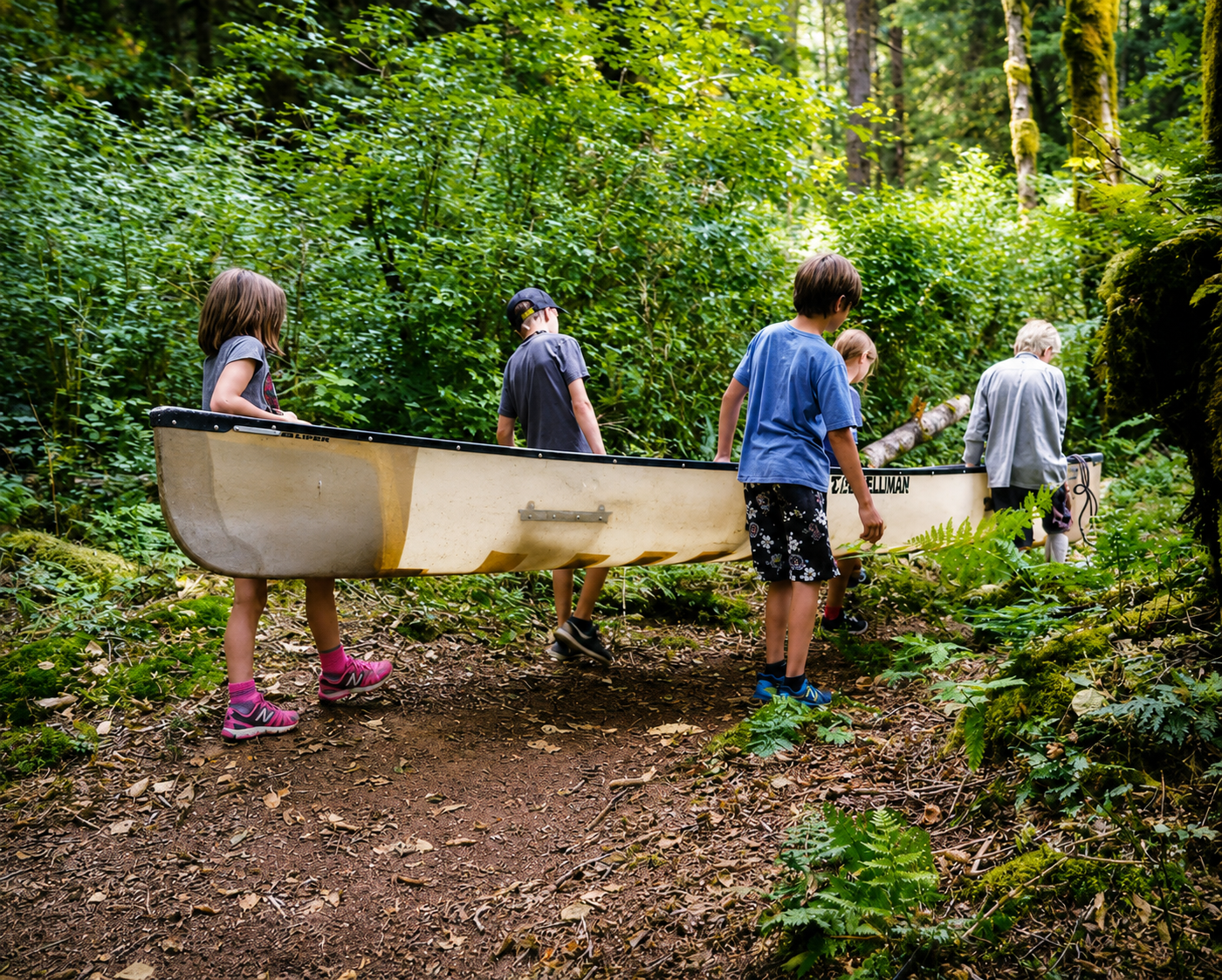
After helping thousands of paddlers complete the qathet Canoe Route, we've learned that a canoe provides the best overall experience. While it's certainly possible to paddle the route in a kayak, we don't recommend it. Kayakers can enjoy the same quiet lakes, campsites, and wilderness scenery, but the repeated portages make a kayak far more difficult and tiring to manage than a canoe.
The qathet Canoe Route is a carry-and-paddle adventure. While a kayak may seem appealing because it is familiar or efficient on open water, those advantages disappear once you reach the first portage.
The route includes numerous portages between lakes. These narrow wilderness trails have uneven ground, roots, tight treed corners, and occasional steep sections. They are designed for carrying boats—not rolling them.
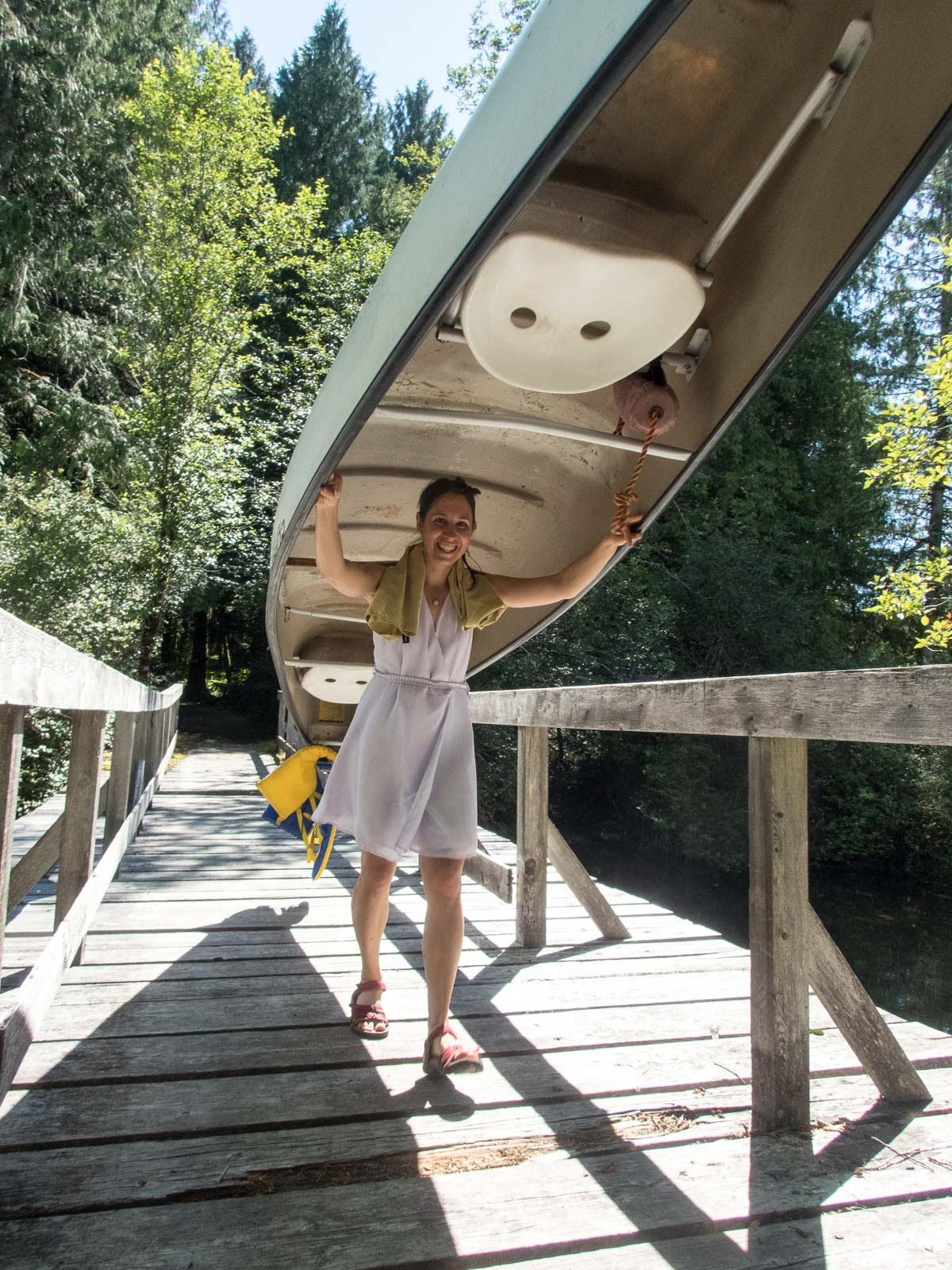
The qathet Canoe Route was designed for canoe travel. A canoe with a yoke makes every portage easier.
You Cannot Use Wheeled Carts on the qathet Canoe Route
Wheeled carts, kayak dollies, and portage trailers are not usable on the qathet Canoe Route. The trails are not cut wide enough, and many sections are too rough, steep, narrow, or obstructed for wheels to work safely.
These are true wilderness portages with frequent canoe rests. Their rustic character helps keep traffic lower and trail conditions better. Because the trails have not been widened and churned up by wheeled equipment, there is generally very little mud on the route.
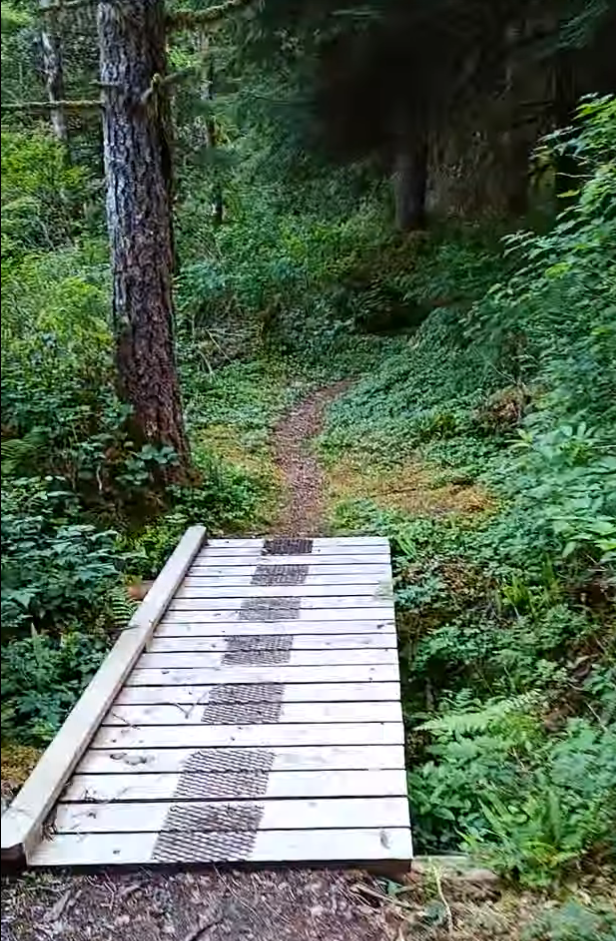
These narrow wilderness portages are one of the reasons wheel carts simply don't work on the qathet Canoe Route.
There are other B.C. paddling routes designed for wheeled carts. The qathet Canoe Route is not one of them. Wheeled equipment can damage the trail surface, create ruts, and make conditions worse for the people travelling after you.
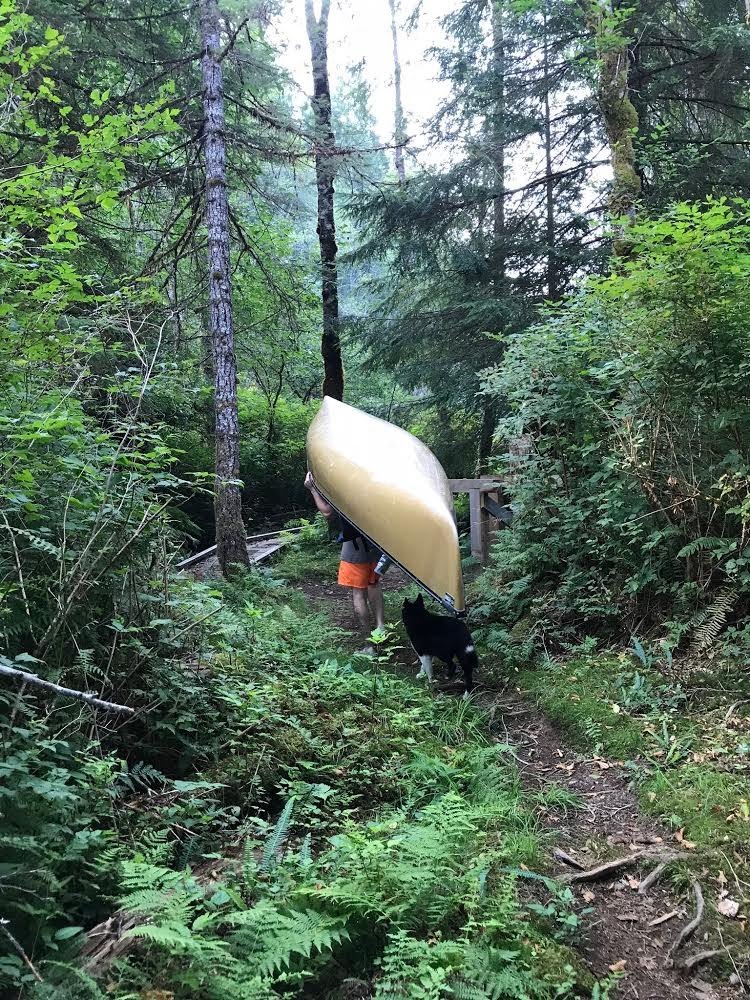
Imagine carrying a 17-foot kayak around tight corner. Now imagine a canoe balanced comfortably on a yoke. The difference becomes obvious.
Why Mitchell's Canoe & Kayak Recommends Canoes for the qathet Canoe Route
After almost four decades of helping visitors prepare for the qathet Canoe Route, our recommendation is always the same—a lightweight canoe with a comfortable yoke will give you the best overall experience. With a yoke, the canoe balances comfortably on your shoulders, leaving your hands free for balance along the trail. Time and again, visitors tell us they're glad they chose a canoe because it made the portages much more enjoyable than they expected.
A canoe is designed for this type of trip. One paddler can comfortably carry a tandem canoe using the yoke while their partner carries the lighter gear. At the frequent canoe rests, they simply switch roles.
A canoe also simplifies packing. Backpacks, food barrels, camping gear, fishing equipment, and even your dog can be loaded quickly without trying to fit everything through small hatch openings.
Our goal isn't simply to rent you a boat—we want you to finish the route saying, "That was an incredible trip." We've talked to paddlers convinced they wanted a kayak and leave saying they were grateful someone talked them into a canoe instead.

Frequent canoe rests allow paddlers to switch carriers and share the effort—one of the many advantages of travelling by canoe.
Why Kayaks Are Much More Difficult on the qathet Canoe Route
Kayaks simply aren't designed for repeated wilderness portages.
Unlike a canoe, they don't have a centre yoke that allows one person to comfortably balance the boat on their shoulders. Even with an aftermarket yoke or sling system, a kayak is still awkward to carry over long distances.
A loaded kayak should never be portaged. Besides being extremely heavy, it places unnecessary stress on the hull. Most paddlers end up having to:
Carry the kayak awkwardly at arm's length or on one shoulder.
Use two people to move the boat.
Unload multiple dry bags before every portage.
Repack gear into a backpack.
Make additional trips between lakes.
Carefully avoid damaging the hull or rudder.
If you're travelling with another kayaker, you'll repeat this process for two separate boats at every portage.
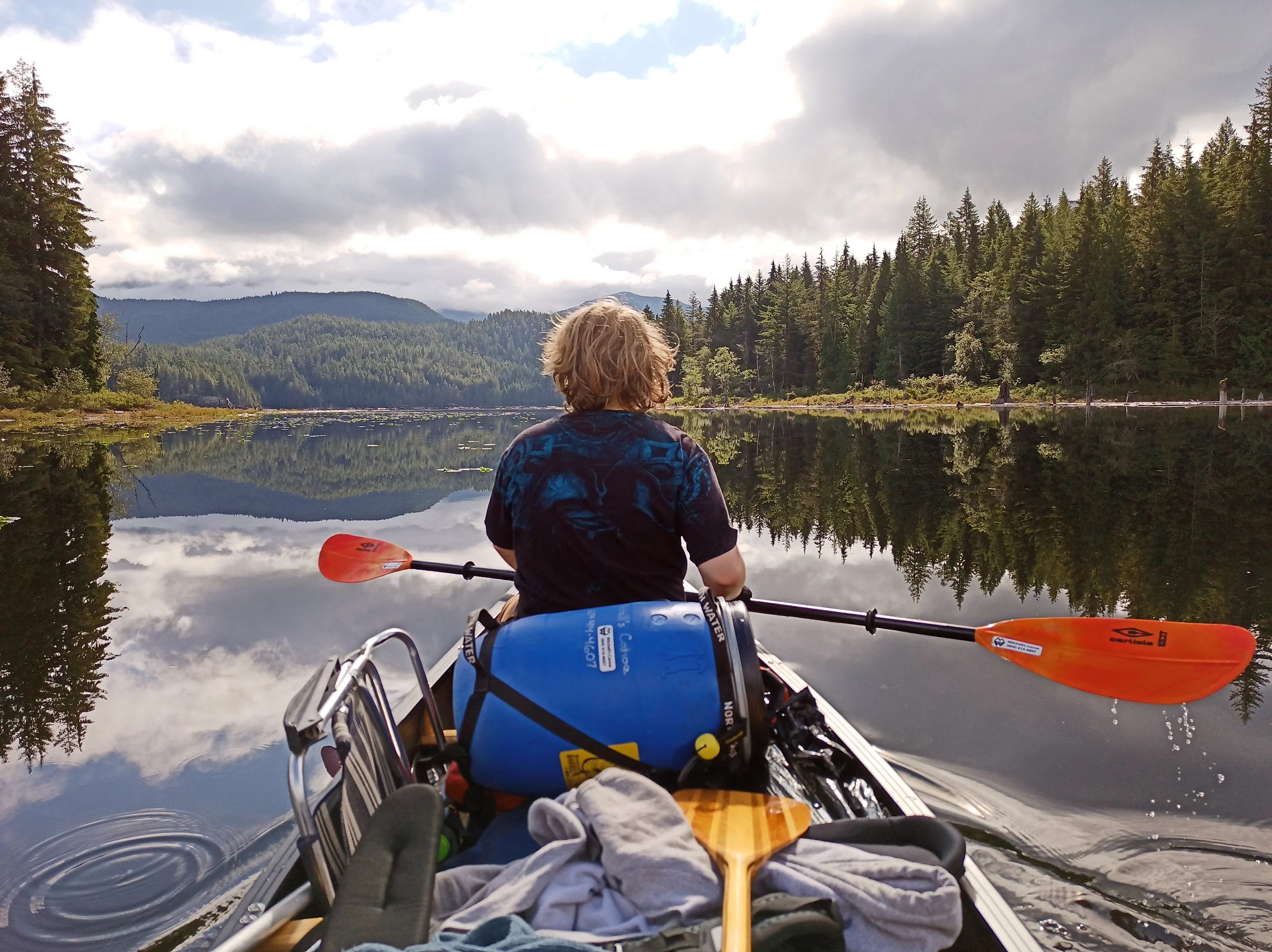
A canoe isn't just better on the portages—it's easier to pack, easier to unload, and carries everything you need for a multi-day adventure.
Packing a Kayak Takes Longer
Because kayak hatches are relatively small, gear has to be divided into several dry bags.
That means unpacking, carrying multiple bags, then repacking at every lake.
With a canoe, most of your equipment fits into a backpack and a food barrel. Once the canoe is across, both paddlers simply walk back for the packs.
It's a much simpler system that lets you spend more time paddling and less time reorganizing gear.
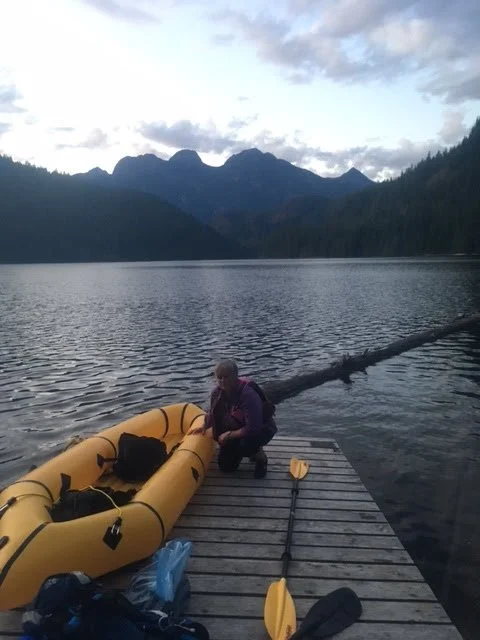
The right boat doesn't just make paddling easier—it makes every portage easier too.
What About Packrafts or Inflatable Kayaks?
A lightweight inflatable craft may seem like an easier alternative, but it still comes with trade-offs. You will likely need to deflate and repack it in its backpack at every portage start, as well as carry the pump and repair kit over every portage, then unpack and inflate at every portage end.
Inflatable boats can also be less efficient in wind and more vulnerable to damage around rocky shorelines and rough landings. They may work for experienced, minimalist travellers who understand the route and are prepared for extra logistical challenges and time needed, but they are not the ideal choice for most paddlers.
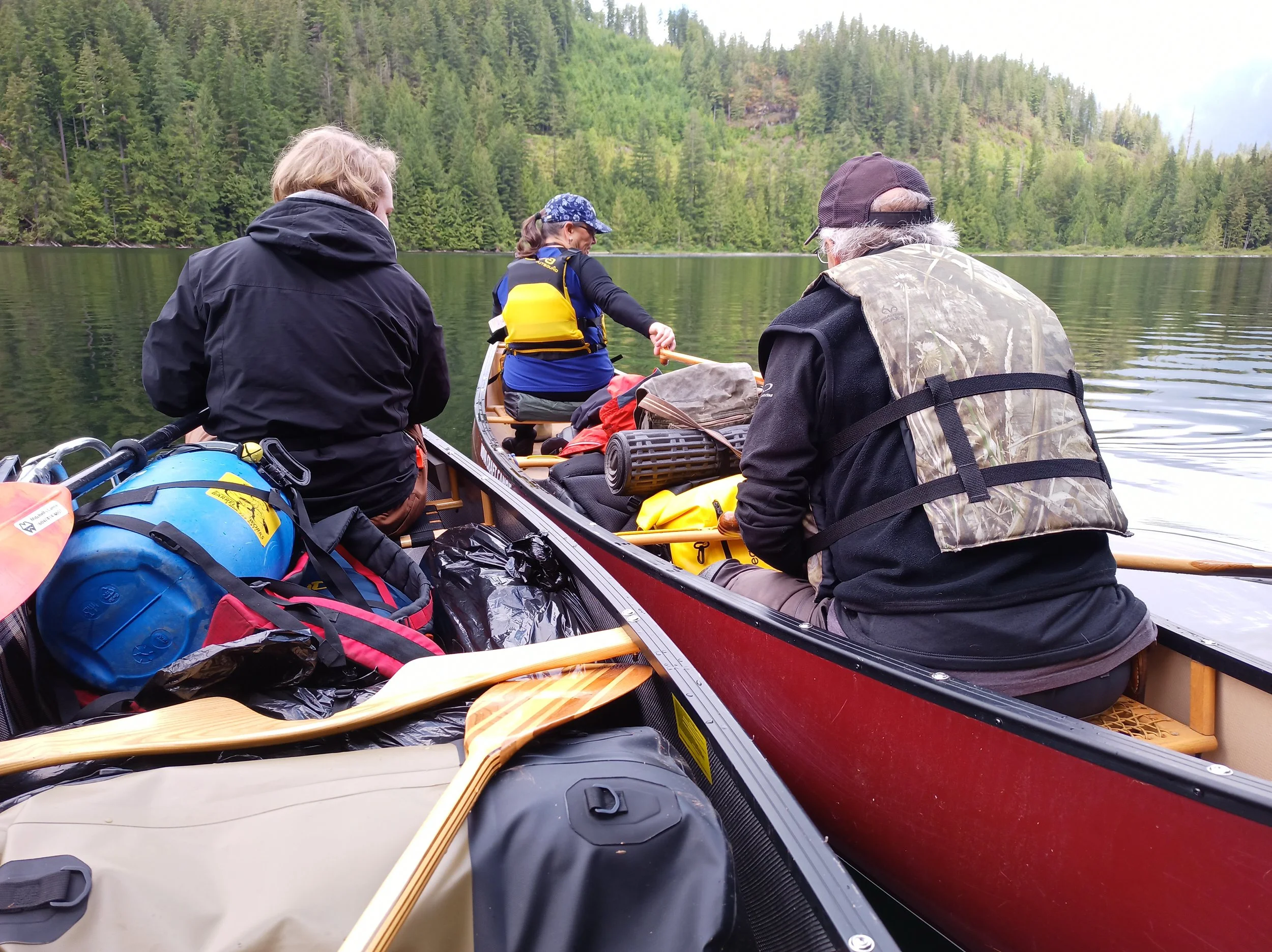
Backpacks, food barrel, fishing gear, dog... a canoe swallows it all with ease.
Final Thoughts
The qathet Canoe Route is a wilderness paddling route that requires carrying your boat and gear between lakes. Bring a canoe, pack thoughtfully, expect to portage, and treat the trails with care. You will spend less time struggling with equipment and more time enjoying the lakes, forest, campsites, and quiet that make this route so special. Choose equipment designed for the journey. That's why we recommend a canoe.
Continue Planning your qathet Canoe Route Adventure
Before you launch, explore our most helpful guides for planning a safe, comfortable, and unforgettable trip:
🧍 Complete qathet Canoe Route Guide for a route map, campsites, transportation, water, and trip planning advice.
🦟 Bugs on the qathet Canoe Route When mosquito season peaks, where bugs are worst, and how to avoid
🎒 How to Pack for the qathet Canoe Route | Expert Packing Guide + Free Checklist A complete packing list for a comfortable multi-day trip
🦅 The Best Gear for the qathet Canoe Route: Packing Tips Learn what gear actually makes the trip easier, from canoe barrels to footwear and rain gear
🥾 Portaging the qathet Canoe Route Learn the easiest way to carry your canoe and gear through every portage
⛺ Camping on the qathet Canoe Route Campsites, bear caches, and tips for planning your overnight stops, cooking, and Leave No Trace tips
🐕 Bringing Your Dog on the qathet Canoe Route Tips for paddling, camping, portaging, and keeping your canine companion safe and happy
🐟 Fishing the qathet Canoe Route Species, tackle recommendations, regulations, and the best times to fish
🧍 Do you need a Guide on the qathet Canoe Route? Learn why most paddlers successfully complete the route on their own
🏞️Comparing BC’s Most Iconic Canoe Routes Not sure if the qathet Canoe Route is the right adventure for you? Compare it with BC's other famous canoe routes
🛶Why the qathet Canoe Route Is Unlike Any Other Paddling Experience Discover what makes the qathet Canoe Route a truly unique wilderness adventure—and why so many paddlers return again and again
Originally written by Christie Mitchell based on decades of experience on the qathet Canoe Route.
Copyright Notice
All photographs, maps, illustrations, and written content are © Christie Mitchell. Unauthorized reproduction or redistribution is prohibited without written permission.