
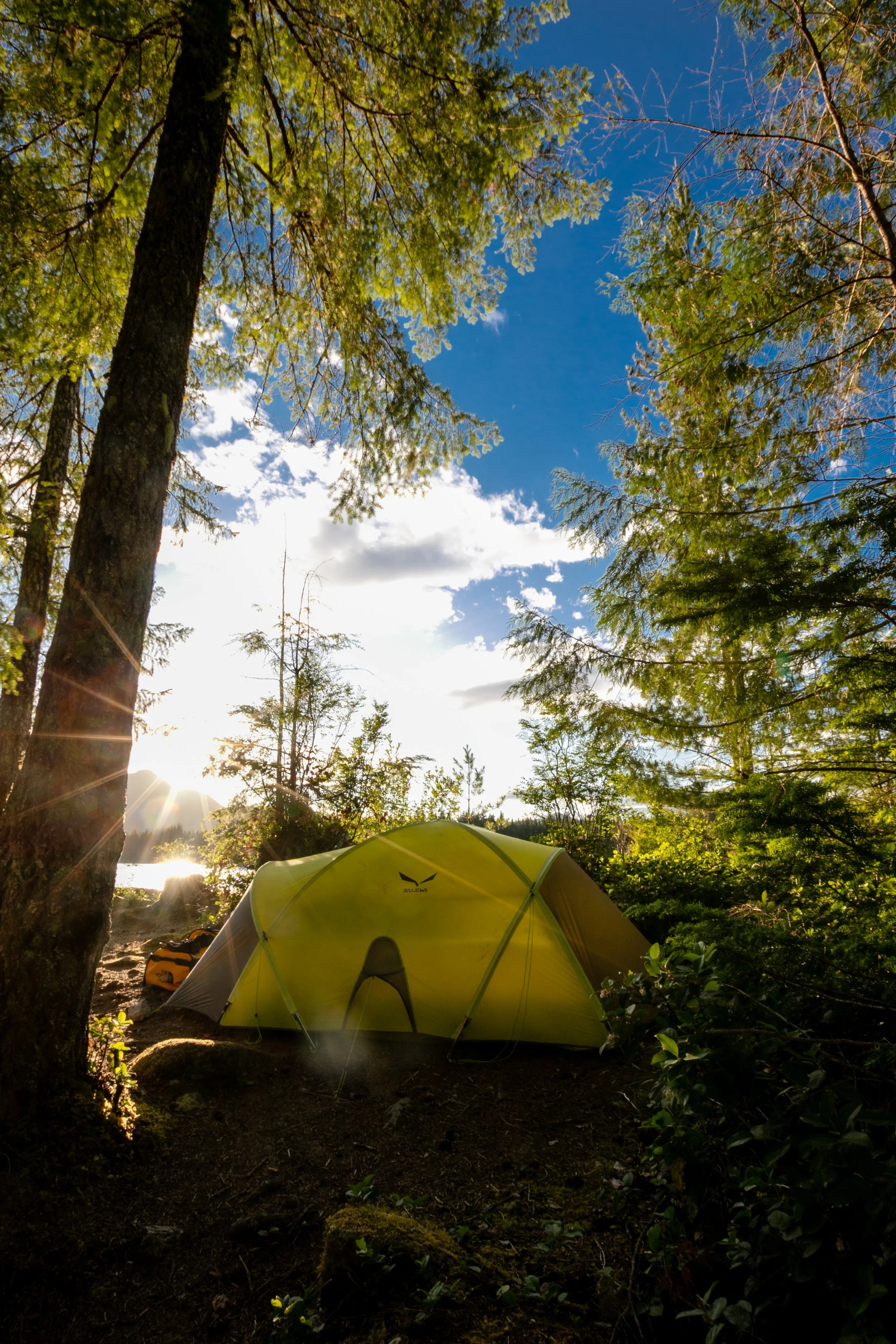
After helping paddlers prepare for the route for almost four decades, we've learned that the best gear isn't necessarily the lightest or the most expensive.
It's the gear that makes the repeated portages easier, keeps you organized, and lets you spend more time enjoying the lakes instead of wrestling with your equipment.
Unlike many canoe trips, the qathet Canoe Route combines 52 kilometres of paddling with 8 kilometres of wilderness trail. Every piece of gear you'll carry should make both paddling and portaging easier. Pack well, and the route feels smooth and enjoyable. Pack poorly, and even short carries can become exhausting.
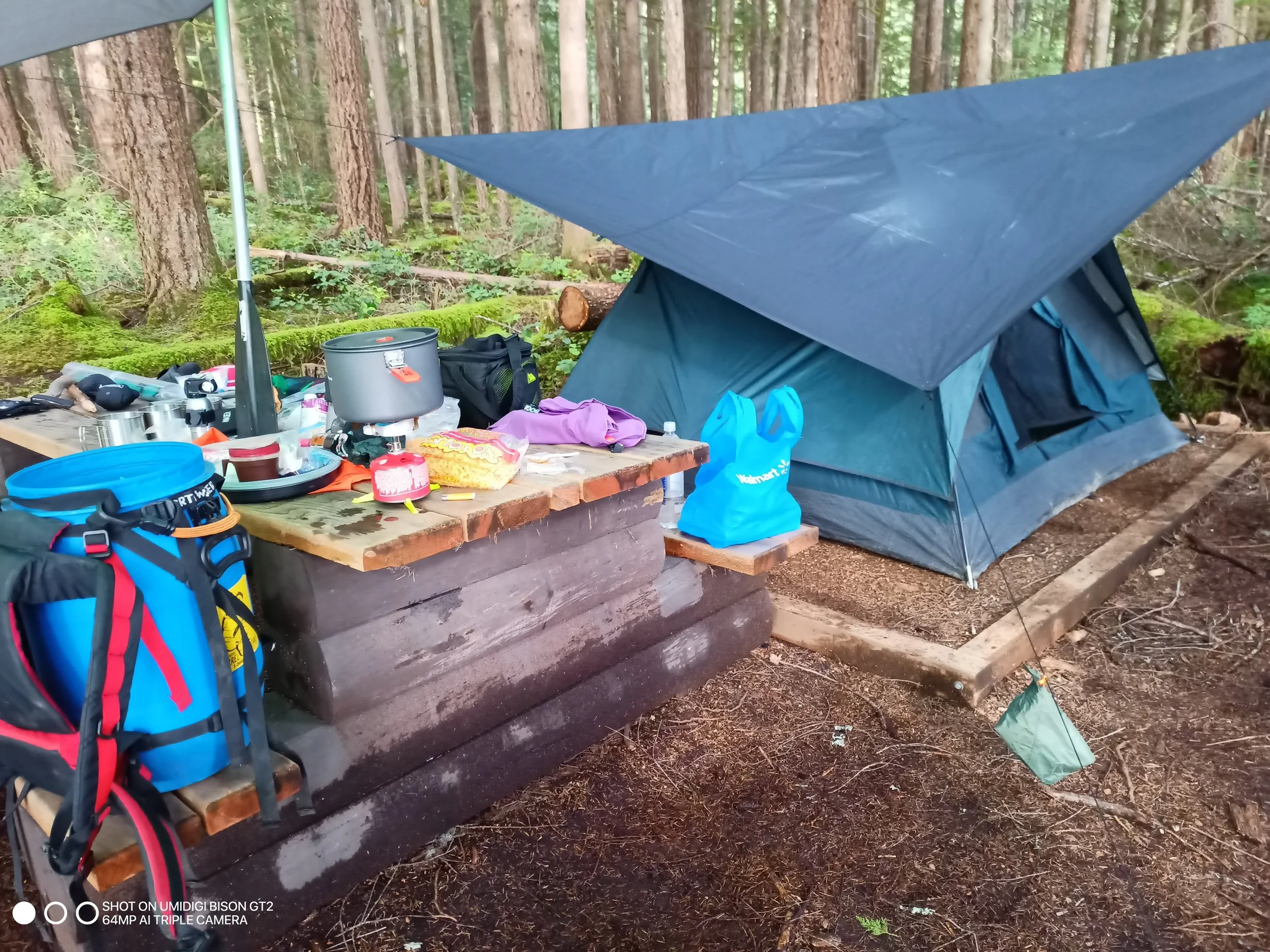
When your gear works with you instead of against you, it's easier to focus on what makes the qathet Canoe Route unforgettable.
How Should I Pack for the qathet Canoe Route?
The biggest packing mistake we see is that people pack for life in the canoe instead of life between the lakes.
Remember, everything you bring must be carried across five wilderness portages.
Our recommendation is simple:
One backpack or canoe barrel per person
One small waist pack for daily essentials like water, sunscreen, snacks, camera, and a small first aid kit
Keeping your hands free makes every portage easier, safer, and much more enjoyable.
Think lightweight. Think compact.
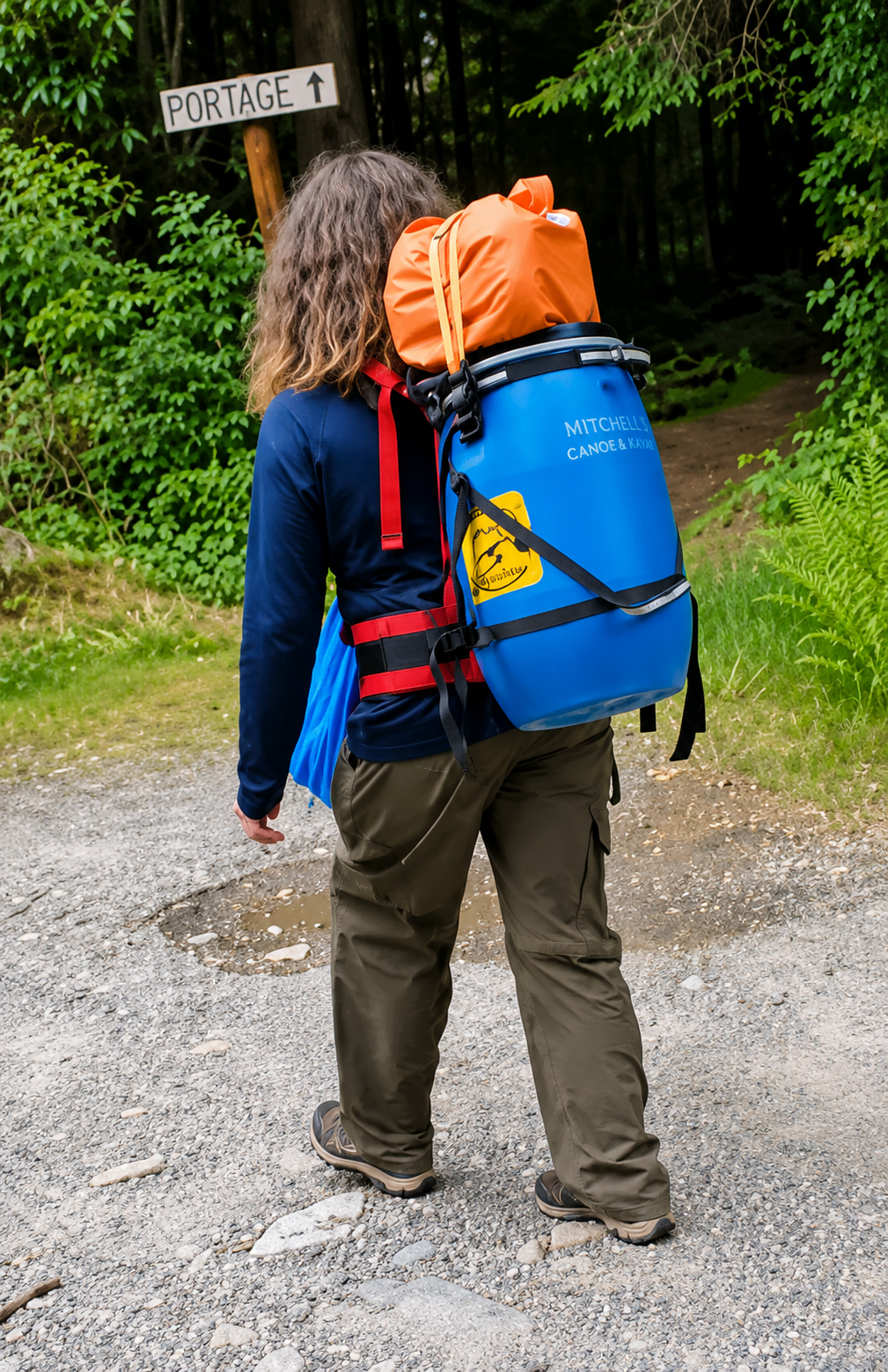
A comfortable barrel harness transfers weight to your hips, making long portages noticeably easier.
Do I Need a Canoe Barrel if Every Campsite Has a Bear Cache?
In our opinion—yes.
Bear caches are a fantastic addition to the route, but they're shared by everyone using the campsite. There isn't always room if another group stores large backpacks instead of just food.
A canoe barrel solves several problems. It keeps all of your food and scented items together in one waterproof, animal-resistant container throughout the day—not just at camp. While you're carrying the canoe or returning for your backpack, your food remains protected if it's temporarily left at one end of the trail.
Barrels also make lunch stops easier. Instead of opening a backpack, exposing other gear to rain, and digging around for what you need, you simply remove the lid and grab your lunch.
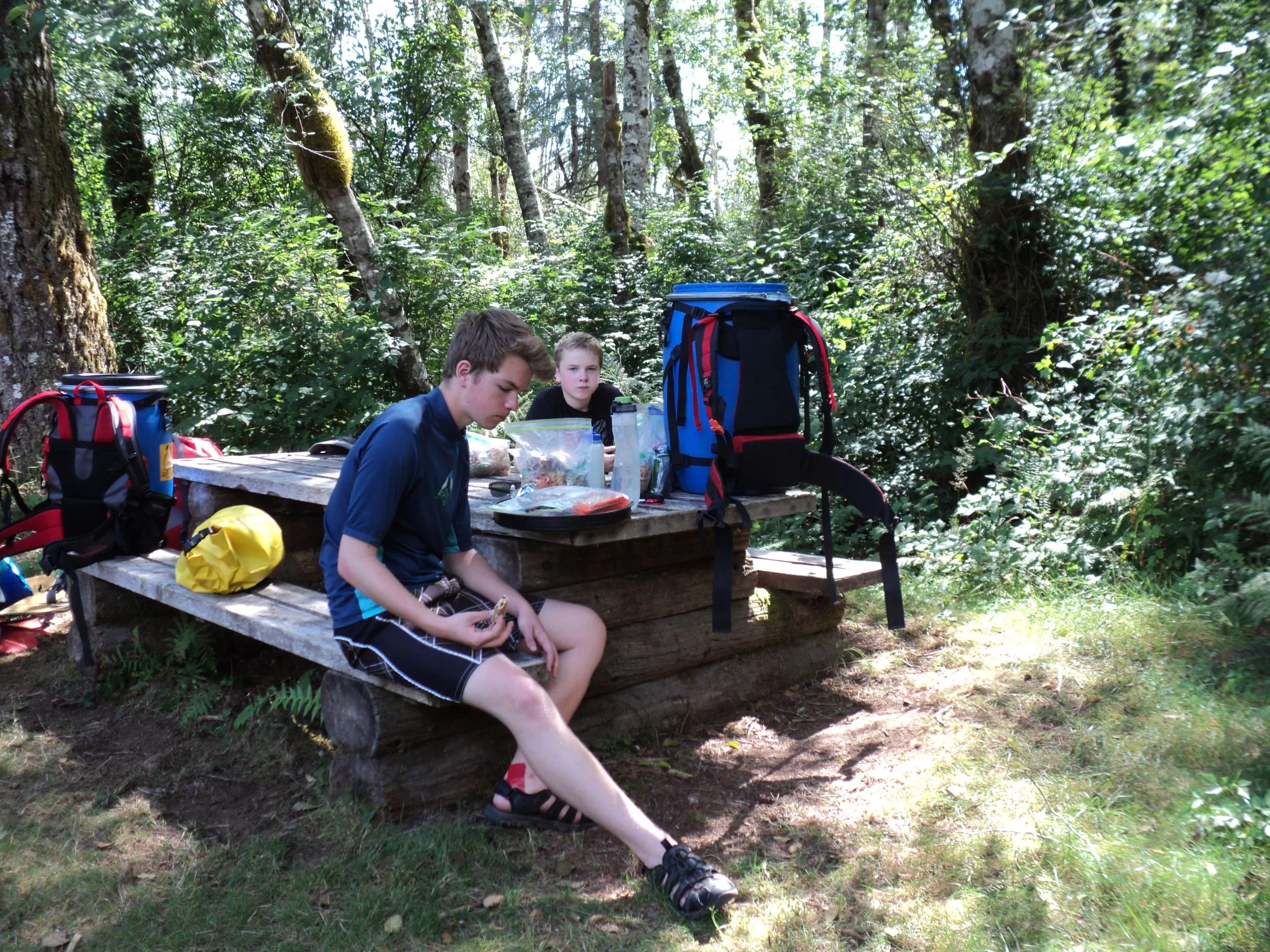
One of the biggest advantages of a canoe barrel? Lunch is always easy to find—even in the rain.
Which Size Barrel Should I Choose?
A 30-litre barrel comfortably holds food and scented items for two paddlers. Pair it with a 30–40 litre dry bag backpack carried on your front while the barrel rides on your back. The balanced weight distribution is surprisingly comfortable.
A 60-litre barrel gives you much more flexibility. It can carry additional camping gear or serve as the shared food barrel for two canoes travelling together, allowing everyone else to carry only backpacks.
At Mitchell's Canoe & Kayak, we rent our barrels with the North Water Quick Haul Harness System. The padded hip belt transfers much of the weight to your hips while keeping the barrel comfortably away from your spine. Most paddlers appreciate the difference after the first long trail.
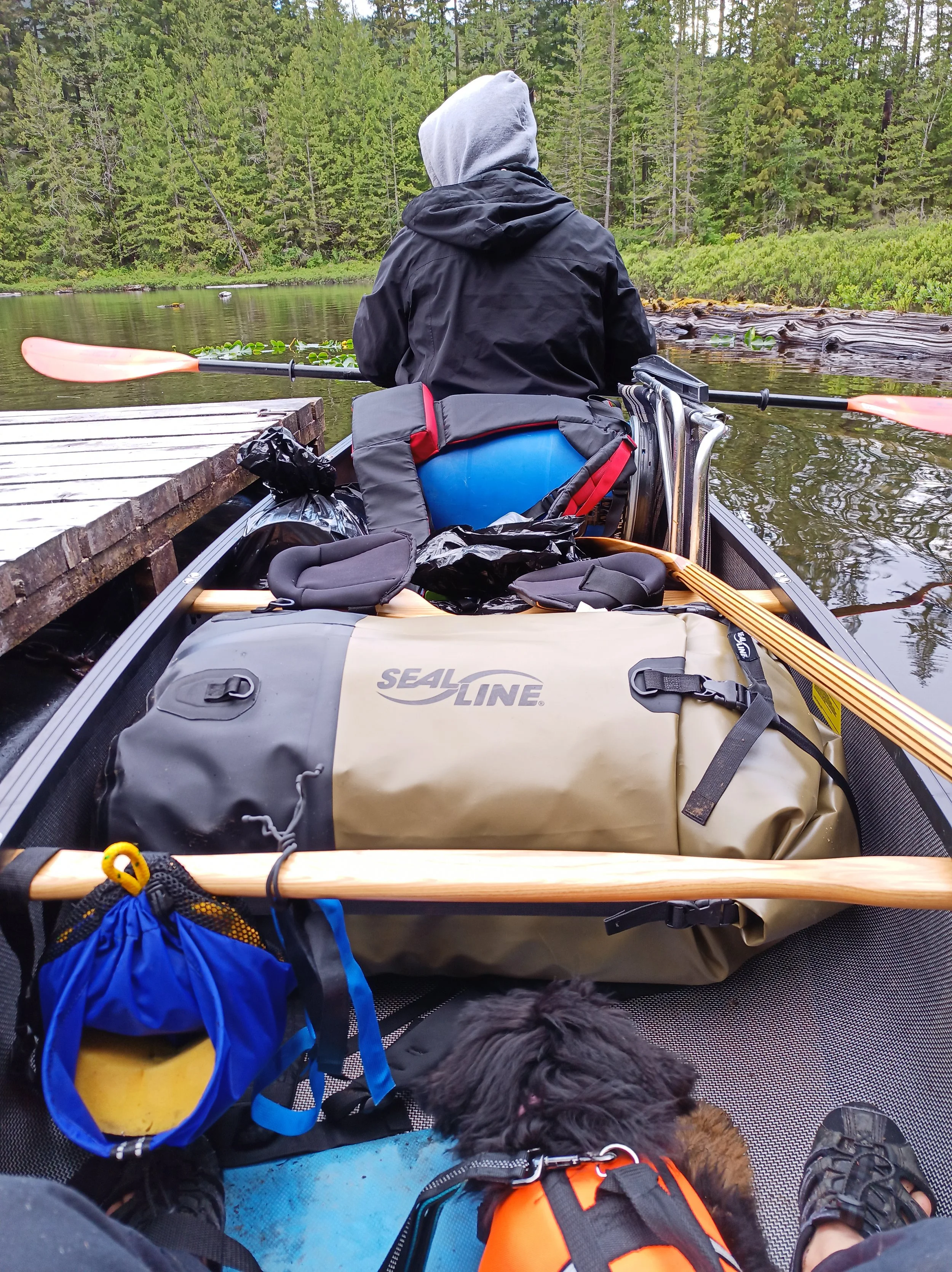
Waterproof dry bag backpacks simplify packing and help keep essential gear dry, even on rainy coastal days.
What Backpack Works Best for the qathet Canoe Route?
Whenever possible, we recommend waterproof dry bag backpacks.
Unlike traditional fabric backpacks, they don't need rain covers or garbage bags to keep your gear dry.
They also simplify packing because everything stays protected—even when sitting in the bottom of a wet canoe or during an unexpected rain shower.
If you already own a fabric hiking backpack, it will work just fine.
We recommend:
a genuinely waterproof rain cover
lining the inside with contractor garbage bags
bringing a second rain cover to protect the shoulder straps while paddling
Those straps can spend hours sitting in water on the canoe floor.
And bring extra garbage bags.
The "hole monster" always seems to find one.
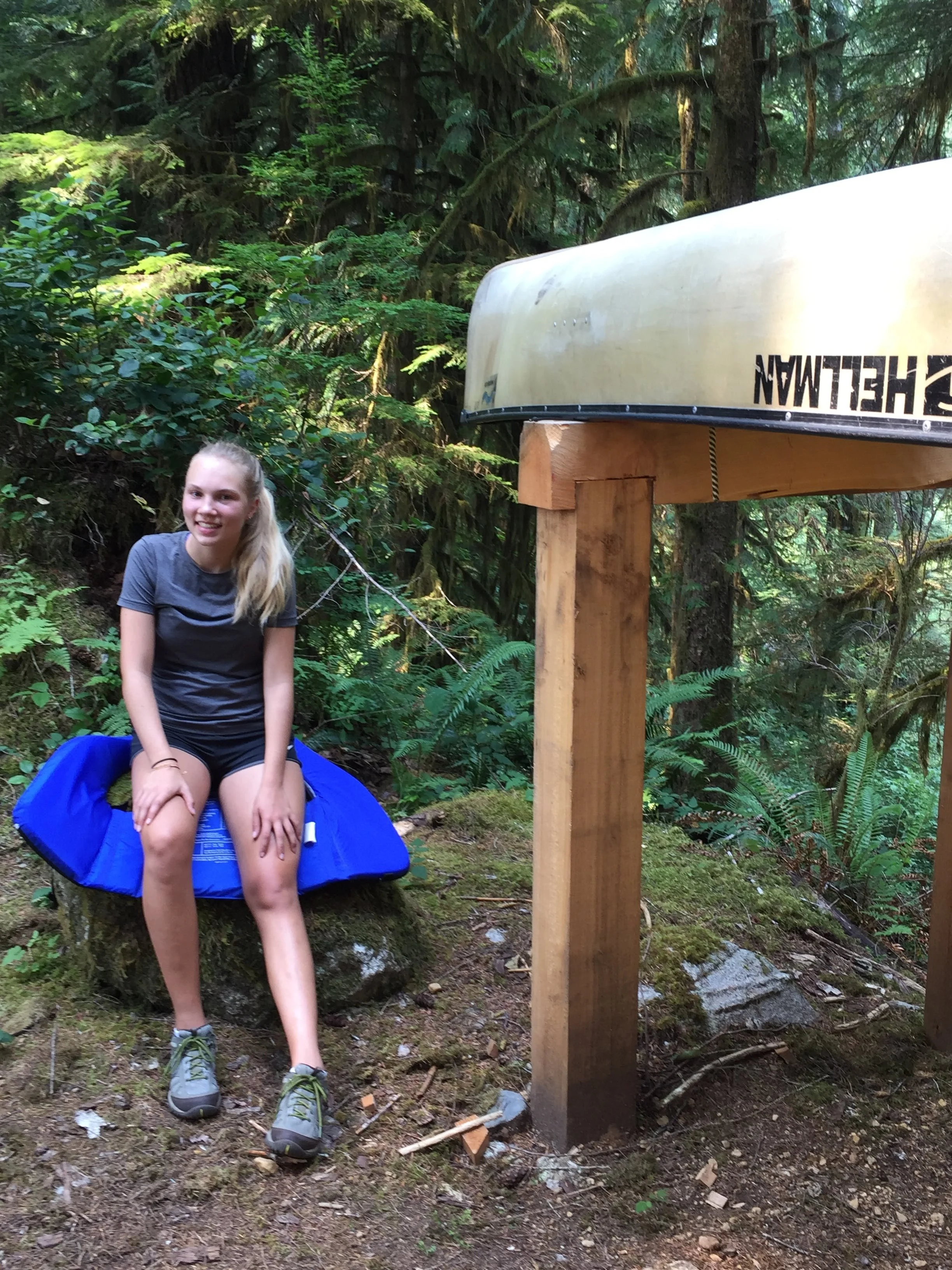
Most paddlers are surprised to discover that lightweight trail runners outperform heavy hiking boots on the qathet Canoe Route.
What Footwear Works Best?
Many first-time paddlers assume they need heavy hiking boots.
Most don't.
A quality trail runner or lightweight hiking shoe provides excellent grip while remaining comfortable in the canoe and during carries.
You'll appreciate the lighter footwear after several days of climbing in and out of the canoe.
We also recommend carrying a small blister kit—or supplies to thread a blister. Hopefully you'll never need it, but you'll be glad it's there if you do.
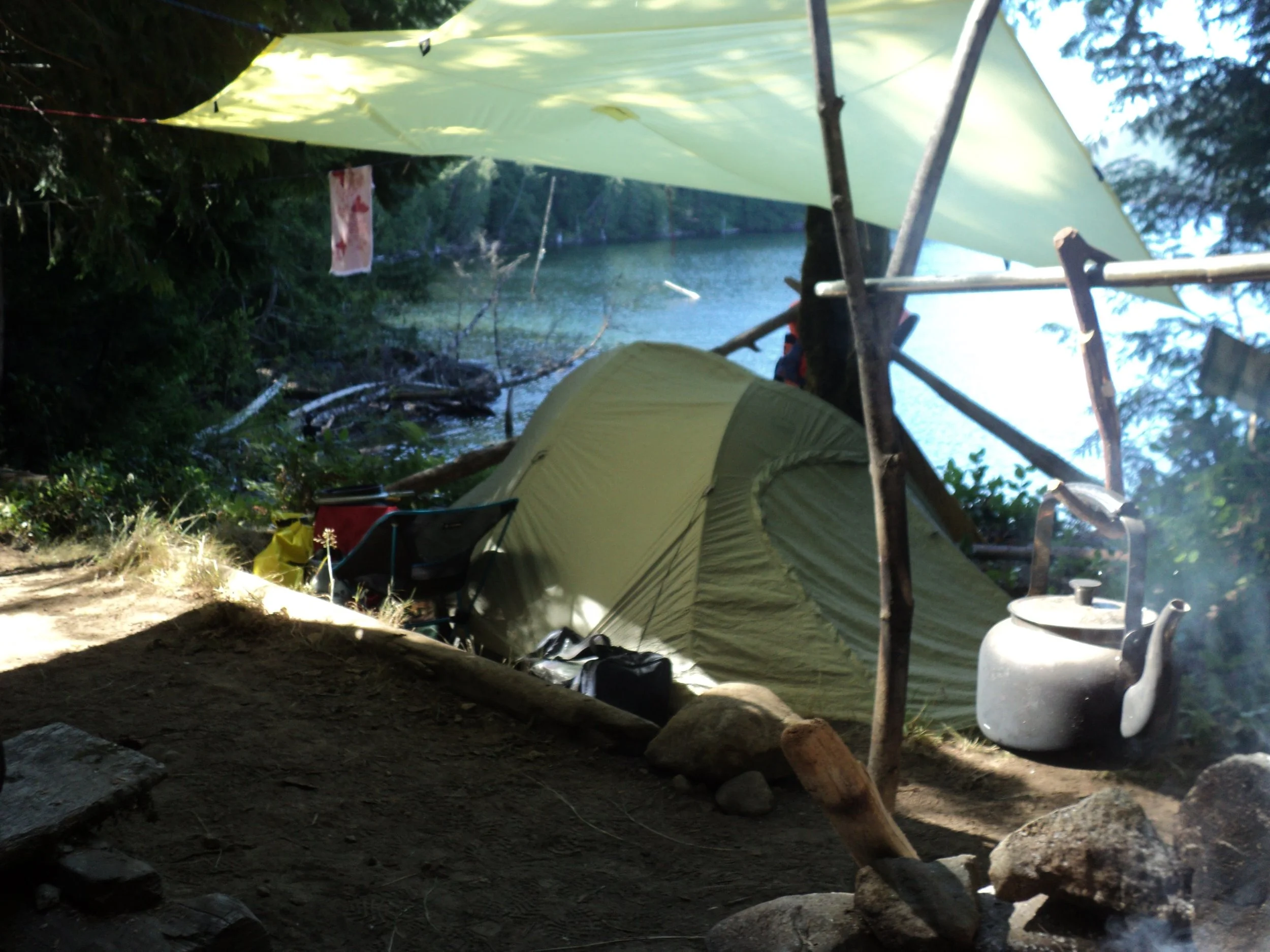
A well-pitched tarp often becomes everyone's favourite place to gather when the coastal weather rolls in.
How Do I Stay Dry on the qathet Canoe Route?
Even during the driest months, coastal British Columbia can surprise you with rain.
Quality rain gear can make the difference between an uncomfortable day and an enjoyable one.
If your tent doesn't have a waterproof bathtub floor, place a plastic painter's drop sheet inside the tent beneath your sleeping gear to help prevent groundwater from soaking through.
We also recommend bringing two tarps:
one for over your tent
one for over your cooking area
Bring plenty of rope so you can properly tension a ridgeline and secure each corner.
A well-pitched tarp often becomes everyone's favourite gathering place when the weather changes.
What Gear Should I Leave at Home?
Some gear simply creates more work than it's worth.
We recommend leaving behind:
Coolers
Wheeled portage carts
Oversized camp chairs
Multiple loose bags that must be carried by hand
If an item can't be comfortably carried on your back, it's probably worth reconsidering.
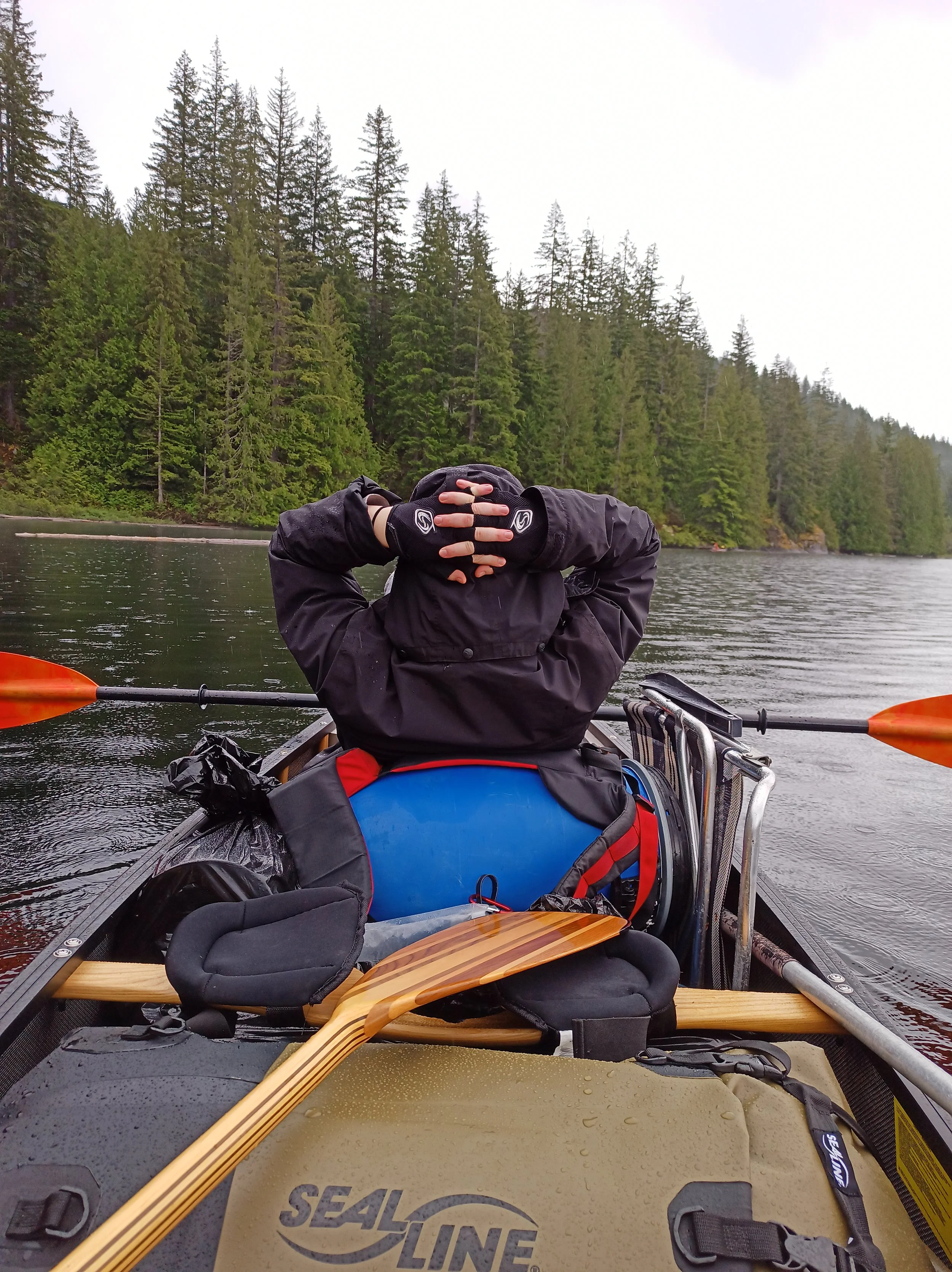
Using the Backpack Barrel as a back rest 👍👍
What Should I Rent Instead of Buy?
If you're planning to paddle the qathet Canoe Route once—or even just every few years—it usually makes more sense to rent some of the specialized equipment rather than buy it.
Items like canoe barrels, barrel harnesses, yoke pads, and extra-long kayak paddles can be expensive to purchase, and many paddlers won't use them often enough to justify the cost.
Renting gives you access to quality equipment that's designed for this type of trip without having to invest hundreds of dollars in gear that may spend the rest of the year in your garage.
We generally recommend owning the items you'll use on many outdoor adventures, such as:
Quality rain gear with arm pit and side zips
Supportive trail runners or lightweight hiking shoes
Quick-dry Clothing
Specialized canoe-tripping equipment, on the other hand, is often more economical to rent.
If you decide renting makes sense, Mitchell's Canoe offers many of the items that make the biggest difference on the route, including:
Canoe barrels with comfortable backpack harness systems
Waterproof dry bag backpacks
Yoke pads
Extra-long kayak paddles
Bear spray
That way, you can travel with equipment that's well suited to the qathet Canoe Route without having to purchase gear you may only use once.
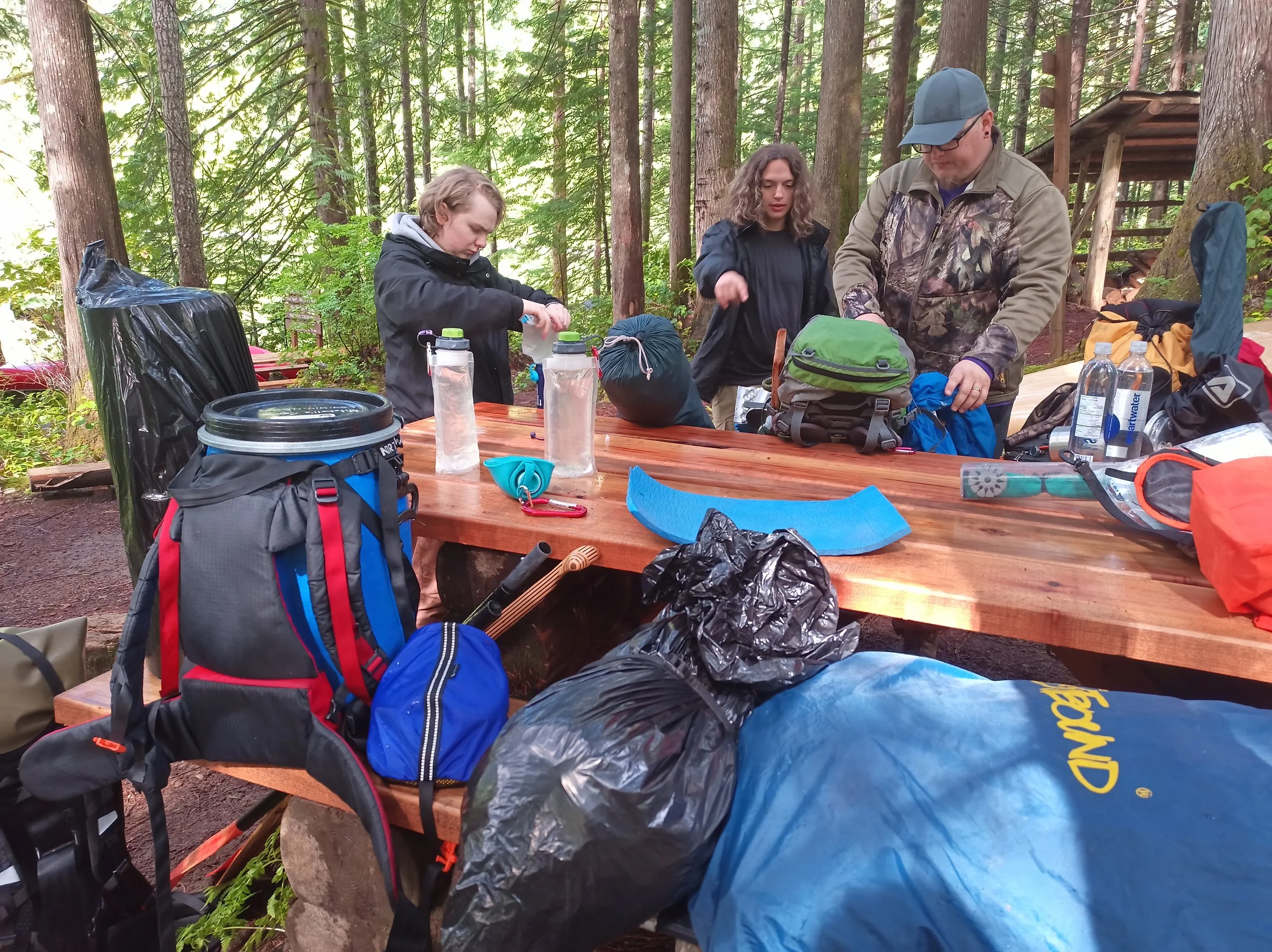
The right gear makes every portage easier—and lets you spend more time enjoying the experience.
Final Thoughts
After almost four decades of helping visitors prepare for this adventure, we've learned that the best gear isn't always the lightest or the most expensive—it's the gear you barely notice because it simply works. When you're comfortable, organized, and travelling efficiently, your attention shifts from your equipment to the experience itself: quiet mornings on misty lakes, birdsong echoing through old-growth forest, and the satisfaction of carrying your canoe from one beautiful lake to the next. That's what makes the qathet Canoe Route so special, and thoughtful packing helps you enjoy every moment of it.
Continue Planning your qathet Canoe Route Adventure
Before you launch, explore our most helpful guides for planning a safe, comfortable, and unforgettable trip:
🧍 Complete qathet Canoe Route Guide for a route map, campsites, transportation, water, and trip planning advice.
🦟 Bugs on the qathet Canoe Route When mosquito season peaks, where bugs are worst, and how to avoid
🎒 How to Pack for the qathet Canoe Route | Expert Packing Guide + Free Checklist A complete packing list for a comfortable multi-day trip
🥾 Portaging the qathet Canoe Route Learn the easiest way to carry your canoe and gear through every portage
⛺ Camping on the qathet Canoe Route Campsites, bear caches, and tips for planning your overnight stops, cooking, and Leave No Trace tips
🚣 Can You Kayak the qathet Canoe Route? Learn why we recommend a canoe and why wheel carts don't work on the route
🐕 Bringing Your Dog on the qathet Canoe Route Tips for paddling, camping, portaging, and keeping your canine companion safe and happy
🐟 Fishing the qathet Canoe Route Species, tackle recommendations, regulations, and the best times to fish
🧍 Do you need a Guide on the qathet Canoe Route? Learn why most paddlers successfully complete the route on their own
🏞️Comparing BC’s Most Iconic Canoe Routes Not sure if the qathet Canoe Route is the right adventure for you? Compare it with BC's other famous canoe routes
🛶Why the qathet Canoe Route Is Unlike Any Other Paddling Experience Discover what makes the qathet Canoe Route a truly unique wilderness adventure—and why so many paddlers return again and again
Originally written by Christie Mitchell based on decades of experience on the qathet Canoe Route.
Copyright Notice
All photographs, maps, illustrations, and written content are © Christie Mitchell. Unauthorized reproduction or redistribution is prohibited without written permission.