
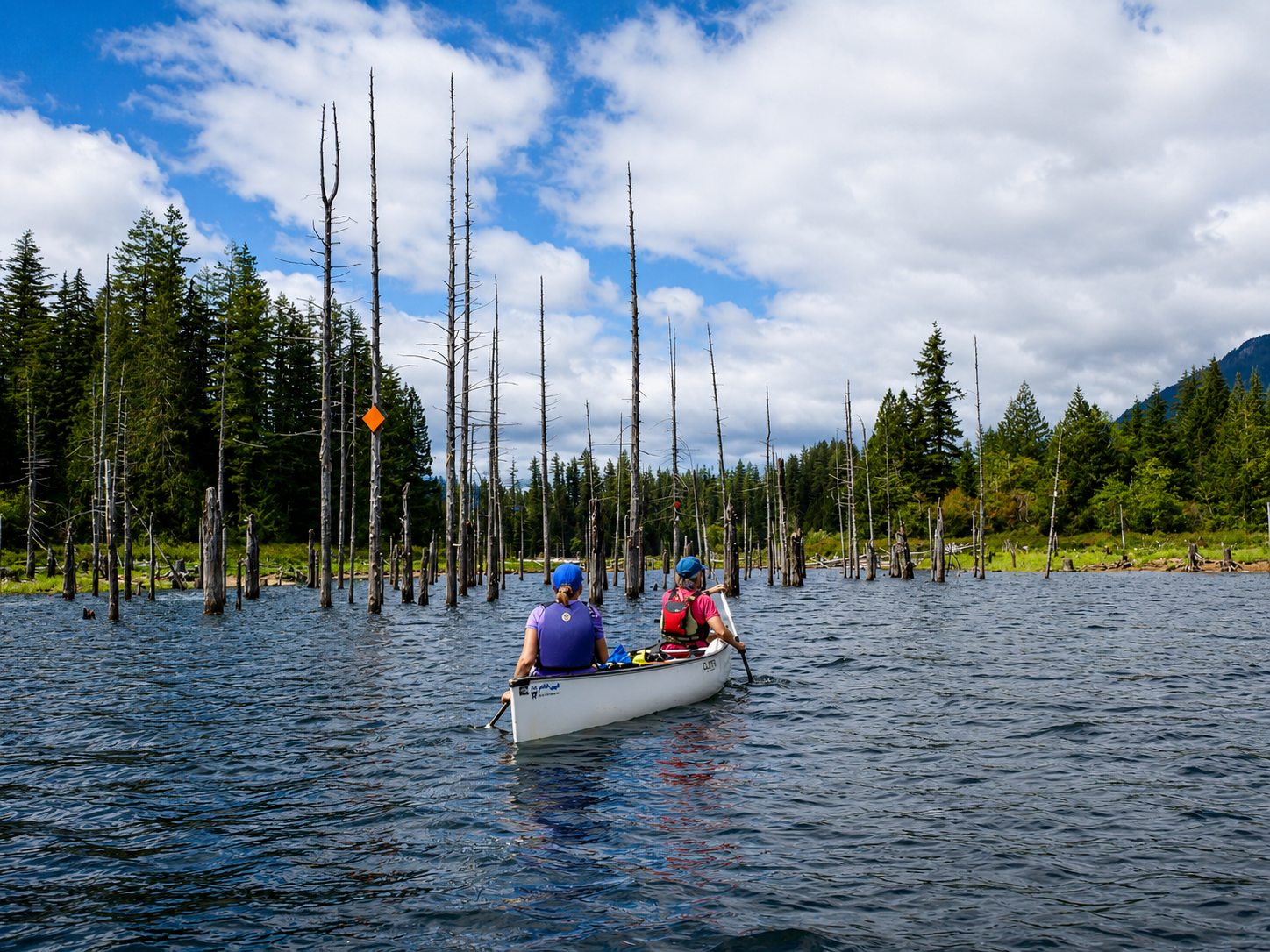
The qathet Canoe Route is one of British Columbia's most accessible and rewarding multi-day paddling adventures. Stretching through a network of interconnected lakes and forested portages on the Sunshine Coast, the route offers an authentic wilderness experience without many of the logistical challenges found on more remote canoe circuits.
One question we sometimes hear from first-time visitors is: Do I need to hire a guide for the qathet Canoe Route?
For most paddlers, the answer is no.
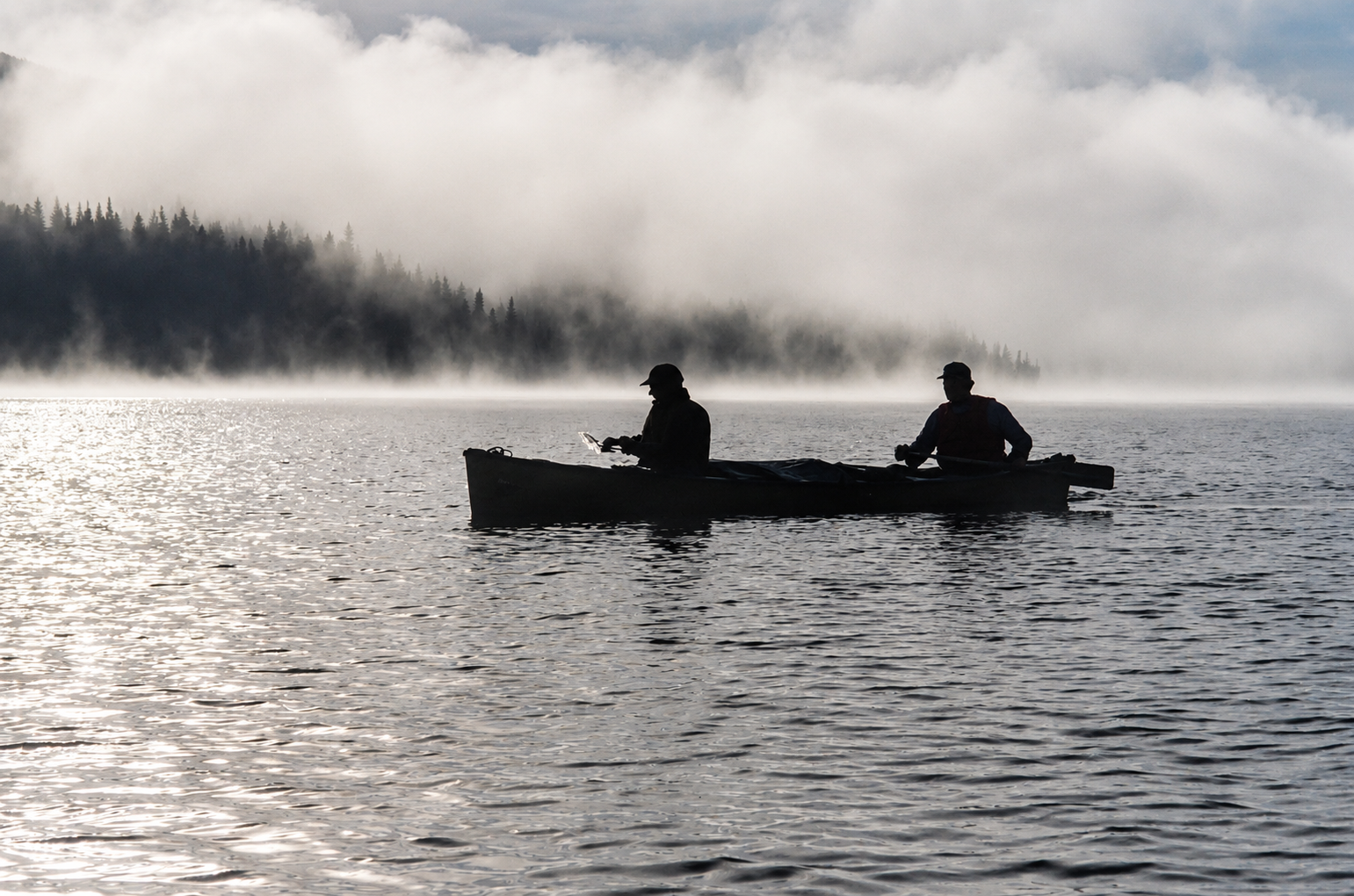
Early mornings are serene - the best adventures don’t always require a guide.
A Route Designed for Independent Travel
Unlike some wilderness canoe expeditions that require advanced navigation skills, satellite communication, or extensive route planning, the qathet Canoe Route was designed to be accessible to self-guided paddlers.
The route follows a well-established system of lakes connected by marked portages. Maps are readily available, campsites are designated, and the route has been paddled by thousands of independent visitors over the years.
With basic trip preparation, most canoeists can confidently navigate the route without the assistance of a guide.
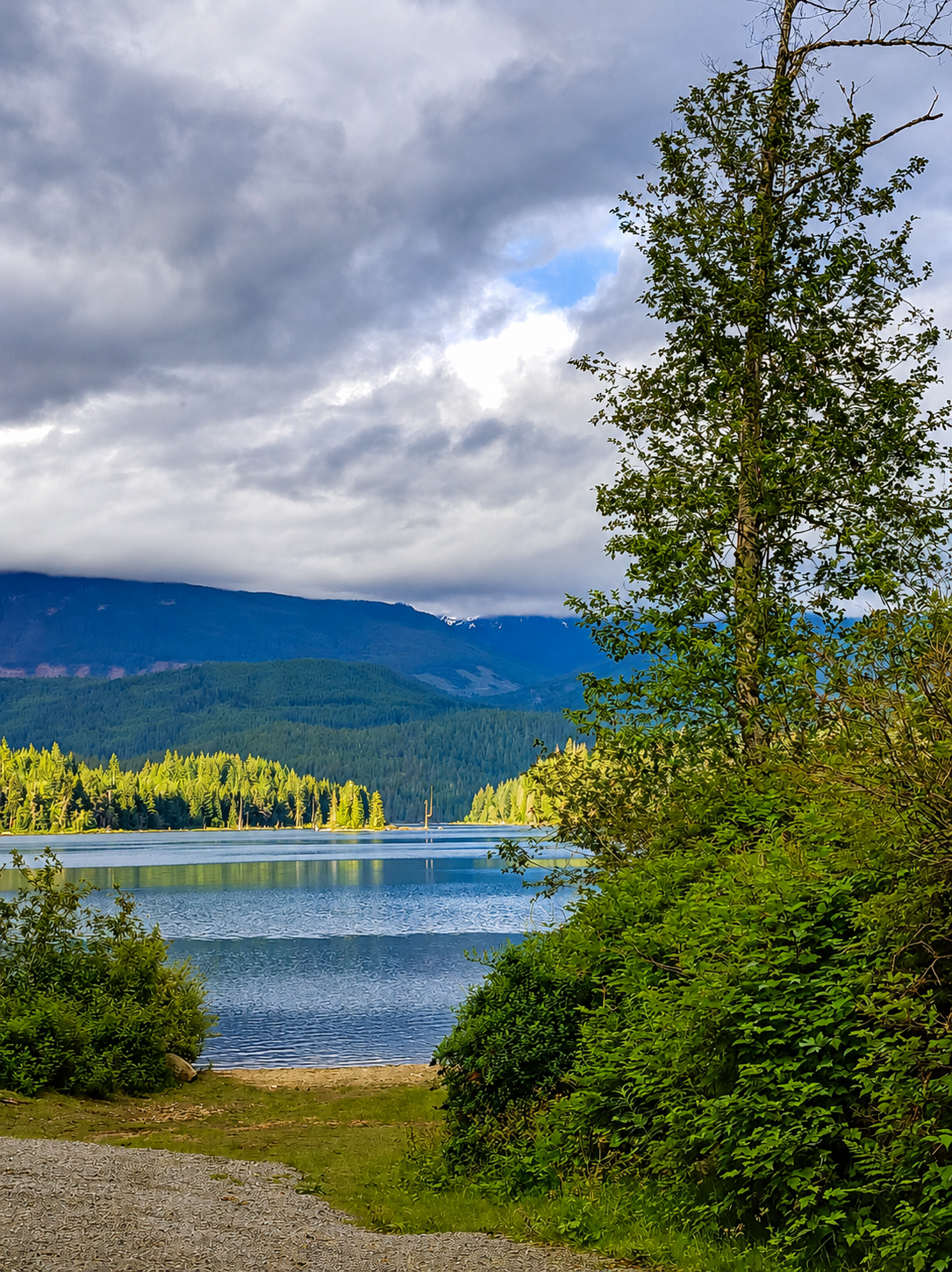
The valley geography naturally guides paddlers from lake to lake.
The Valley Geography Makes Navigation Straightforward
One reason the qathet Canoe Route is well suited to self-guided paddlers is its geography. The route follows a glacial valley system, with most of the lakes connected in a natural corridor between surrounding mountains and forested ridges. This provides easy orientation when viewing maps,leading to fewer route-finding decisions than many large wilderness canoe systems.
Unlike some wilderness canoe routes that involve numerous junctions, river channels, or route choices, the qathet Canoe Route generally leads paddlers from one lake to the next in a clear and logical progression. The surrounding terrain acts as a natural guide, helping visitors maintain their bearings throughout the trip.
Combined with established portages, visible markers (orange triangles), available maps, nearby road access, and regular boat traffic on Powell Lake, navigation on the qathet Canoe Route is often more straightforward than many paddlers expect. For most visitors with basic map-reading skills and proper trip preparation, the route can be comfortably enjoyed without hiring a guide.
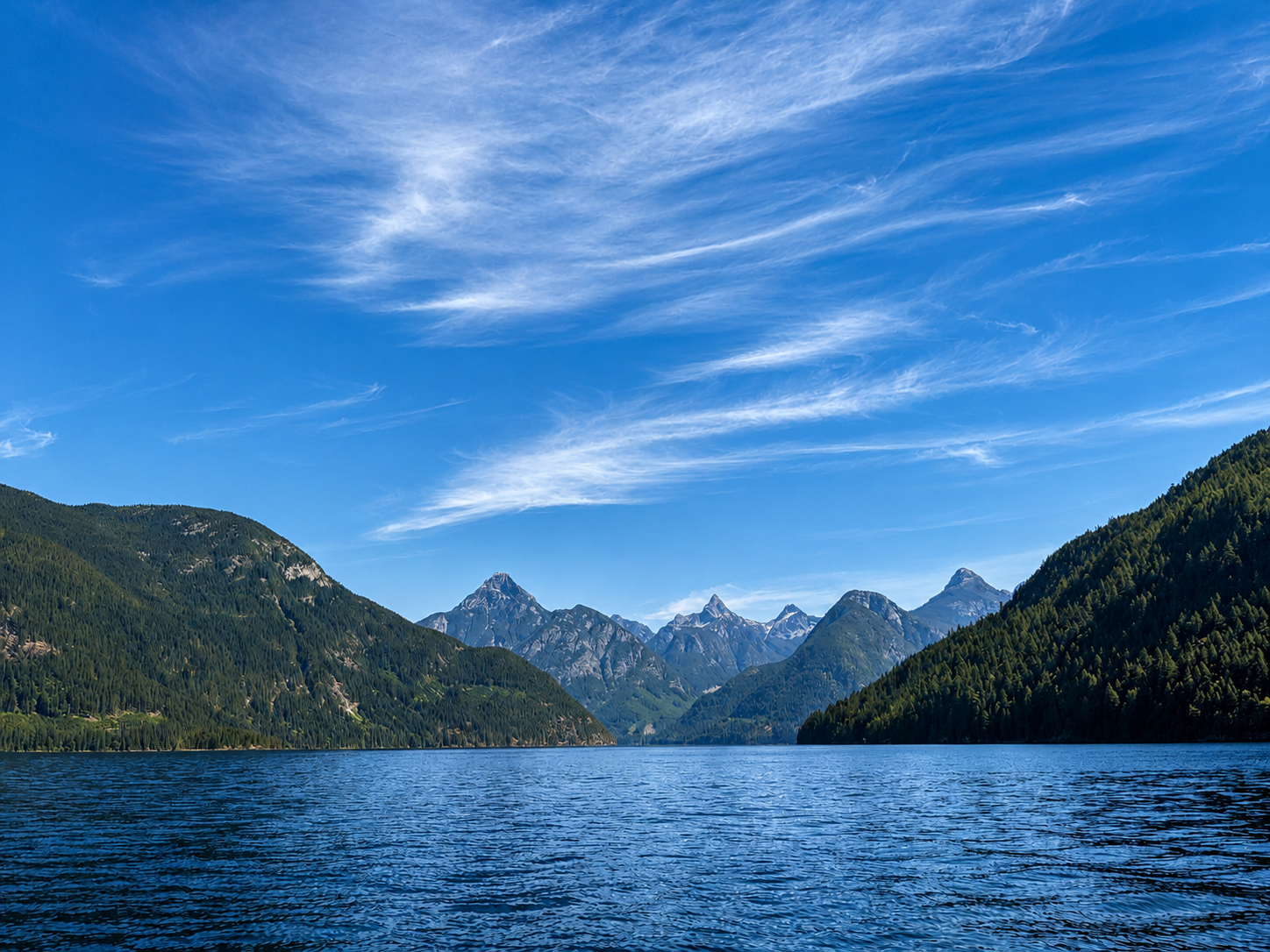
Powell Lake offers stunning scenery and regular boat traffic for added peace of mind.
Help Is Never Far Away
Another reason most paddlers do not require a guide on the qathet Canoe Route is the route's unique balance between wilderness and accessibility.
While the route feels remote and immersive, it is not isolated in the way many northern canoe expeditions are. Along much of the route, active forest service roads are located nearby, particularly on the western side of the lake system. In many sections, paddlers are never far from a road that could provide access to assistance if needed.
On Powell Lake, regular recreational and commercial boat traffic is also common throughout the paddling season. Unlike remote backcountry routes where days may pass without seeing another person, paddlers on Powell Lake often encounter fishing boats, cabin owners, and other recreational users.
This combination of nearby road access and regular boat traffic provides an additional layer of reassurance for independent paddlers. While proper trip planning and safety preparation are still essential, many visitors appreciate knowing that help is generally more accessible than on some of British Columbia's more remote canoe routes.
The result is a route that offers a genuine wilderness experience while remaining one of the more approachable multi-day canoe adventures in the province.
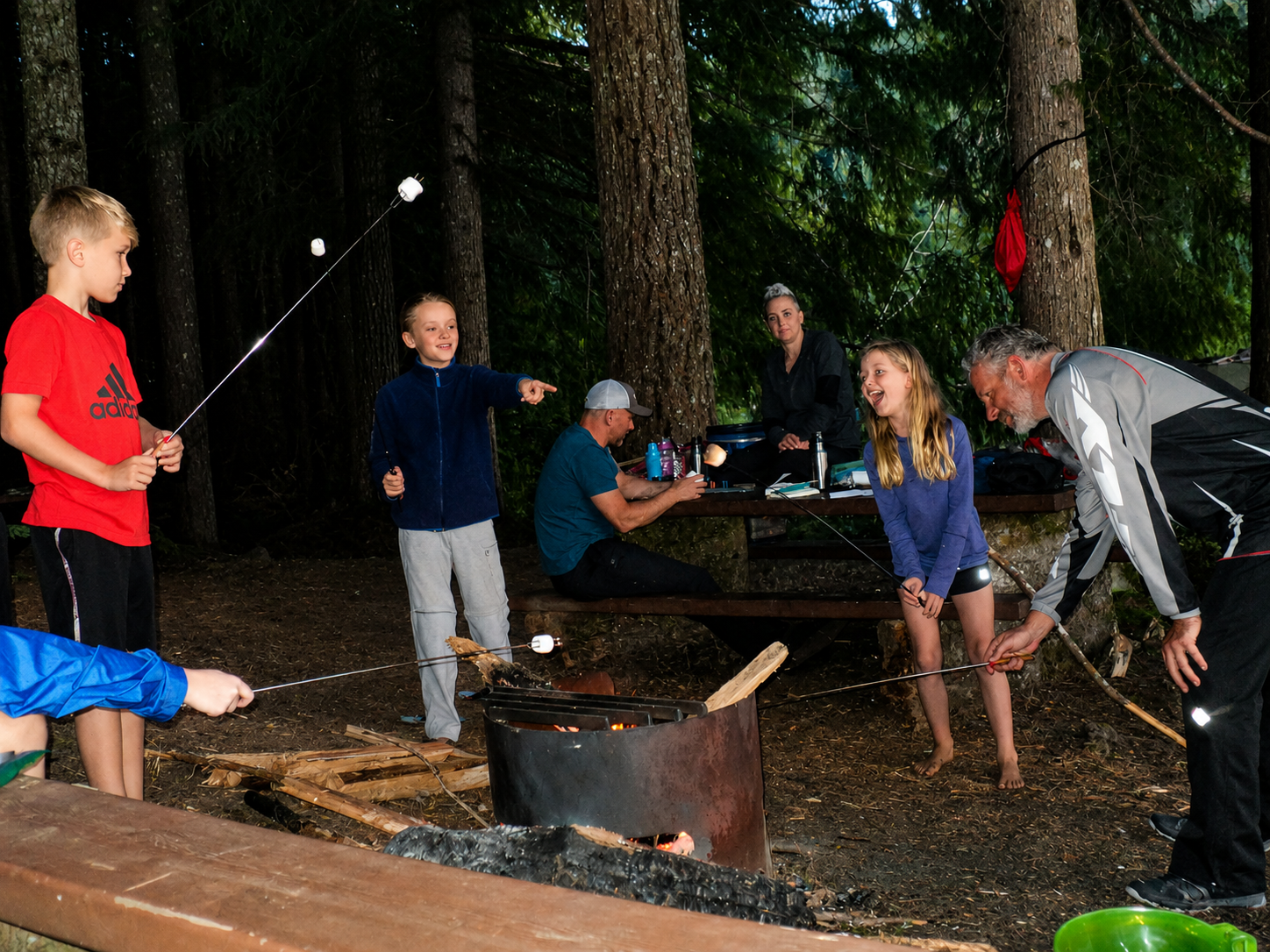
Choose your own pace. Choose your own campsite. Adventure, independence, and unforgettable memories.
No Whitewater or Technical Paddling Required
Many guided canoe trips in Canada are necessary because of whitewater rapids, river hazards, or complex navigation.
The qathet Canoe Route is different.
The route consists primarily of freshwater lakes connected by portage trails. Paddlers don't need advanced whitewater skills or specialized technical training to complete the journey.
While weather and wind conditions should always be respected, the route is generally considered approachable for paddlers with basic canoeing experience.

Portaging along well maintained forest trails make self-guided travel surprisingly approachable.
Well-Maintained Portages Reduce the Learning Curve
One of the biggest concerns for first-time canoe trippers is portaging. On the qathet Canoe Route, the portages are well-established and frequently used by paddlers throughout the season.
Unlike some remote wilderness routes where portages can be difficult to locate or maintain, the qathet Canoe Route's trails are clearly identified and form an integral part of the paddling experience. Most visitors find that with reasonable fitness and proper packing, the portages are manageable and predictable.
This helps reduce one of the biggest challenges that often leads paddlers to consider hiring a guide elsewhere.
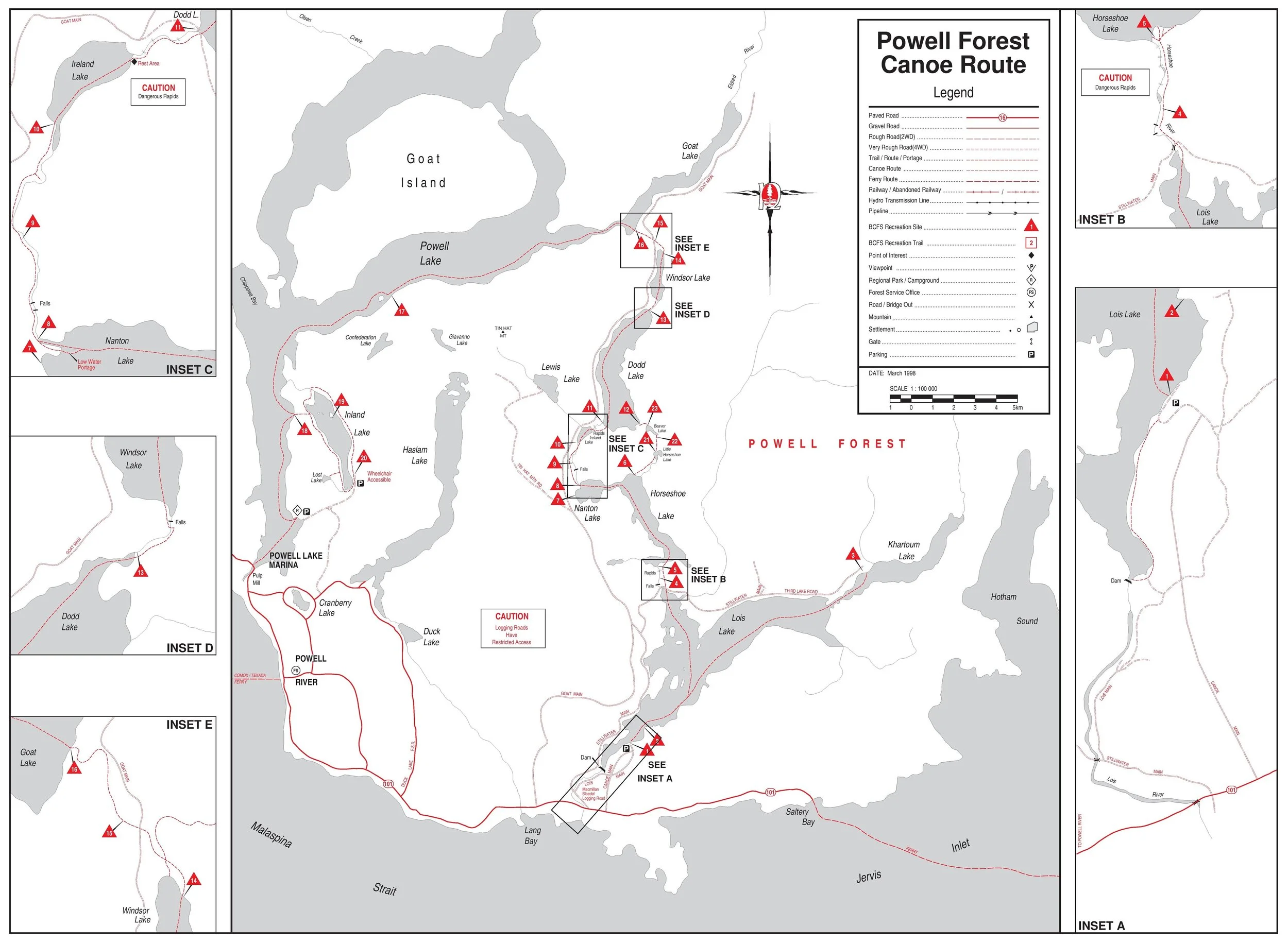
The Information Is Readily Available
Today's paddlers have access to detailed maps, route descriptions, campsite information before ever launching a canoe.
Visitors can research:
Portage lengths
Campsite locations
Access points
Suggested itineraries
Seasonal considerations
Packing recommendations
This wealth of information makes it easier than ever to plan a successful self-guided trip.
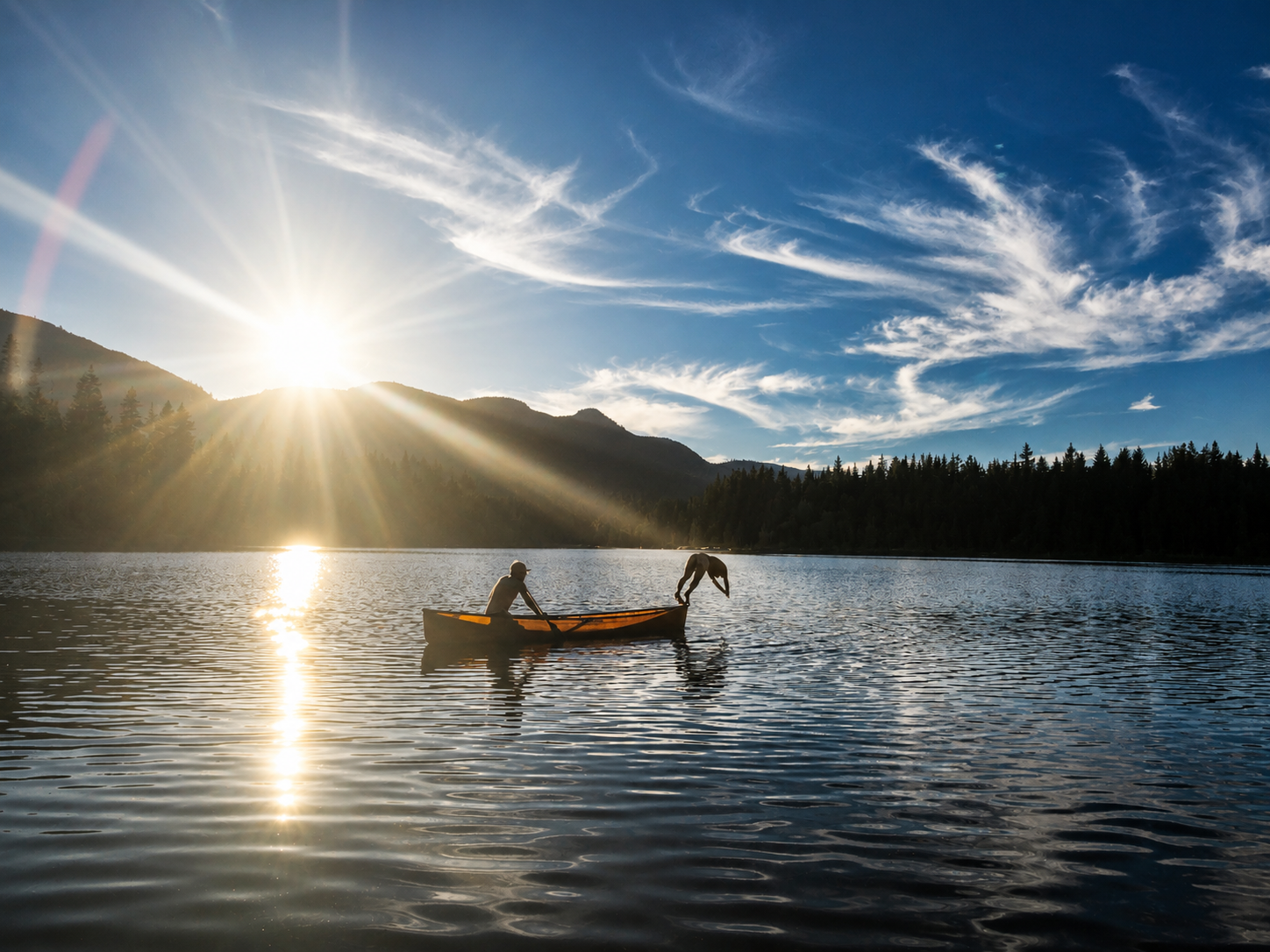
You decide when and where you want to take your “extra” day off. Not “the group”.
Flexibility Is Part of the Experience
One of the greatest advantages of paddling independently is the freedom to travel at your own pace.
Without a guide schedule, you can:
Stop for photos whenever you choose
Take longer breaks at scenic locations
Spend extra time exploring a favourite lake
Adjust your itinerary based on weather and energy levels
Enjoy a quieter and more personal wilderness experience
Many paddlers find that this flexibility becomes one of the most memorable parts of the trip.
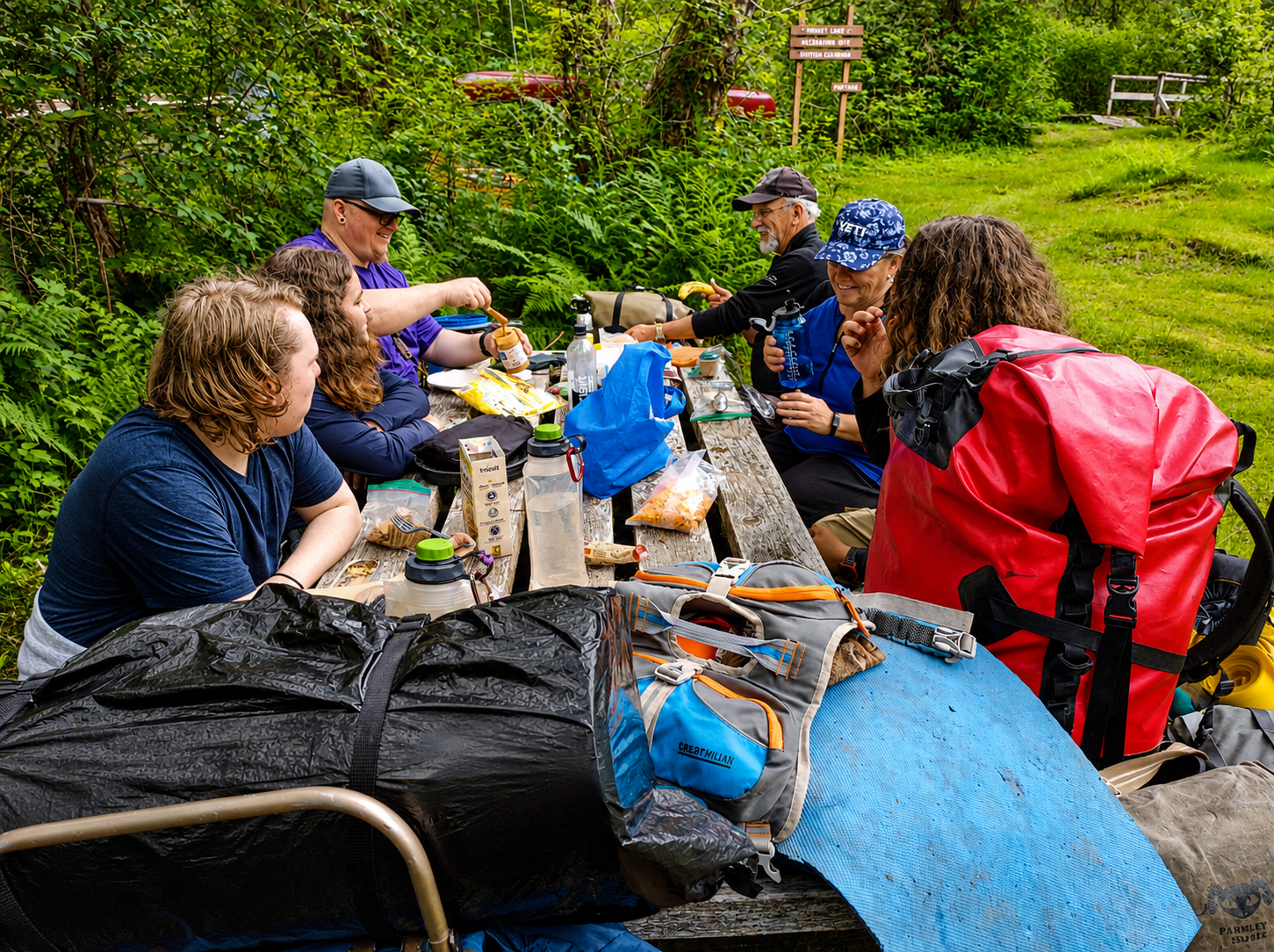
One of BC’s most accessible wilderness canoe routes. Big family adventure!
A More Affordable Adventure
Hiring a guide can significantly increase the cost of a canoe trip.
For families, couples, or groups of friends, the qathet Canoe Route offers an opportunity to experience a multi-day wilderness adventure without the additional expense of guide fees.
The money saved can instead be invested in quality gear, additional nights on the Sunshine Coast, or future paddling adventures.
When a Guide May Still Be Helpful
Although most visitors do not require a guide, there are situations where hiring one can make sense.
A guide may be beneficial if you:
Have no paddling experience & are uncomfortable in the wilderness
Want in depth instruction in paddling techniques
Prefer a fully organized trip with meal prep
Want local natural history or cultural interpretation during your journey
For these paddlers, a guide can provide added confidence and educational value.

Experience the coastal rainforest on your own terms.
The Real Appeal of the qathet Canoe Route
Part of what makes the qathet Canoe Route special is its balance between accessibility and wilderness.
It feels remote enough to provide adventure and immersion in nature, yet approachable enough that most paddlers can explore it independently with proper preparation.
The route rewards self-reliance, curiosity, and a sense of adventure—qualities that have always been at the heart of canoe travel.
Final Thoughts
Most paddlers do not need a guide to enjoy the qathet Canoe Route. With basic canoeing skills, proper trip planning, and respect for changing weather conditions, the route is well suited to independent exploration.
Its combination of straightforward navigation, established campsites, maintained portages, nearby road access, and regular boat traffic on Powell Lake creates a level of accessibility that is uncommon among multi-day wilderness canoe routes in British Columbia.
For many visitors, the freedom to travel at their own pace, choose their own campsites, and experience the coastal rainforest on their own terms is exactly what makes the route so memorable.
The qathet Canoe Route offers something increasingly rare: a genuine backcountry paddling adventure that remains accessible, affordable, and achievable without the need for a guide.
Continue Planning your qathet Canoe Route Adventure
Before you launch, explore our most helpful guides for planning a safe, comfortable, and unforgettable trip:
🧍 Complete qathet Canoe Route Guide for a route map, campsites, transportation, water, and trip planning advice.
🦟 Bugs on the qathet Canoe Route When mosquito season peaks, where bugs are worst, and how to avoid
🎒 How to Pack for the qathet Canoe Route | Expert Packing Guide + Free Checklist A complete packing list for a comfortable multi-day trip
🦅 The Best Gear for the qathet Canoe Route: Packing Tips Learn what gear actually makes the trip easier, from canoe barrels to footwear and rain gear
🥾 Portaging the qathet Canoe Route Learn the easiest way to carry your canoe and gear through every portage
⛺ Camping on the qathet Canoe Route Campsites, bear caches, and tips for planning your overnight stops, cooking, and Leave No Trace tips
🚣 Can You Kayak the qathet Canoe Route? Learn why we recommend a canoe and why wheel carts don't work on the route.
🐕 Bringing Your Dog on the qathet Canoe Route Tips for paddling, camping, portaging, and keeping your canine companion safe and happy
🐟 Fishing the qathet Canoe Route Species, tackle recommendations, regulations, and the best times to fish
🏞️Comparing BC’s Most Iconic Canoe Routes Not sure if the qathet Canoe Route is the right adventure for you? Compare it with BC's other famous canoe routes
🛶Why the qathet Canoe Route Is Unlike Any Other Paddling Experience Discover what makes the qathet Canoe Route a truly unique wilderness adventure—and why so many paddlers return again and again
Originally written by Christie Mitchell based on decades of experience on the qathet Canoe Route.
Copyright Notice
All photographs, maps, illustrations, and written content are © Christie Mitchell. Unauthorized reproduction or redistribution is prohibited without written permission.