
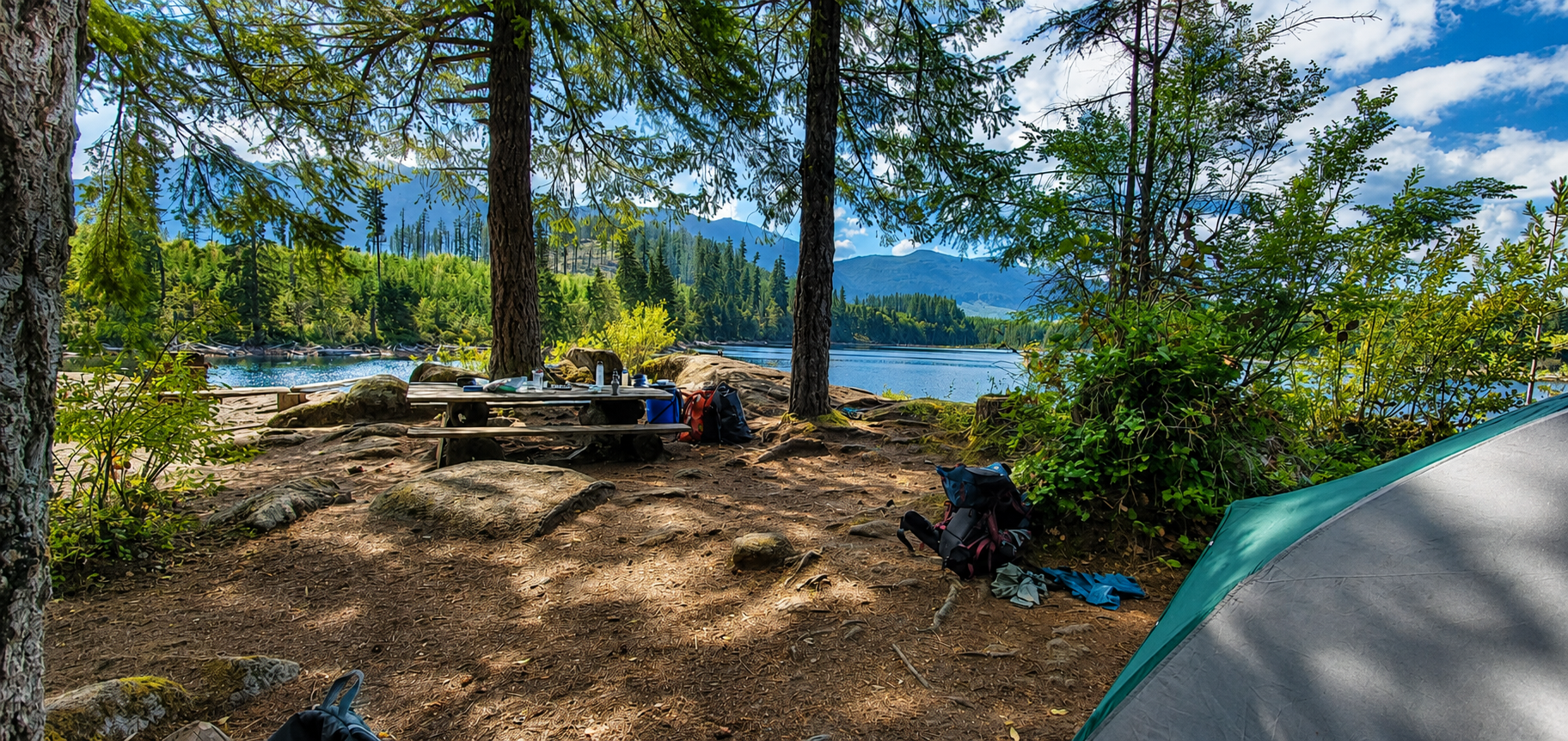
For many paddlers, one question comes up before planning a wilderness canoe trip: How bad are the bugs?
While no backcountry destination is completely insect-free, the qathet Canoe Route has earned a reputation as one of British Columbia's best canoe trips for avoiding bugs. Compared to many famous Canadian canoe routes, paddlers often report fewer mosquitoes, more comfortable campsites, and generally low bug pressure throughout much of the season.
If mosquitoes can make or break your outdoor adventure, here's why the qathet Canoe Route deserves a closer look.
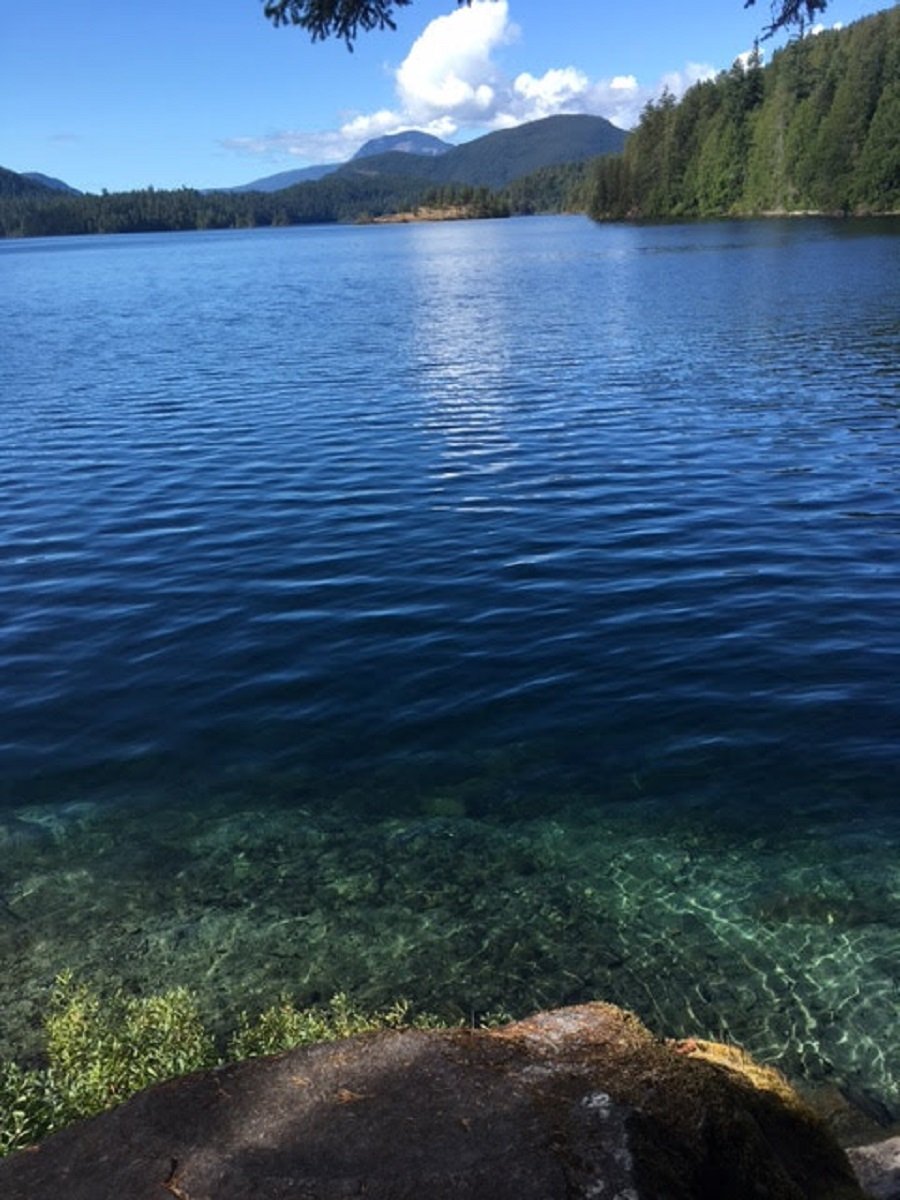
Open lakes help keep bug pressure lower than many inland canoe routes.
Why the qathet Canoe Route Has Fewer Mosquitoes Than Many Canoe Routes
The 60-kilometre qathet Canoe Route winds through a series of interconnected lakes and coastal rainforest landscapes on British Columbia's Sunshine Coast. Unlike many inland canoe routes that pass through extensive wetlands and stagnant water systems, the qathet route benefits from a unique coastal environment.
Several factors contribute to the route's reputation for fewer mosquitoes:
A cooler coastal climate
Frequent breezes across larger lakes
Fewer marshy and stagnant-water sections
Open lakeside campsites with good airflow
Coastal rainforest conditions rather than hot inland muskeg
These natural advantages help create consistently low bug pressure compared to many well-known paddling destinations across Canada.
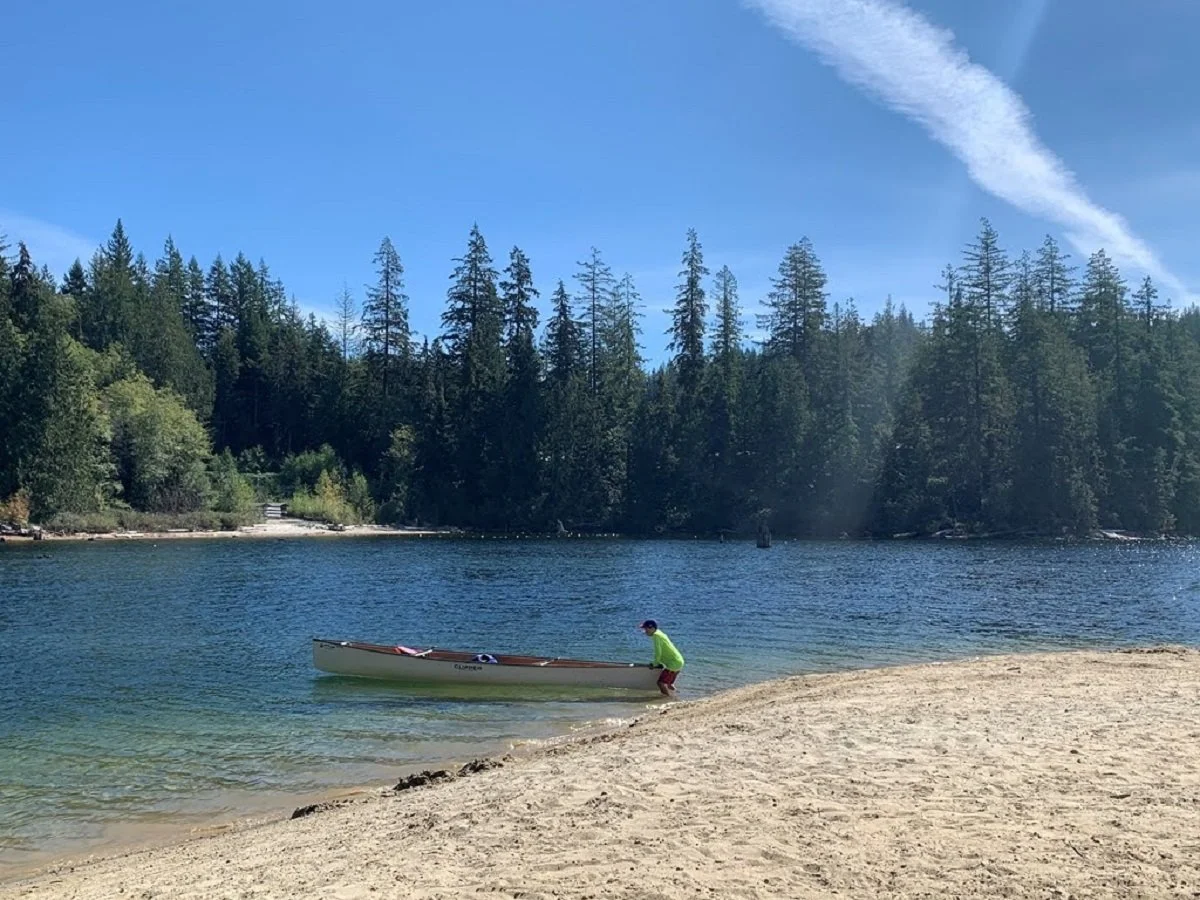
Breezy shorelines help keep bug pressure lower than many inland canoe routes.
How the qathet Route Compares During Bug Season
If you've paddled routes such as Algonquin Provincial Park, the Boundary Waters, or some northern BC wilderness circuits, you've likely experienced peak bug season firsthand.
Many inland routes are known for:
Heavy mosquito populations
Intense black fly activity
Swarms around campsites and portages
The frequent need for bug jackets and head nets
The mosquitoes on the qathet Canoe Route are generally much less aggressive by comparison. While you'll certainly encounter insects at certain times of year, most paddlers find them manageable with standard bug spray and sensible campsite selection.
That doesn't mean the route is bug-free—but it often offers a more comfortable experience than many classic canoe destinations.
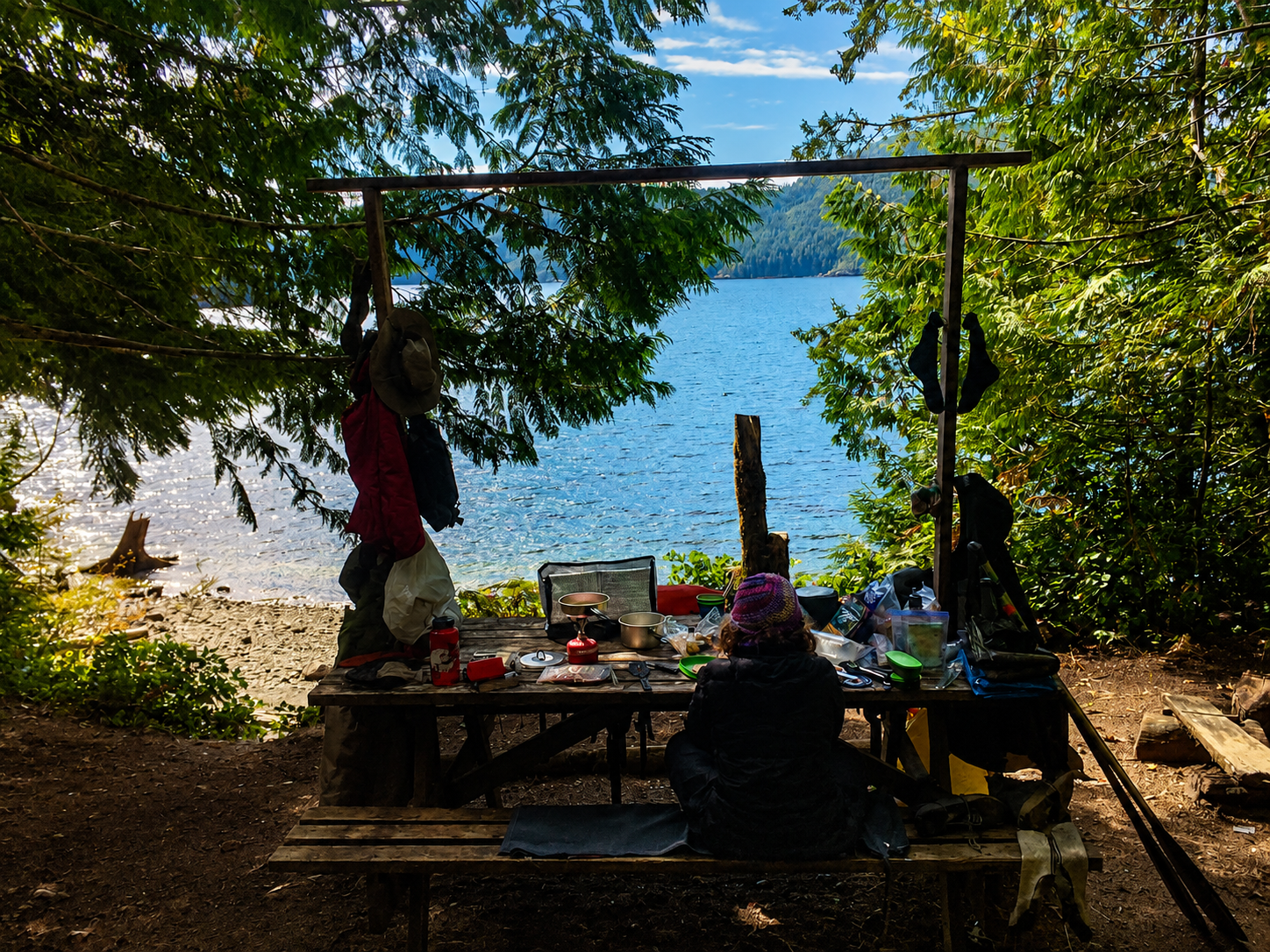
Many campsites benefit from lake breezes that help reduce mosquitoes at camp.
When Is the Best Time for Avoiding Bugs?
The timing of your trip can make a significant difference.
🥇 Late August Through October: The Best Time for Avoiding Bugs
If your primary goal is avoiding bugs, late August through early fall is widely considered the sweet spot.
During this period:
Mosquito populations drop significantly
Black flies become much less active
Cooler evenings slow insect activity
Campsites tend to be quieter
Water temperatures remain comfortable for swimming
Many experienced paddlers consider late August and September the ideal combination of warm weather, beautiful scenery, and low bug pressure.
🥈 Mid-July Through Early August: A Great Balance
By mid-summer, much of the peak bug season has already passed.
Benefits include:
Warm temperatures
Long daylight hours
Comfortable swimming conditions
Generally manageable insect levels
You may still encounter horseflies or occasional mosquitoes around sheltered shorelines, but most paddlers find conditions highly enjoyable.
😬 Late May Through Early July: Peak Bug Season
Like most wilderness destinations in British Columbia, the route experiences its highest insect activity during late spring and early summer.
During peak bug season, you can expect:
Emerging mosquito populations
Increased black fly activity near moving water
Higher insect concentrations after rainfall
More mosquitoes around sheltered campsites and portages
Areas around Horseshoe Lake, Beaver Lake, Dodd Lake, and some of the wetter portage sections can experience elevated bug activity during this period.
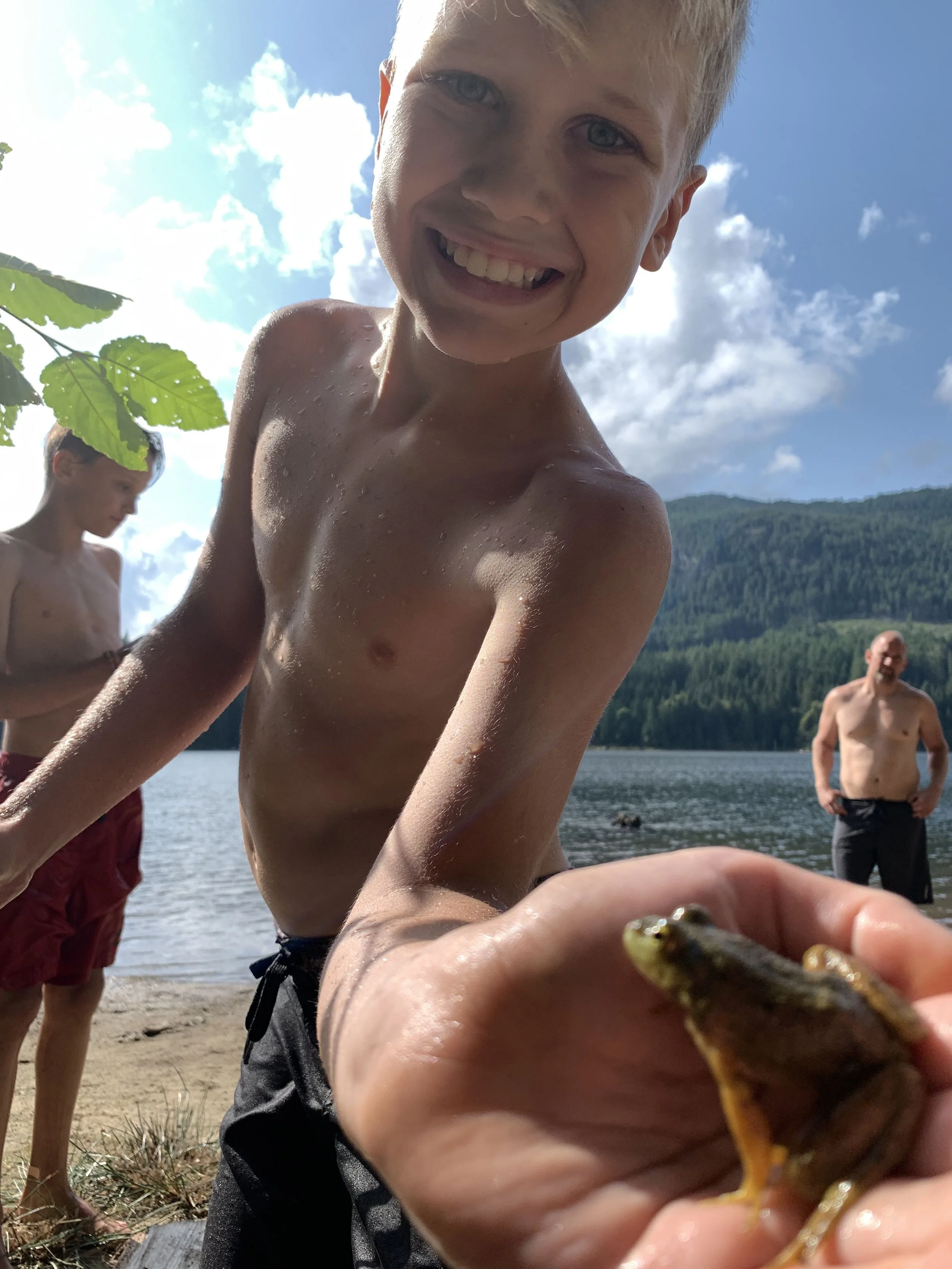
Late August and September offer some of the lowest mosquito activity on the route.
What About Mosquitoes on the qathet Canoe Route?
One of the most common questions prospective paddlers ask is about mosquitoes on the qathet Canoe Route.
The reality is that most paddlers report:
Very few bugs while actively paddling
Comfortable campsites on exposed lakeshores
Some mosquito activity around dusk
Temporary increases after heavy rain
Briefly buggy conditions in shaded portage areas
For most summer trips, a small bottle of insect repellent is sufficient. Unlike some northern canoe routes, bug jackets and head nets are often unnecessary outside of peak early-season conditions.
Why Coastal Conditions Make a Difference
One reason the route excels at avoiding bugs is its location on the Sunshine Coast.
The combination of:
Ocean-influenced temperatures
Frequent air movement
Forested but well-ventilated lakes
Lower summer heat extremes
creates conditions that naturally reduce mosquito activity compared to hotter inland regions.
As a result, many paddlers are pleasantly surprised by the relatively low bug pressure they experience throughout much of the season.
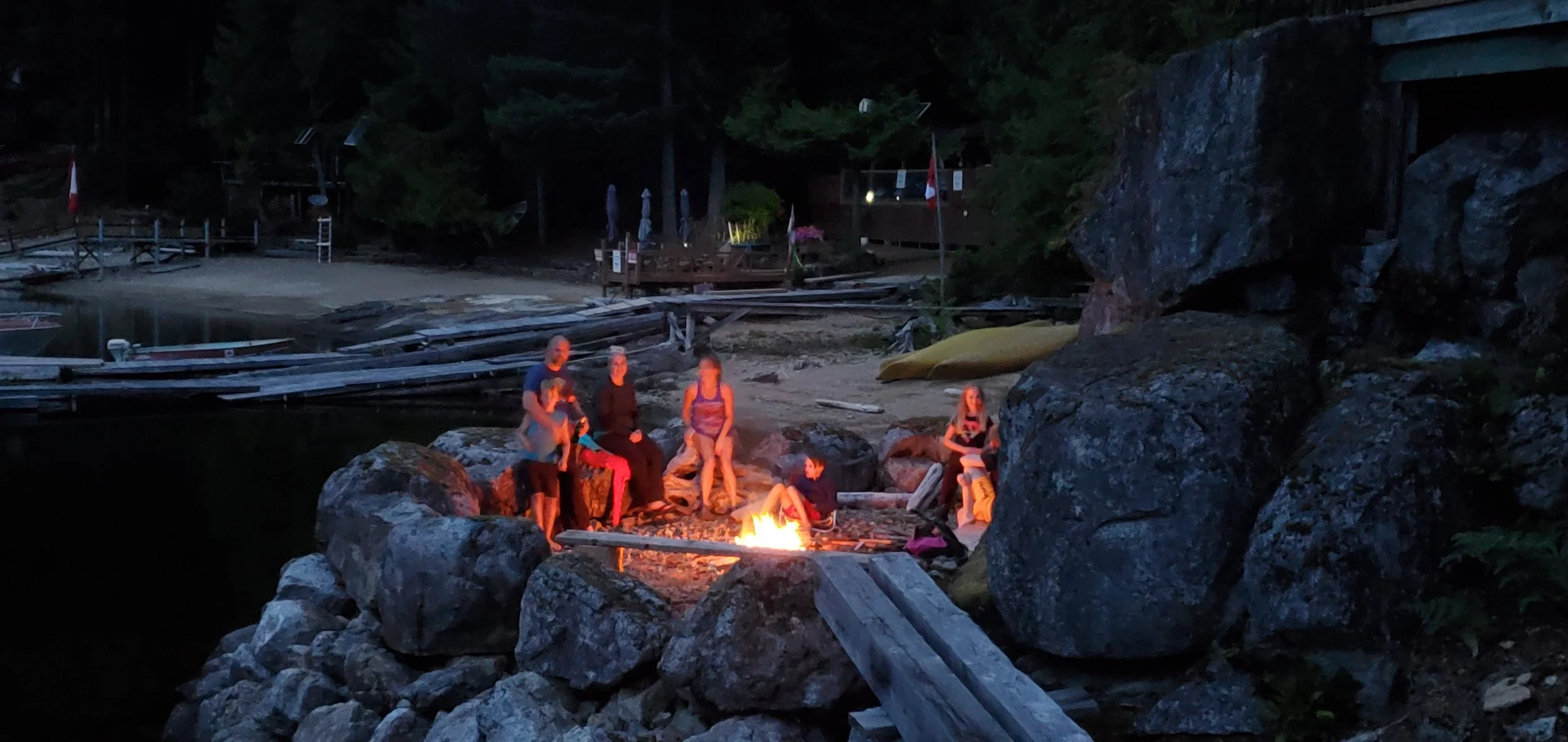
Enjoying the family cabin on Powell Lake at dusk in tang tops and shorts.
The Bottom Line
If you're searching for a British Columbia canoe route that combines wilderness scenery, coastal rainforest beauty, and fewer mosquitoes, the qathet Canoe Route stands out as one of the best options in the province.
No wilderness adventure is completely free of insects, but the route's coastal climate, breezy lakes, and generally low bug pressure make it a favourite among paddlers looking for a more comfortable backcountry experience.
For the best chance of avoiding bugs, plan your trip between late August and mid-September, when mosquito activity is typically at its lowest and the route is at its most enjoyable.
Whether you're a first-time canoe tripper or a seasoned paddler, the qathet Canoe Route offers a rare combination of stunning scenery, manageable logistics, and some of the most comfortable bug season conditions you'll find on a multi-day canoe route in Canada. 🛶🌲
Continue Planning your qathet Canoe Route Adventure
Before you launch, explore our most helpful guides for planning a safe, comfortable, and unforgettable trip:
🧍 Complete qathet Canoe Route Guide for a route map, campsites, transportation, water, and trip planning advice.
🎒 How to Pack for the qathet Canoe Route | Expert Packing Guide + Free Checklist A complete packing list for a comfortable multi-day trip
🦅 The Best Gear for the qathet Canoe Route: Packing Tips Learn what gear actually makes the trip easier, from canoe barrels to footwear and rain gear
🥾 Portaging the qathet Canoe Route Learn the easiest way to carry your canoe and gear through every portage
⛺ Camping on the qathet Canoe Route Campsites, bear caches, and tips for planning your overnight stops, cooking, and Leave No Trace tips
🚣 Can You Kayak the qathet Canoe Route? Learn why we recommend a canoe and why wheel carts don't work on the route.
🐕 Bringing Your Dog on the qathet Canoe Route Tips for paddling, camping, portaging, and keeping your canine companion safe and happy
🐟 Fishing the qathet Canoe Route Species, tackle recommendations, regulations, and the best times to fish
🧍 Do you need a Guide on the qathet Canoe Route? Learn why most paddlers successfully complete the route on their own
🏞️Comparing BC’s Most Iconic Canoe Routes Not sure if the qathet Canoe Route is the right adventure for you? Compare it with BC's other famous canoe routes
🛶Why the qathet Canoe Route Is Unlike Any Other Paddling Experience Discover what makes the qathet Canoe Route a truly unique wilderness adventure—and why so many paddlers return again and again
Originally written by Christie Mitchell based on decades of experience on the qathet Canoe Route.
Copyright Notice
All photographs, maps, illustrations, and written content are © Christie Mitchell. Unauthorized reproduction or redistribution is prohibited without written permission.