
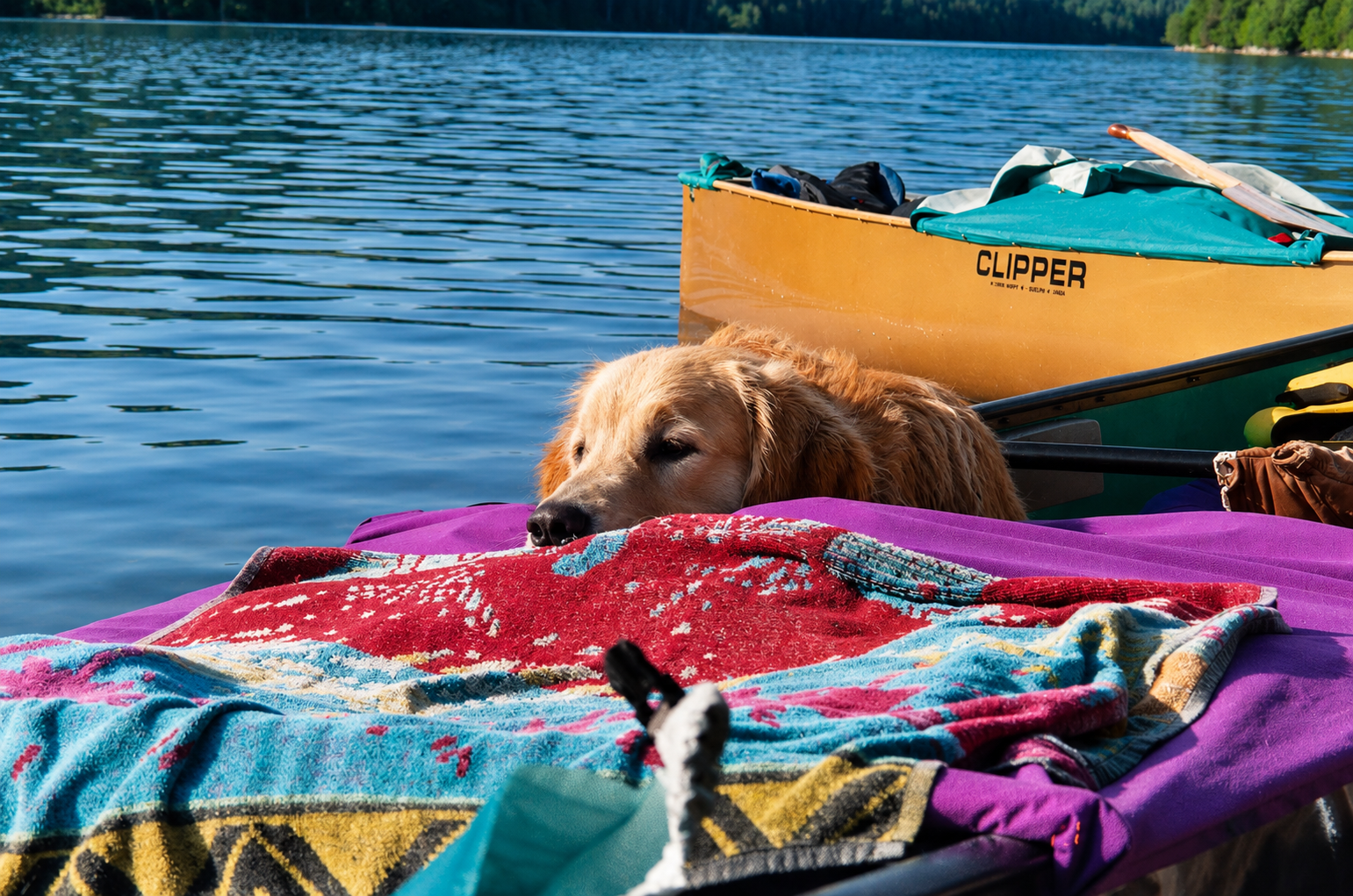
If your idea of the perfect adventure includes a canoe, a wilderness campsite, and a four-legged companion curled up beside the fire, you'll be happy to know that dogs are welcome on the qathet Canoe Route.
Stretching across a network of lakes, portages, and forested shorelines on British Columbia's Sunshine Coast, the qathet Canoe Route offers an incredible multi-day paddling experience for both people and their canine companions. With a little preparation, your dog can enjoy every paddle, portage, and campsite right alongside you.
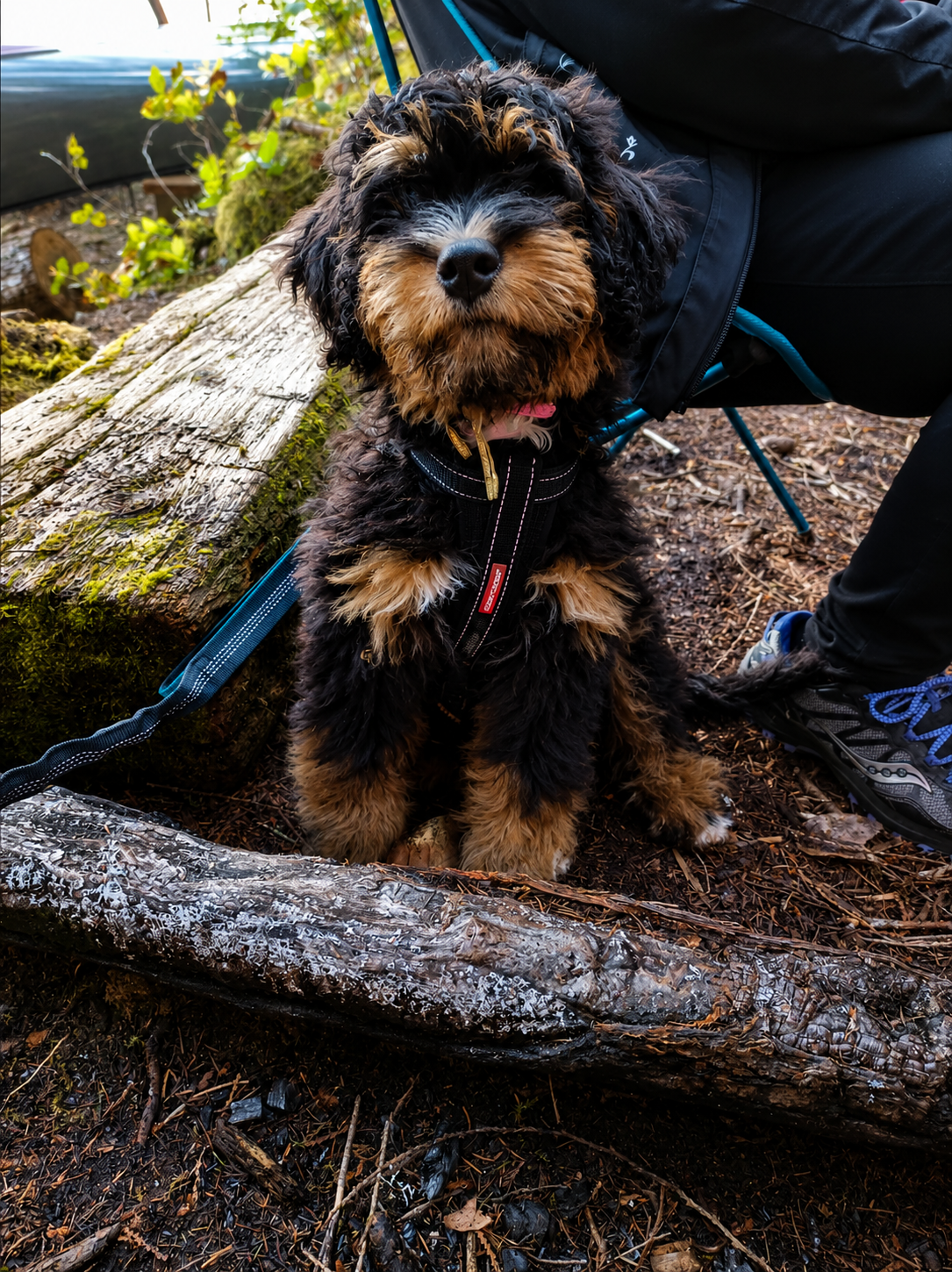
The memories you treasure most often include a four-legged friend. This is our Bernedoodle, Berkeley, on her first canoe route.
Are Dogs Allowed on the qathet Canoe Route?
Yes.
Dogs are permitted throughout the qathet Canoe Route, including on the portage trails and at designated recreation sites and campsites.
As with any shared outdoor space, bringing a dog comes with responsibilities. The route remains enjoyable for everyone when dog owners follow Leave No Trace principles and respect other campers, wildlife, and the environment.
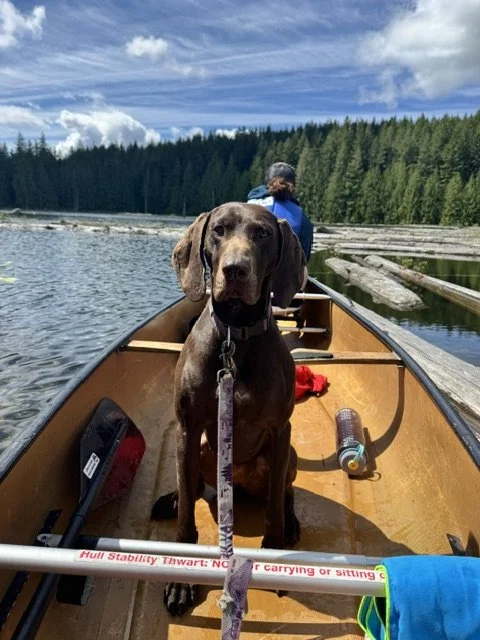
Chief Morale Officer and unofficial wildlife spotter.
Why Dogs Love the qathet Canoe Route
Many canoe routes involve crowded campsites, busy waterways, or difficult terrain that can be stressful for dogs. The qathet Canoe Route is different.
Your dog will enjoy:
Quiet wilderness campsites
Frequent opportunities to swim
Shaded forest portage trails
Long stretches of calm paddling water
Plenty of space to explore while remaining under control
Many dogs quickly settle into the rhythm of the trip—paddling during the day, swimming at every opportunity, and curling up beside the campfire each evening.
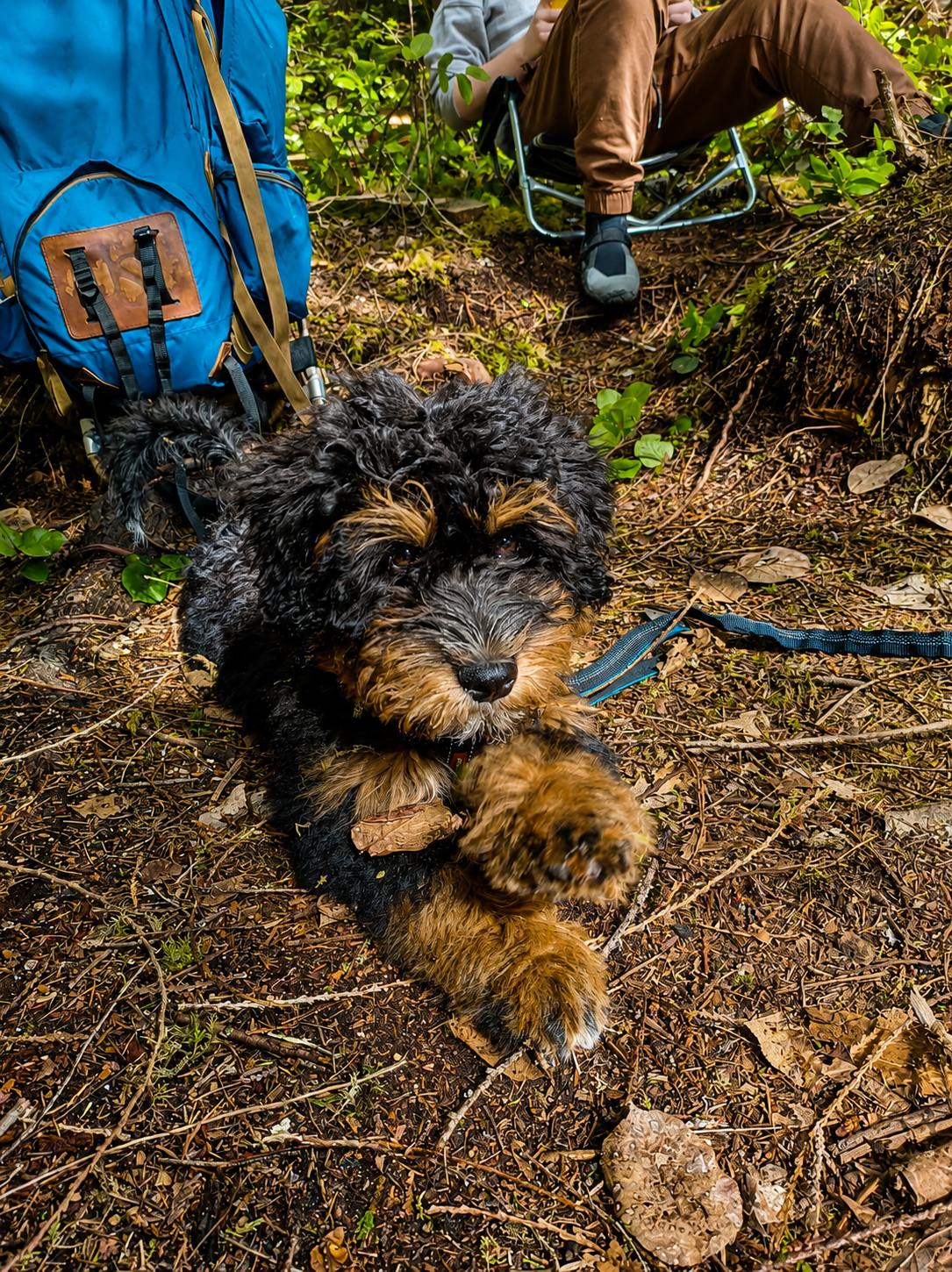
Berkeley taking a well-earned break at camp after a day of paddling and portaging on the qathet Canoe Route.
Keep Your Dog on a Leash
Although your dog may be friendly, wildlife may not appreciate the introduction.
We recommend keeping your dog on a leash throughout the route, particularly at campsites and along portage trails. A loose dog can provoke defensive behaviour from bears, startle wildlife, or create uncomfortable situations for other paddlers.
Keeping your dog under control helps protect both your pet and the wilderness experience for everyone else.
Clean Up After Your Dog
The campsites along the qathet Canoe Route are remarkably clean, thanks to the efforts of paddlers who care about the route.
Please pack out dog waste whenever practical and always follow Leave No Trace practices. Responsible dog ownership helps ensure that dogs continue to be welcomed on the route for years to come.
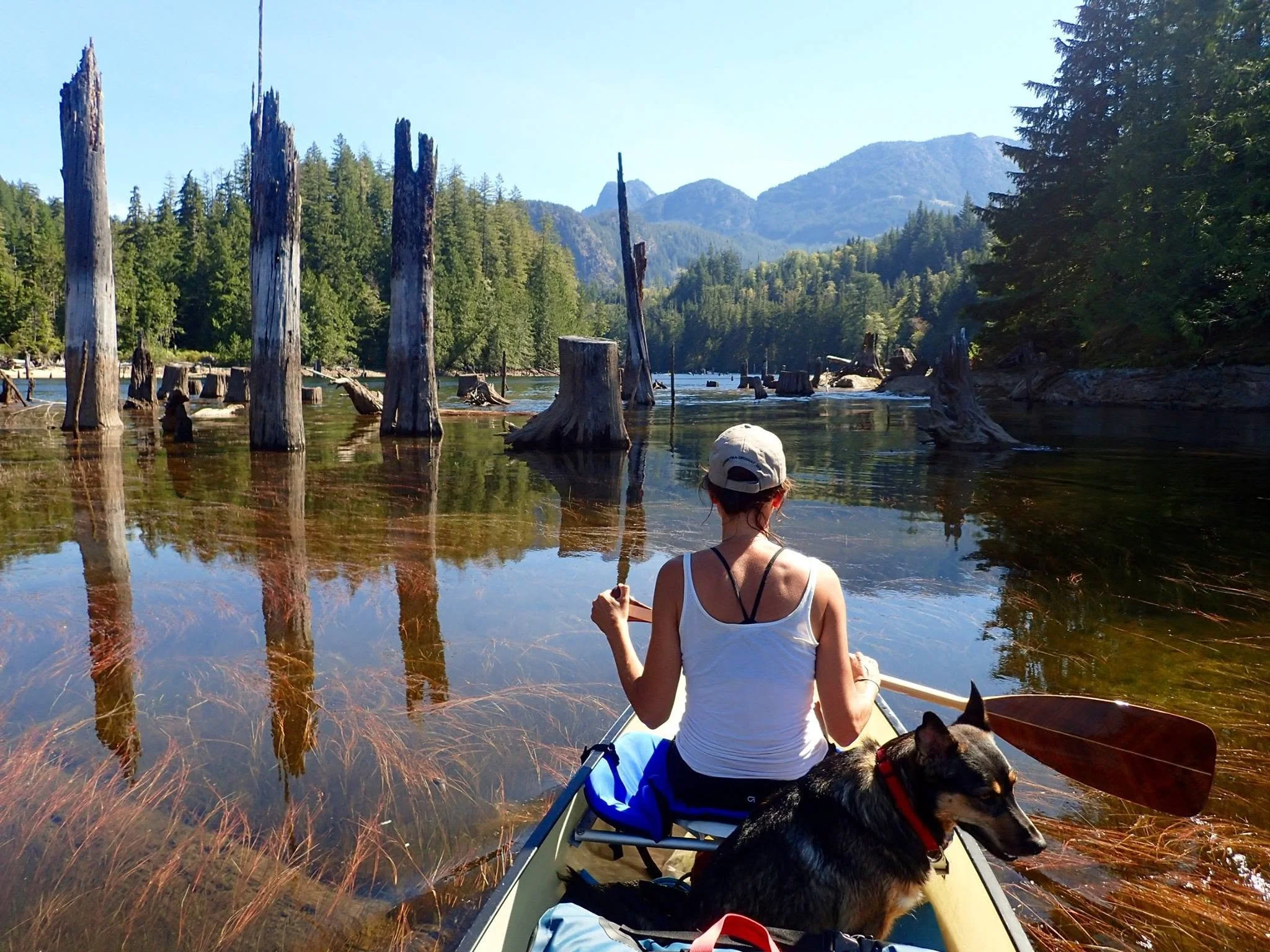
Some come for the fishing. Some come for the scenery. The dogs seem to love every minute of it.
Making Your Canoe Comfortable for Your Dog
A canoe can feel slippery and unstable to a dog, especially during the first few days of a trip.
One of the best things you can bring is a section of closed-cell foam sleeping pad. It's inexpensive, weighs very little, and your dog will probably appreciate it more than any other piece of gear you pack.
Placing the foam on the canoe floor:
Gives your dog better traction
Prevents slipping when the canoe rocks
Creates a comfortable place to lie down
Protects the canoe from nails and wear
Many dogs become noticeably more relaxed once they have a secure, non-slip surface beneath them.
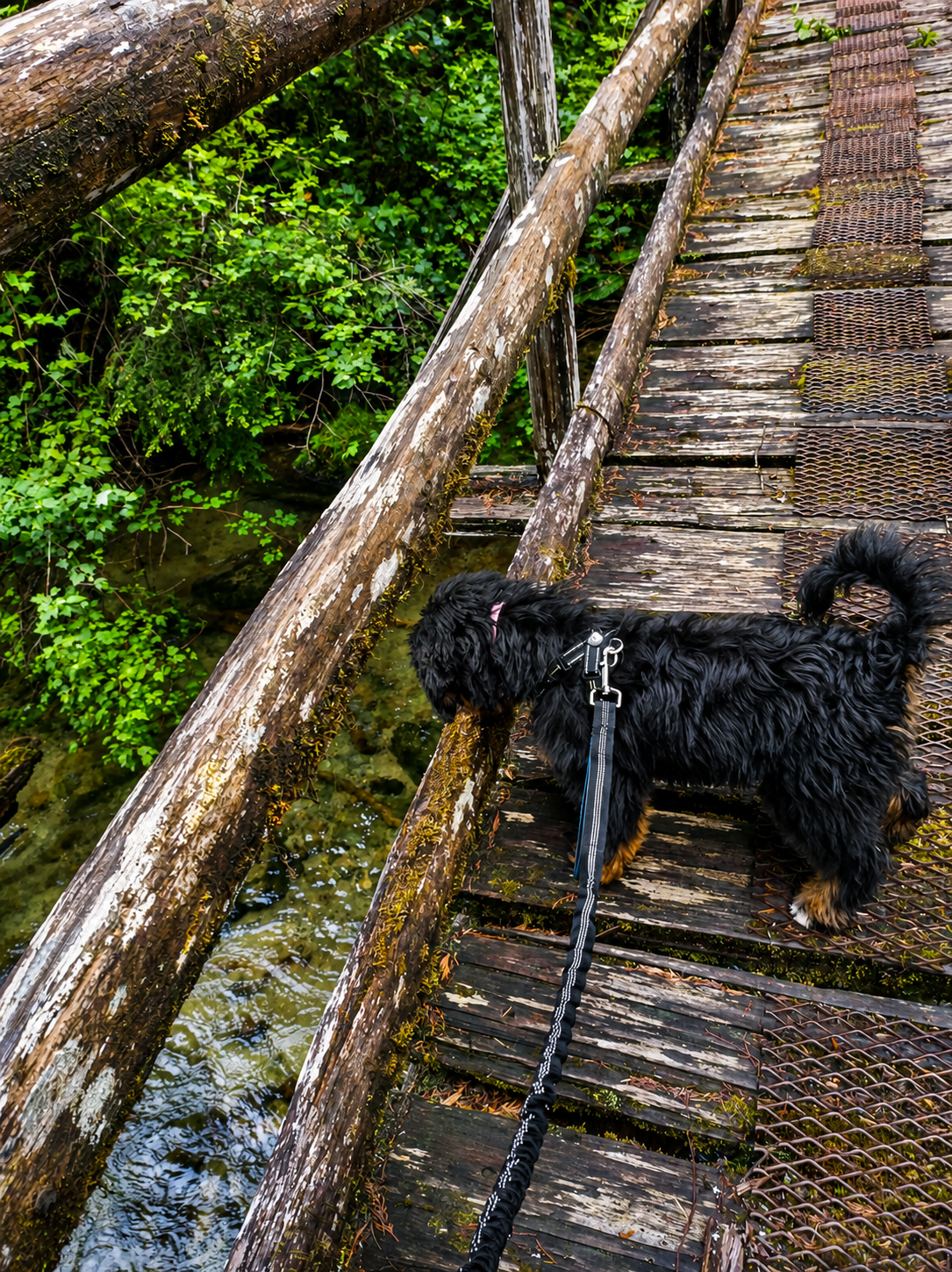
The secret to successful portaging with a dog? Take your time, enjoy the forest, and let the trail become part of the adventure.
Portaging With a Dog
Dogs generally handle the portages on the qathet Canoe Route very well. Most dogs happily walk the portages alongside their owners and often have far more energy left than the humans carrying the canoe. Many dogs seem to think the portages are simply another hiking trail.
Bring a collapsible bowl and offer water regularly, particularly during warm weather and after portages. Many dogs will drink directly from the lakes, but filtered or treated water is always the safer option.
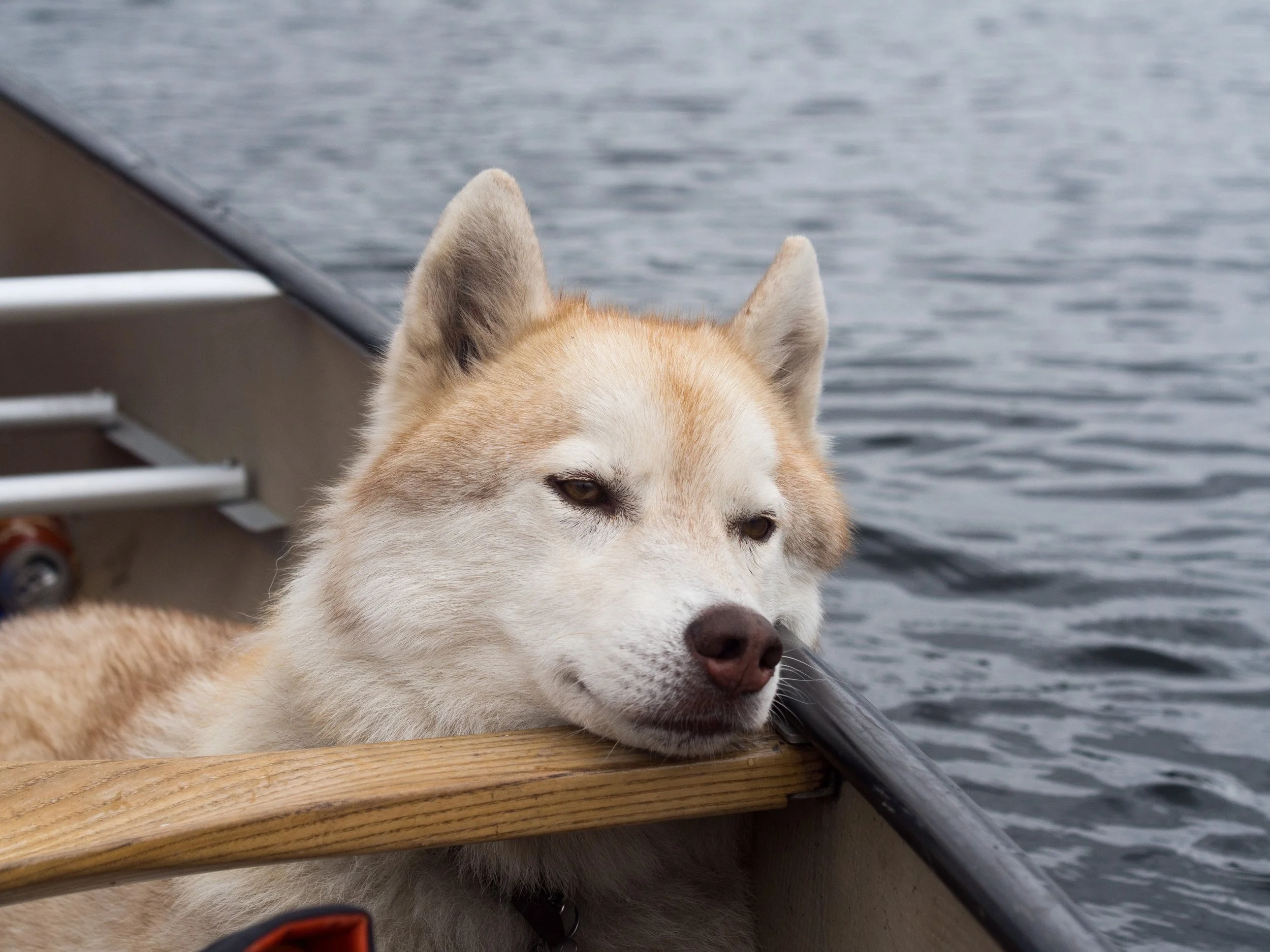
Your dog won't remember the kilometres paddled or the portage distances. They'll remember being with you.
Wildlife Considerations
The qathet Canoe Route travels through active wildlife habitat.
You may encounter:
Black bears
Deer
Beavers
Osprey
Bald eagles
Various waterfowl
A leashed dog is much less likely to create wildlife conflicts than a dog allowed to roam freely.
Never allow your dog to chase wildlife.
Why Basic Obedience Makes the Trip Better
One of the best things you can do before bringing your dog on the qathet Canoe Route is spend some time practicing a few basic commands.
A reliable "sit," "stay," "come," "leave it," and "place" can make the difference between a relaxing trip and a stressful one.
Before launching, asking your dog to sit while the canoe is loaded helps keep the boat stable and prevents an excited leap into the canoe before you're ready. Once on the water, a dog that understands "stay" is far less likely to shift their weight unexpectedly, making paddling safer and more comfortable for everyone.
At campsites, good recall is just as valuable. Although the route feels remote, you'll often share campsites and portages with other paddlers. A dog that comes when called and stays close to camp is more enjoyable for everyone and is less likely to disturb wildlife or wander into another group's campsite.
The "leave it" command can also be invaluable. It may prevent your dog from investigating discarded fish remains, wildlife scat, unfamiliar mushrooms, or other things they shouldn't eat along the trail.
You don't need perfect obedience, but a dog that reliably responds to a handful of basic commands will usually be calmer, safer, and more confident throughout the trip. That means you'll spend less time managing your dog and more time enjoying the peaceful lakes, forest trails, and quiet campsites that make the qathet Canoe Route such a memorable adventure.
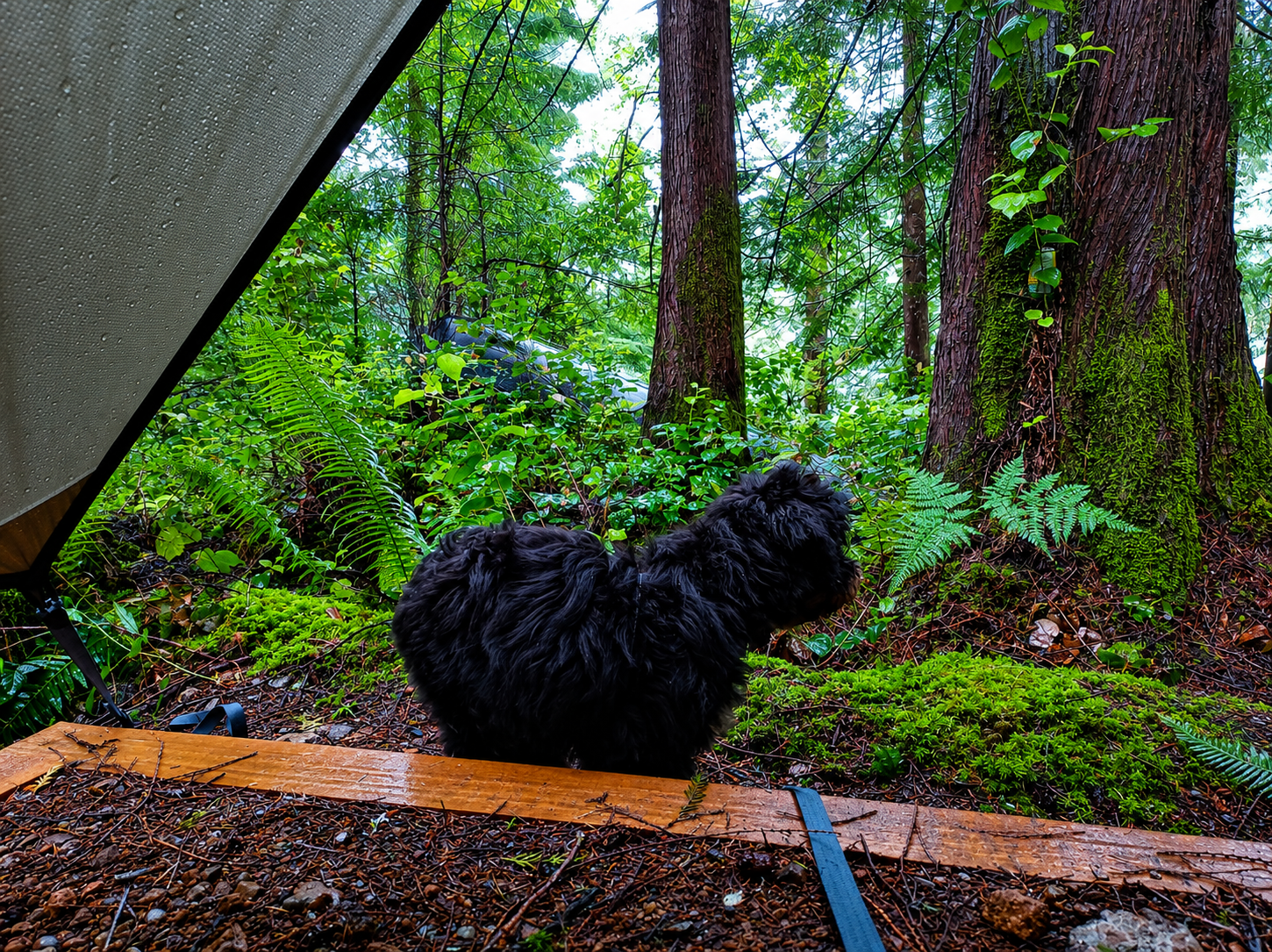
A dog doesn’t care too much if its rainy or sunny. They just want to be by your side.
Additional Gear That Makes Life Easier with a Dog
After many trips on the qathet Canoe Route with my own dog, here are the items I've found most useful.
A Lightweight Cable or Long Tether
A lightweight coated cable or long tether (that doesn’t absorb water) works extremely well around camp. It allows your dog some freedom to move about while helping prevent them from wandering into neighboring campsites or exploring areas where they shouldn't be.
The designated campsites along the route can host multiple groups, so giving your dog a defined area helps everyone enjoy their wilderness experience.
A Dog Rain Jacket
If your dog sleeps in the tent with you, a lightweight rain jacket can be worth its weight in gold.
Besides helping keep your pup warm during wet weather, a rain jacket dramatically reduces the amount of mud, sand, and moisture they bring into the tent after a rainy day. I also recommend the jacket have some reflective strips on it for finding your dog at night with your flashlight.
Bring a Dedicated Dog Towel
A dedicated pooch quick-dry towel is a must-have item.
Wet paws, muddy shorelines, unexpected swims, and rainy portages are all part of the adventure. Having a towel specifically for your dog helps keep your tent, sleeping gear, and canoe much cleaner throughout the trip.
Consider a Dog PFD
A properly fitted dog PFD (personal flotation device) is one of the best safety investments you can make.
Beyond the obvious flotation benefits, most dog PFDs include a sturdy carry handle on the back. That handle makes it much easier to assist them at landings, or scoop them out of an unexpected situation, or help lift them back into the canoe after a swim.
Many dogs jump in.
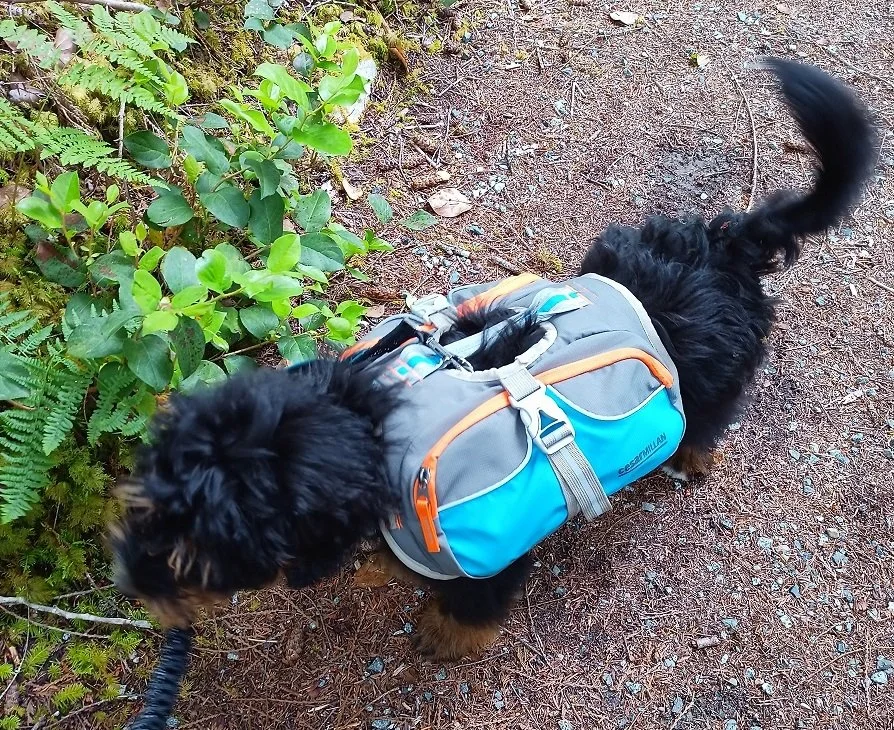
The best trail partner never complains about carrying gear, getting up early, or paddling into a headwind.
Let Your Dog Carry Their Own Gear
Many working and sporting breeds especially enjoy having a job to do.
My own pup wears saddle bags and carries her own food (I always pack 1 extra day's worth), treats, and collapsible bowls. Not only does this lighten your load slightly, but many dogs seem to enjoy having a purpose while travelling.
If you're planning to use saddle bags, introduce them well before your trip. Start by letting your dog wear them empty during walks. Once they're comfortable, gradually add weight over several outings.
By the time you arrive at the qathet Canoe Route, the saddle bags should feel completely normal to your dog, making for a happier and more confident adventure companion.
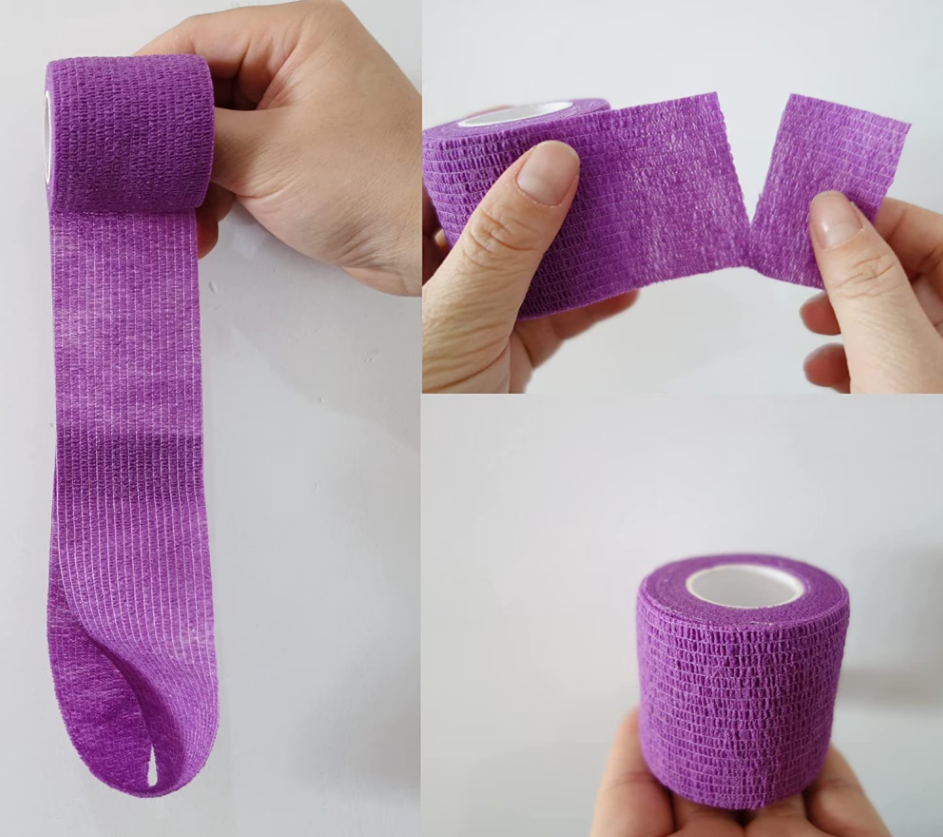
My Favorite "Doggy First Aid" Item
-
It weighs almost nothing and can be used for:
Paw injuries
Torn nails
Securing bandages
Holding dressings in place
Temporary splints
It’s Non-Sticky: Sticks exclusively to itself. Will not pull hair or cause pain when removed.
Tearable: Easy to tear by hand without needing scissors.
Breathable & Lightweight: Porous non-woven material allows the skin and wound to breathe.
Adjustable Compression: Can be stretched up to 200% to control the amount of compression applied to an injury
Other Doggy First Aid Items
Non-stick gauze pads
Dog booties (or infant socks as emergency backups)
Saline Solution
Paw balm or Musher's Secret
Small scissors
Tweezers for splinters and thorns
Tick removal tool
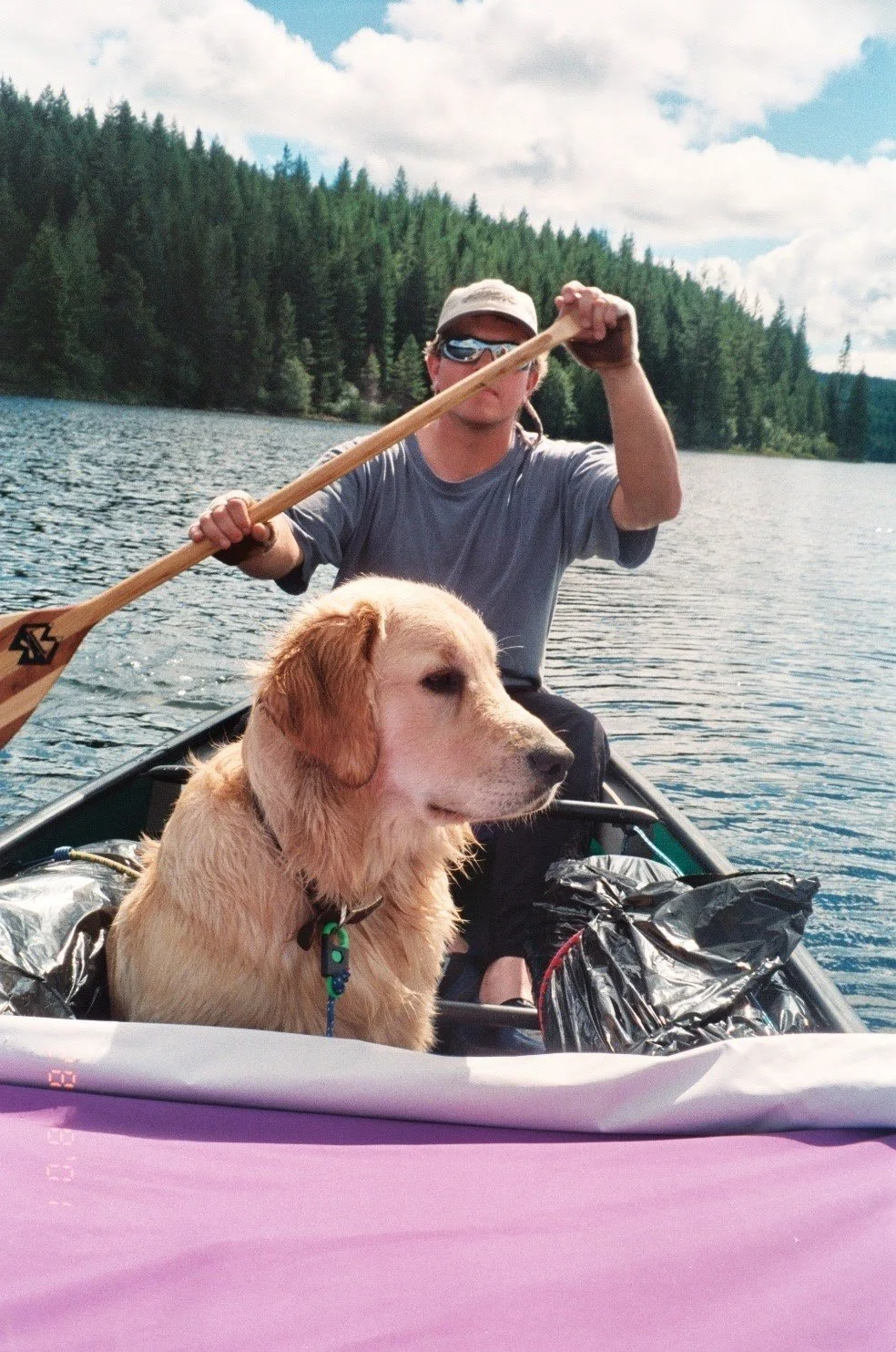
This is our first dog Rosco, as a pup, with a “break-away” leash to deter him from always wanting to be in the water. Few things make a water dog happier than a swim in one of the route's crystal-clear lakes.
Tips for a Successful Trip
Before leaving home:
Practice basic obedience before your trip.
Ensure your dog is comfortable riding in a canoe.
Bring a leash and long lead.
Pack a dog-specific first aid kit.
Bring extra food.
Bring a sitting / sleeping pad.
Check that your dog has good recall and basic obedience.
Carry proof of vaccinations if traveling from out of the area.
A multi-day canoe trip can be physically demanding for people and dogs alike. Be a considerate paddler, keep your expectations realistic, follow Leave No Trace principles, keep your dog under control, and help preserve this incredible wilderness experience for future adventurers—both two-legged and four-legged.
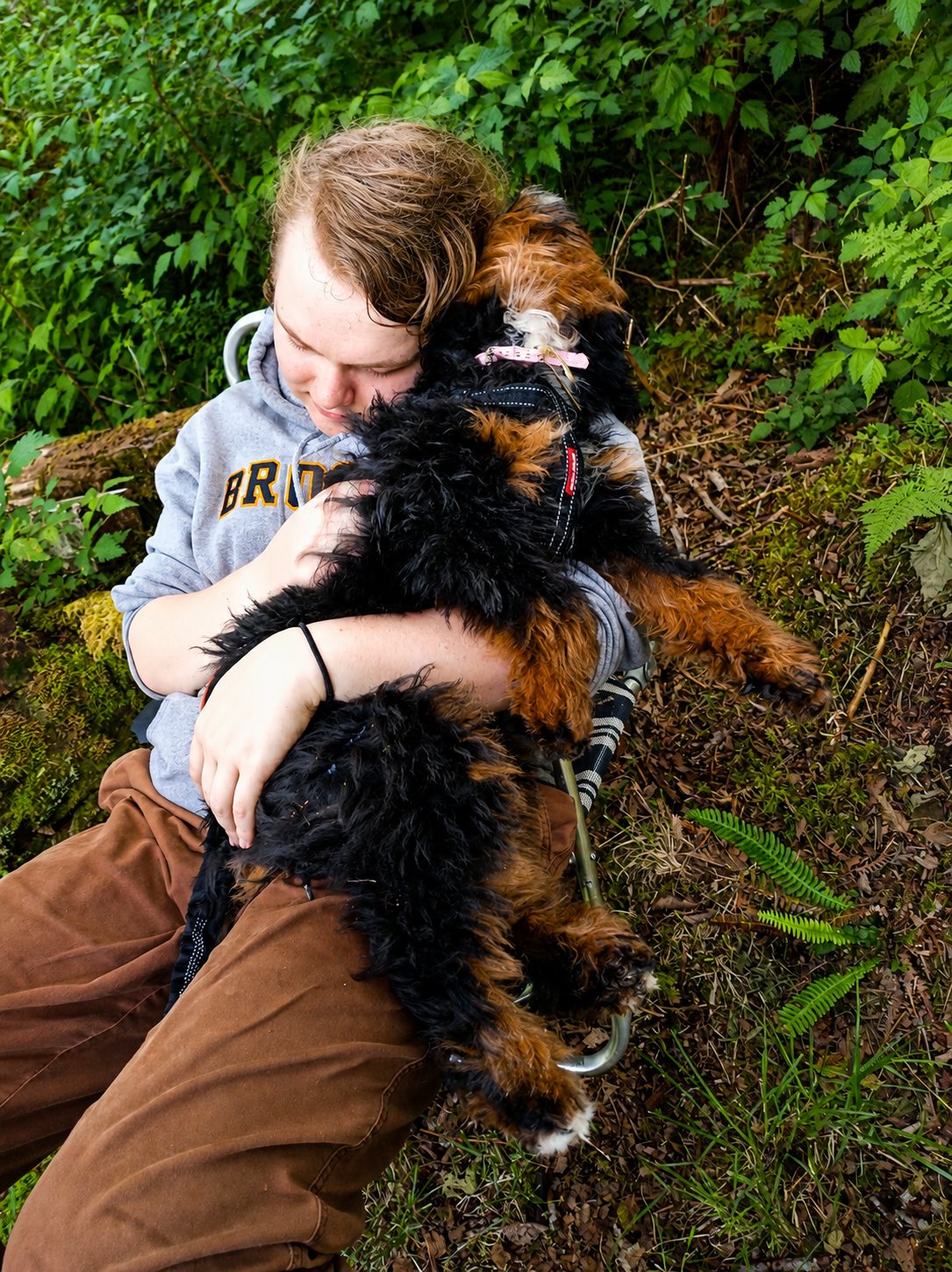
Puppies get tired and need mini naps…even in the middle of a portage.
Final Thoughts
If you love exploring the outdoors with your dog, the qathet Canoe Route is hard to beat. Beautiful lakes, quiet campsites, rainforest portages, and endless opportunities for swimming make it an unforgettable adventure for both of you.
Watching them leap from the canoe for a swim, trot happily down a shaded portage, and curl up beside you after a day on the water is part of what makes this adventure so memorable.
Continue Planning your qathet Canoe Route Adventure
Before you launch, explore our most helpful guides for planning a safe, comfortable, and unforgettable trip:
🧍 Complete qathet Canoe Route Guide for a route map, campsites, transportation, water, and trip planning advice.
🦟 Bugs on the qathet Canoe Route When mosquito season peaks, where bugs are worst, and how to avoid
🎒 How to Pack for the qathet Canoe Route | Expert Packing Guide + Free Checklist A complete packing list for a comfortable multi-day trip
🦅 The Best Gear for the qathet Canoe Route: Packing Tips Learn what gear actually makes the trip easier, from canoe barrels to footwear and rain gear
🥾 Portaging the qathet Canoe Route Learn the easiest way to carry your canoe and gear through every portage
⛺ Camping on the qathet Canoe Route Campsites, bear caches, and tips for planning your overnight stops, cooking, and Leave No Trace tips
🚣 Can You Kayak the qathet Canoe Route? Learn why we recommend a canoe and why wheel carts don't work on the route.
🐟 Fishing the qathet Canoe Route Species, tackle recommendations, regulations, and the best times to fish
🧍 Do you need a Guide on the qathet Canoe Route? Learn why most paddlers successfully complete the route on their own
🏞️Comparing BC’s Most Iconic Canoe Routes Not sure if the qathet Canoe Route is the right adventure for you? Compare it with BC's other famous canoe routes
🛶Why the qathet Canoe Route Is Unlike Any Other Paddling Experience Discover what makes the qathet Canoe Route a truly unique wilderness adventure—and why so many paddlers return again and again
Originally written by Christie Mitchell based on decades of experience on the qathet Canoe Route.
Copyright Notice
All photographs, maps, illustrations, and written content are © Christie Mitchell. Unauthorized reproduction or redistribution is prohibited without written permission.