
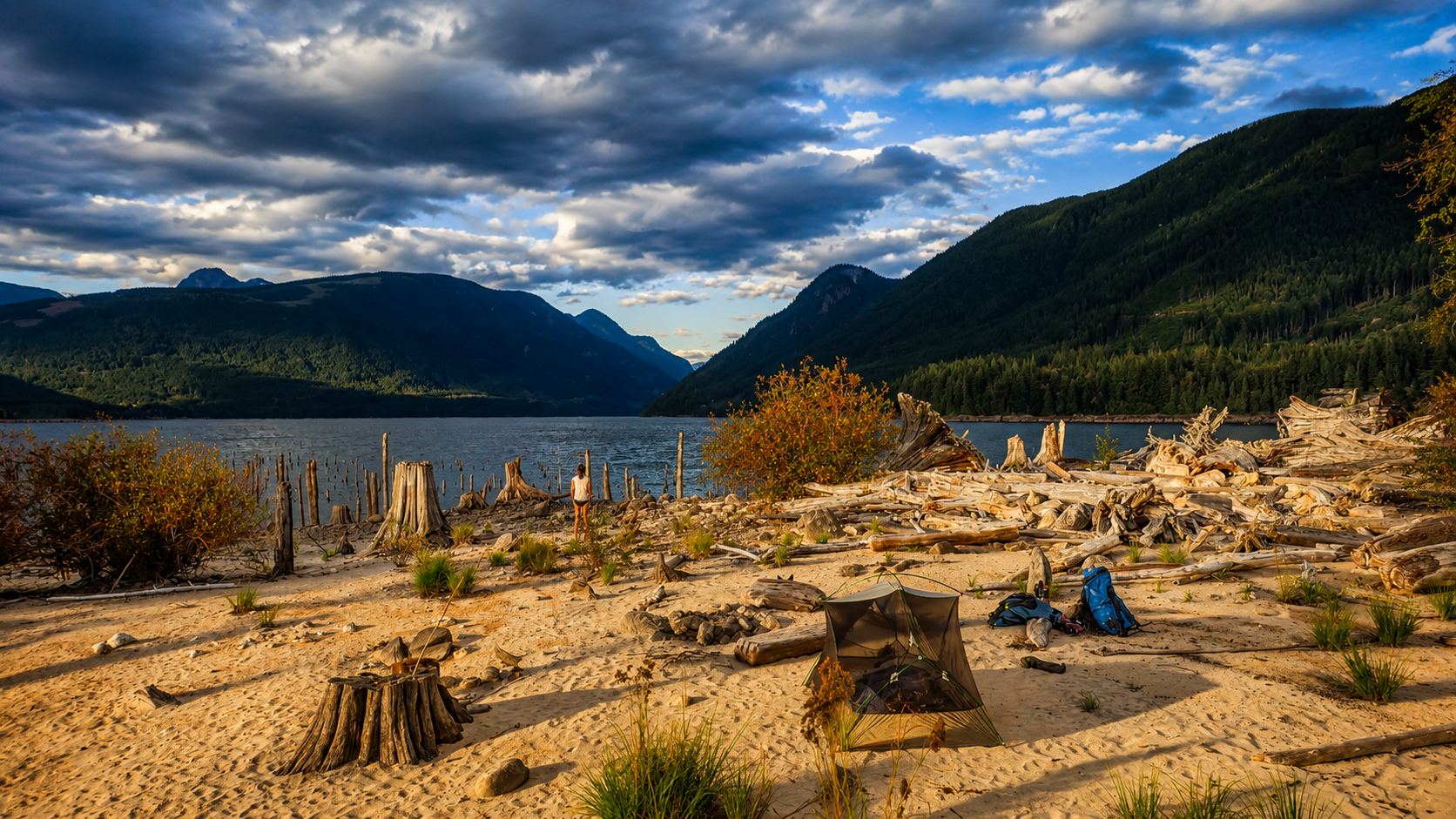
One of the greatest rewards of paddling the qathet Canoe Route isn't just the journey across eight beautiful lakes—it's spending your evenings in peaceful campsites surrounded by towering coastal rainforest. After a day of paddling, portaging, and spotting wildlife, there's something incredibly satisfying about pulling your canoe onto shore, hearing nothing but birdsong and the occasional loon, and settling into camp.
Unlike many backcountry destinations where you must reserve campsites months in advance, camping on the qathet Canoe Route is refreshingly simple.
Where Can You Camp?
Camping is permitted only at the designated recreation campsites along the route. Because much of the surrounding landscape consists of dense rainforest, wetlands, steep mountainsides, and rocky shorelines, there are very few suitable places to camp outside these established areas.
The good news is that the designated campsites are well spaced, allowing most paddlers to comfortably complete the route over several days.
The campsites are free to use, and no camping permits are required.
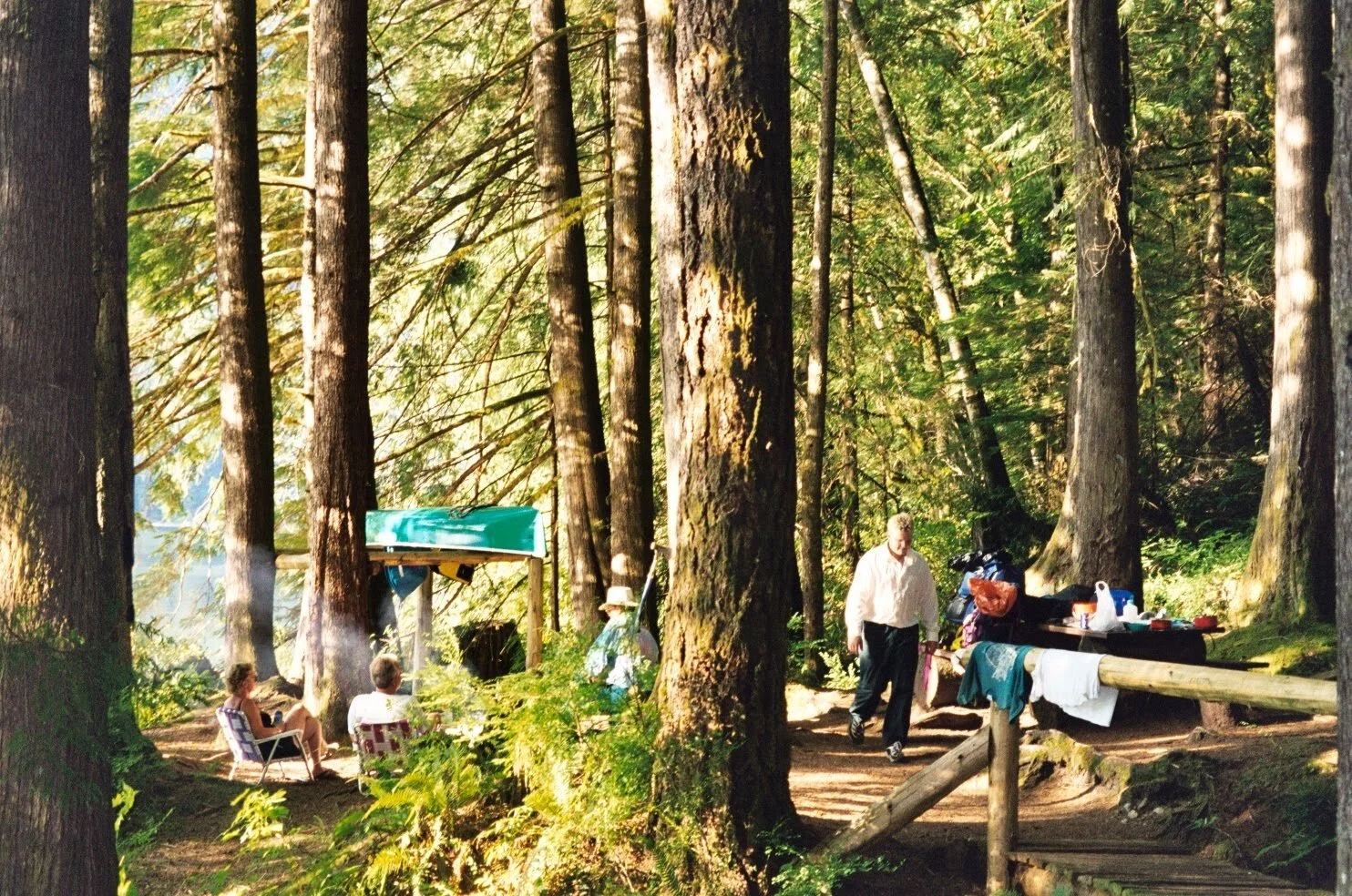
Some campsites have firewood available, but a lightweight camp stove is still your most reliable cooking companion.
A Typical Six-Day Camping Itinerary
While experienced paddlers can complete the route in fewer days, many visitors find that six days provides the perfect balance between adventure and relaxation.
A common itinerary looks like this:
Night 1: Lower Horseshoe Campsite
Night 2: South East Dodd Campsite
Night 3: Windsor Lake Campsite
Night 4: Goat Lake Campsite
Night 5: Lower Powell Campsite
This schedule gives you time to enjoy the scenery, swim on warm days, fish, photograph wildlife, and explore the lakes instead of rushing from campsite to campsite.
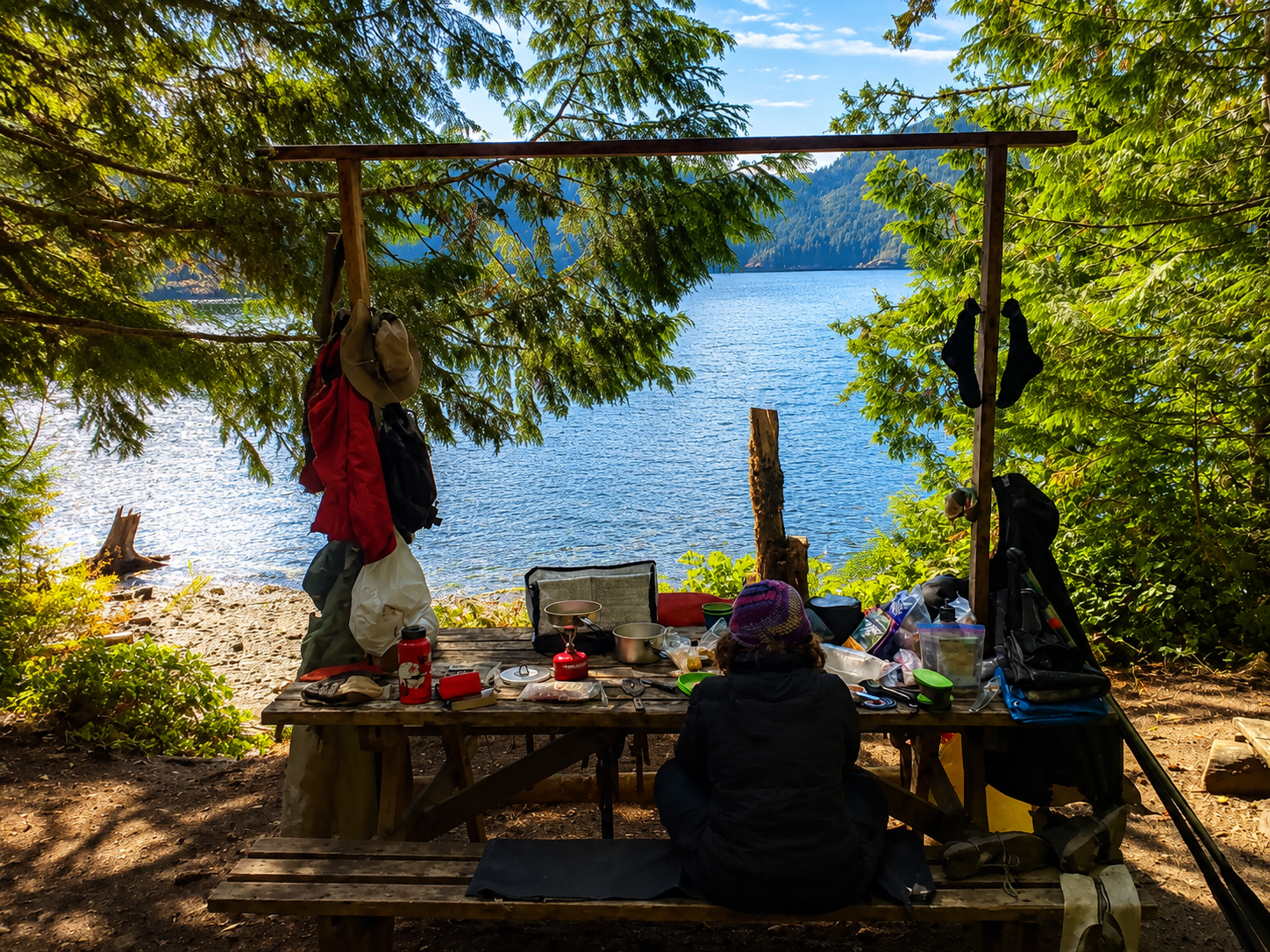
Every designated campsite includes a picnic table, making meal prep surprisingly comfortable in the wilderness.
What You'll Find at Each Campsite
Every designated campsite offers the basic amenities needed for a comfortable wilderness stay, including:
Picnic tables
Outhouses
Tent sites (somewhat flat)
Fire rings
Firewood (sometimes)
Bear caches for food storage
Although some campsites may have firewood, we recommend bringing a lightweight camping stove for cooking. Firewood availability varies throughout the season, and during dry summers campfires may be restricted or prohibited. A stove is faster, cleaner, and much more reliable.
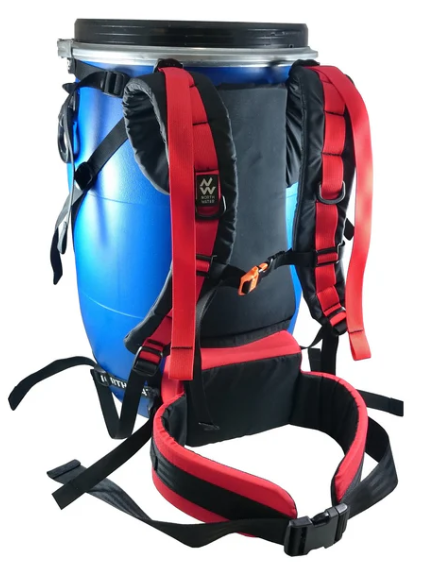
A backpack canoe barrel eliminates the need to use the bear caches, and secures your food when left at the opposite end of each trail while you portage the canoe.
Bear Caches: Helpful, But Have a Backup Plan
Each campsite includes a bear cache for storing food and scented items overnight, helping keep both campers and wildlife safe.
However, these caches occasionally become full if someone puts their whole backpack in their instead of their designated food bag.
For that reason, and because you also leave your smelly stuff at one end of the portage as you are moving other gear, it's smart to have a backup plan. In our Best Gear for the qathet Canoe Route guide, we explain a simple solution that ensures you can safely store your food at all times. Planning ahead is one of the easiest ways to avoid unnecessary stress.
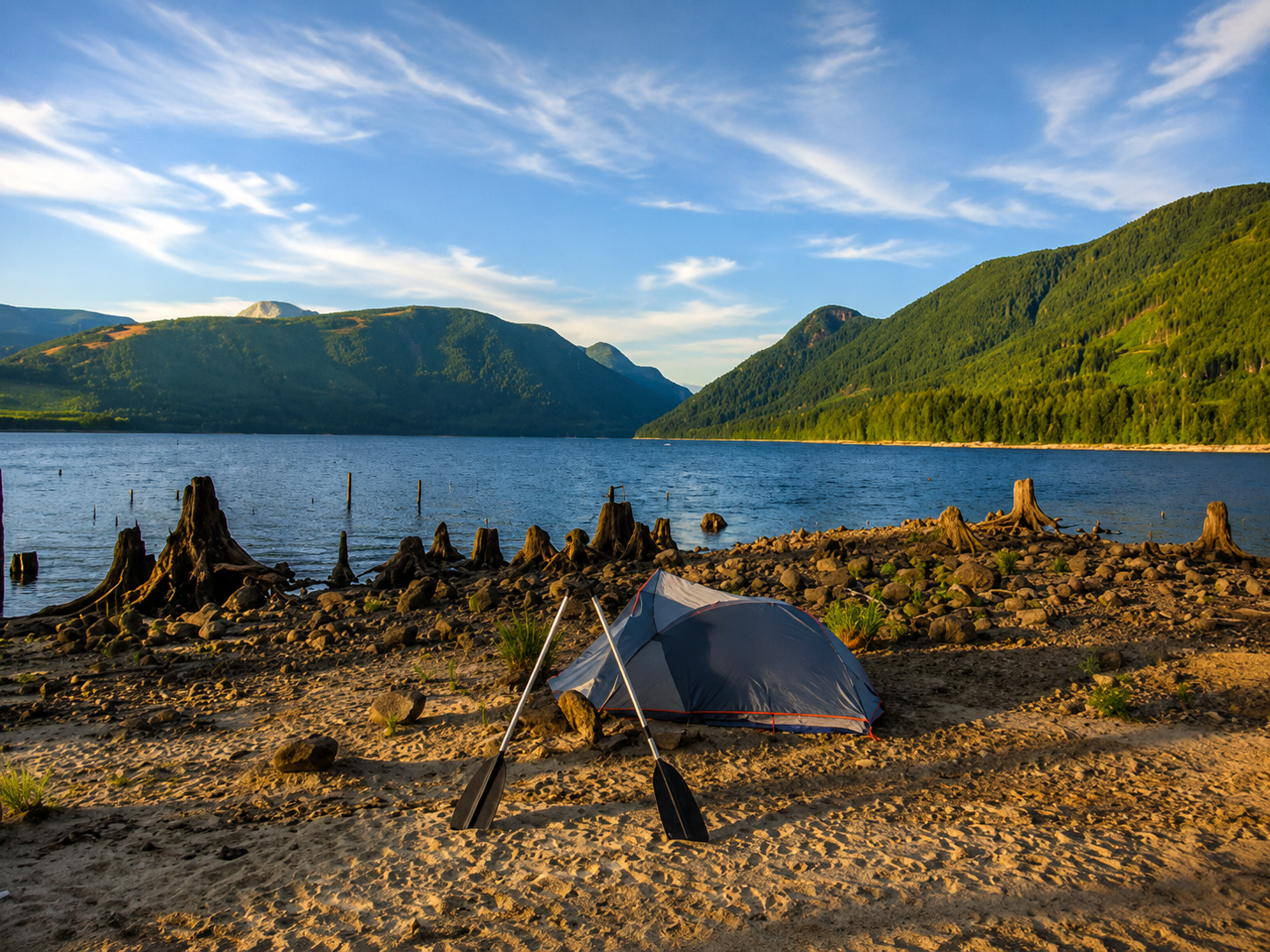
Camping on the qathet Canoe Route isn't about crowded campgrounds—it's about experiencing one of British Columbia's most beautiful coastal rainforests.
Keep These Campsites Beautiful
One of the first things many paddlers notice is just how clean the campsites are.
That isn't by accident.
The route remains in this condition because generations of visitors have respected the wilderness and packed out everything they packed in. Every person who paddles the route plays a part in preserving it for those who follow.
Please:
Pack out all garbage.
Leave campsites cleaner than you found them.
Respect wildlife.
Stay on established trails.
Avoid damaging vegetation.
Leave natural features exactly as you found them.
Following Leave No Trace principles helps protect the forests, lakes, wildlife, and campsites that make the qathet Canoe Route so special.
Follow the Camper's Code
BC Parks promotes the Camper's Code, a simple set of nine principles that help everyone enjoy the outdoors responsibly.
When campers follow these easy guidelines, everyone benefits—including future visitors and the wildlife that calls these forests home.
Whether it's respecting quiet hours, properly disposing of waste, storing food safely, or caring for the campsite, small actions have a lasting impact.
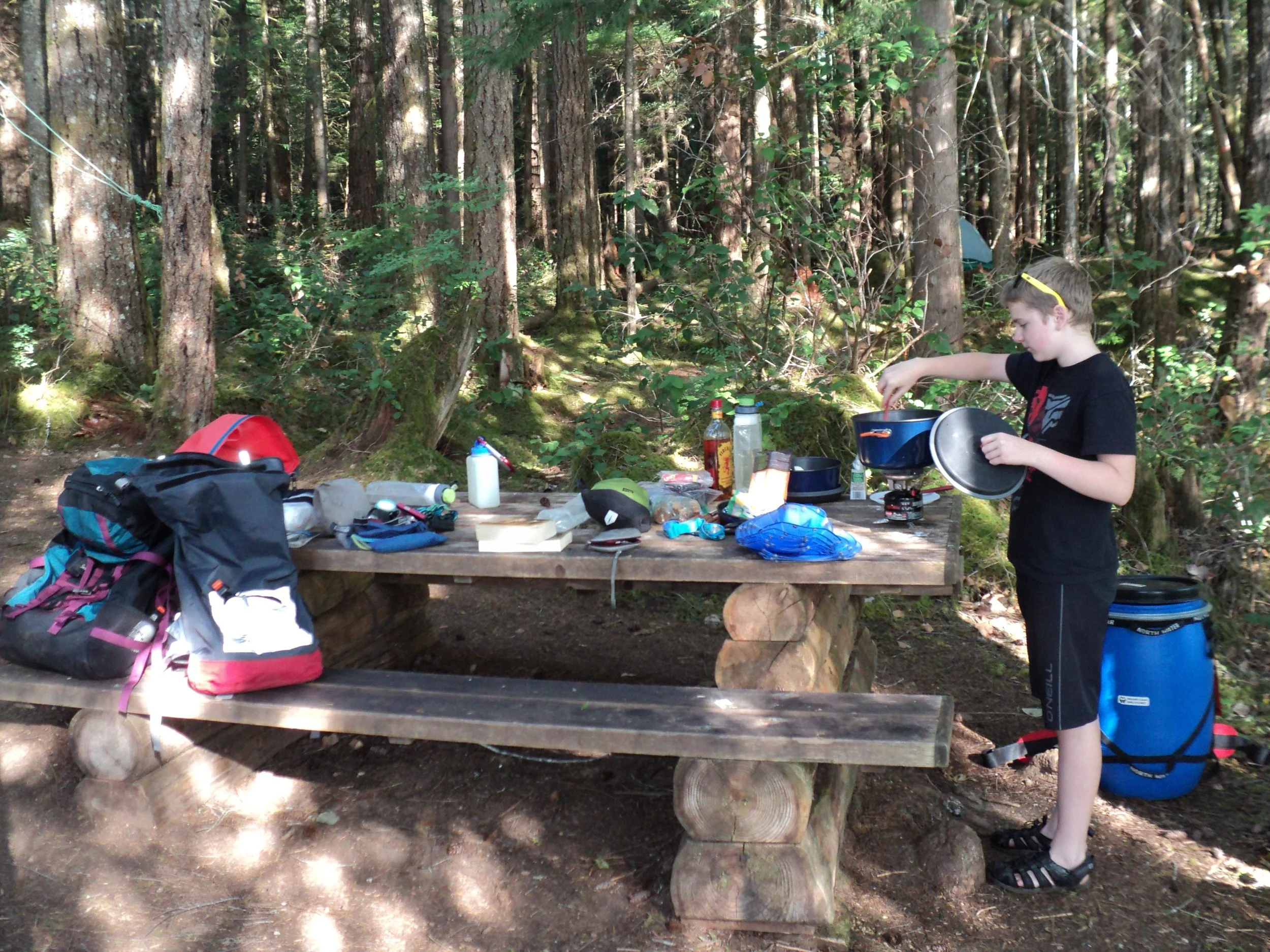
Every campsite feels earned. Every paddle stroke makes arriving just a little more rewarding.
Washing Dishes the Right Way
Even biodegradable soap shouldn’t really be used directly in lakes or streams.
Wash dishes well away from the water's edge and dispose of wastewater responsibly to help keep these lakes clean for everyone.
If you're new to backcountry camping, we recommend watching this excellent video on proper backcountry dishwashing techniques before your trip. We also carry biodegradable camp soap at Mitchell's Canoe & Kayak if you need to stock up before heading out.
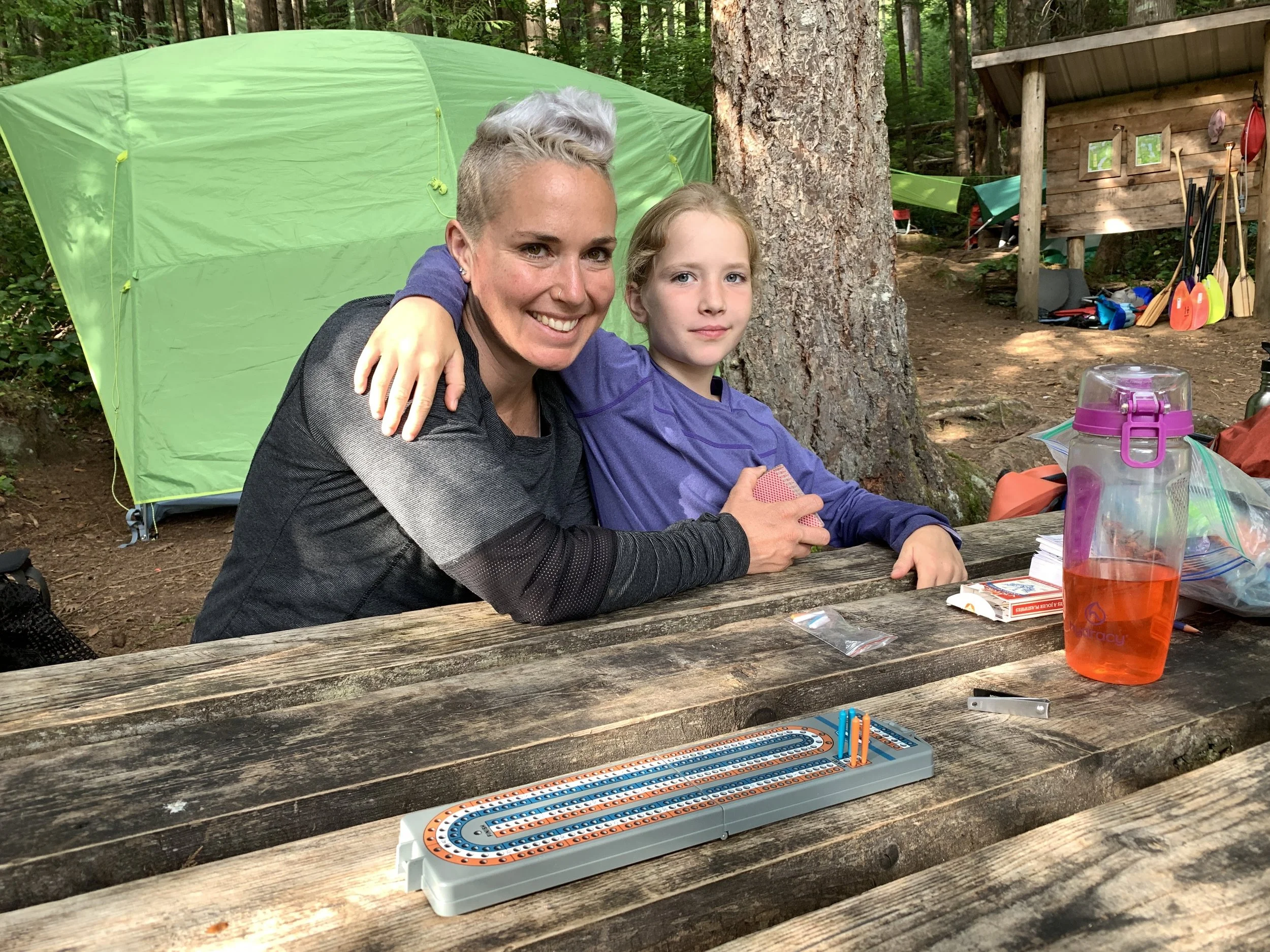
After a full day of paddling and portaging, there's nothing better than pulling your canoe onto shore and calling this home for the night.
Why Camping Here Is Different
Camping on the qathet Canoe Route isn't about crowded campgrounds or squeezing into campsites beside dozens of other people. It's about waking up to mist drifting across still water, listening to loons echo through the valley, watching eagles soar overhead, and ending each day surrounded by one of British Columbia's most spectacular coastal rainforests.
Because you're travelling by canoe, each campsite feels earned. Every portage, every paddle stroke, and every quiet bay leads to another peaceful evening immersed in nature.
It's this combination of remote wilderness, thoughtfully maintained campsites, and a journey that connects eight beautiful lakes that makes the qathet Canoe Route unlike anywhere else in British Columbia. Long after you've packed away your tent and paddled home, it's these quiet nights around camp that many paddlers remember most—and the reason so many return year after year.
Continue Planning your qathet Canoe Route Adventure
Before you launch, explore our most helpful guides for planning a safe, comfortable, and unforgettable trip:
🧍 Complete qathet Canoe Route Guide for a route map, campsites, transportation, water, and trip planning advice.
🦟 Bugs on the qathet Canoe Route When mosquito season peaks, where bugs are worst, and how to avoid
🎒 How to Pack for the qathet Canoe Route | Expert Packing Guide + Free Checklist A complete packing list for a comfortable multi-day trip
🦅 The Best Gear for the qathet Canoe Route: Packing Tips Learn what gear actually makes the trip easier, from canoe barrels to footwear and rain gear
🥾 Portaging the qathet Canoe Route Learn the easiest way to carry your canoe and gear through every portage
🚣 Can You Kayak the qathet Canoe Route? Learn why we recommend a canoe and why wheel carts don't work on the route.
🐕 Bringing Your Dog on the qathet Canoe Route Tips for paddling, camping, portaging, and keeping your canine companion safe and happy
🐟 Fishing the qathet Canoe Route Species, tackle recommendations, regulations, and the best times to fish
🧍 Do you need a Guide on the qathet Canoe Route? Learn why most paddlers successfully complete the route on their own
🏞️Comparing BC’s Most Iconic Canoe Routes Not sure if the qathet Canoe Route is the right adventure for you? Compare it with BC's other famous canoe routes
🛶Why the qathet Canoe Route Is Unlike Any Other Paddling Experience Discover what makes the qathet Canoe Route a truly unique wilderness adventure—and why so many paddlers return again and again
Originally written by Christie Mitchell based on decades of experience on the qathet Canoe Route.
Copyright Notice
All photographs, maps, illustrations, and written content are © Christie Mitchell. Unauthorized reproduction or redistribution is prohibited without written permission.